AZ Rivierenland, Bornem | Refurbishing a fully operational hospital: a Herculean task
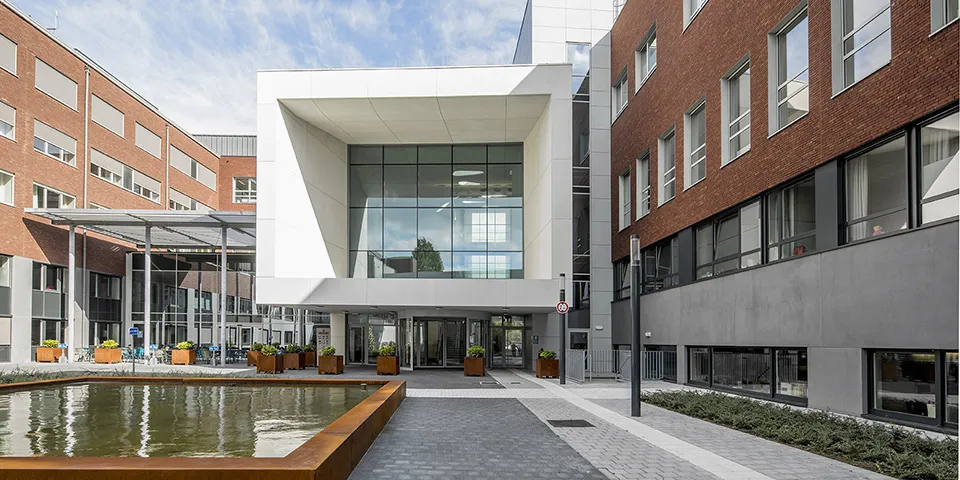
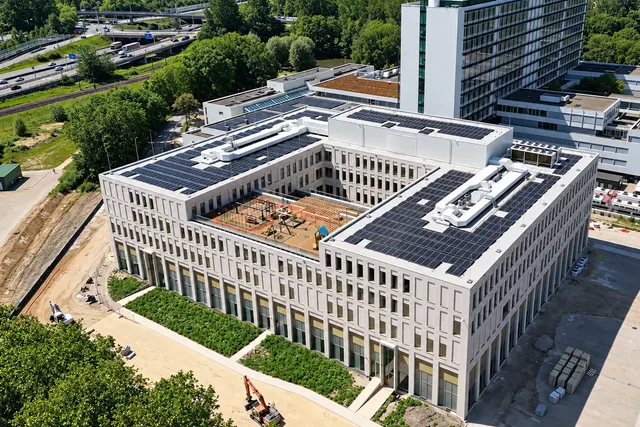
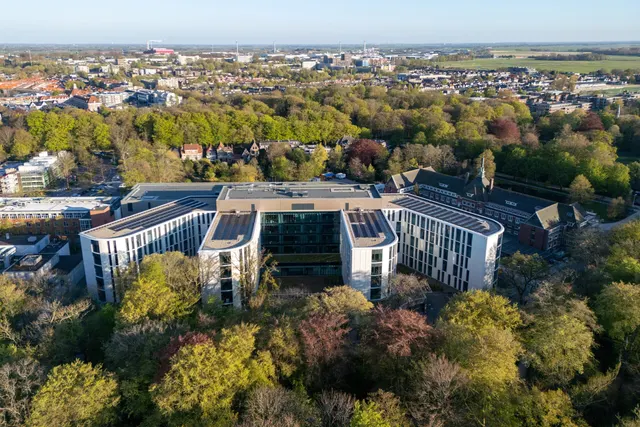
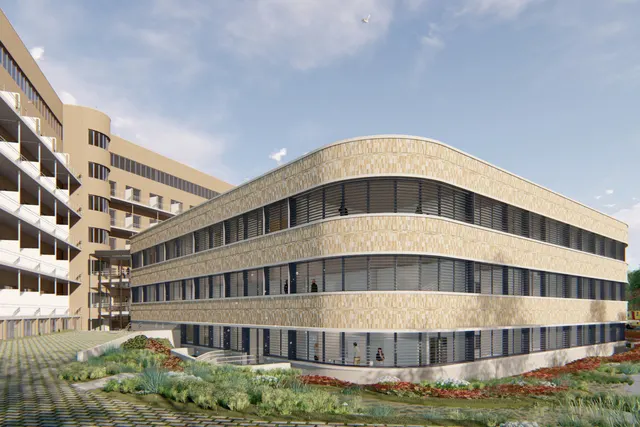
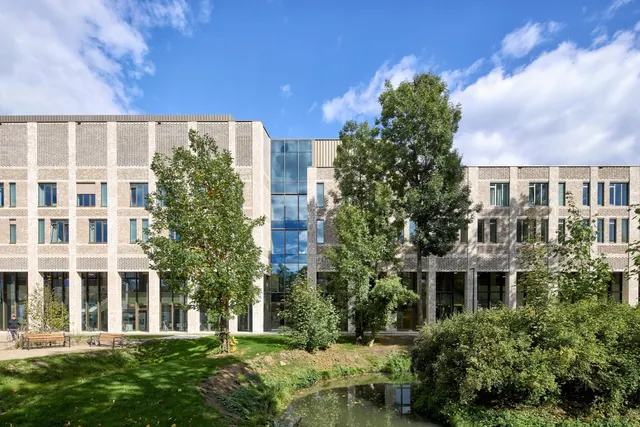
Bornem’s Sint-Jozefkliniek has undergone a major facelift. During the 5-year project, it not only doubled in size, but also merged with AZ Heilige Familie in Rumst in 2018 to form AZ Rivierenland. The refurbishment itself was a Herculean task, as the hospital continued to operate throughout.
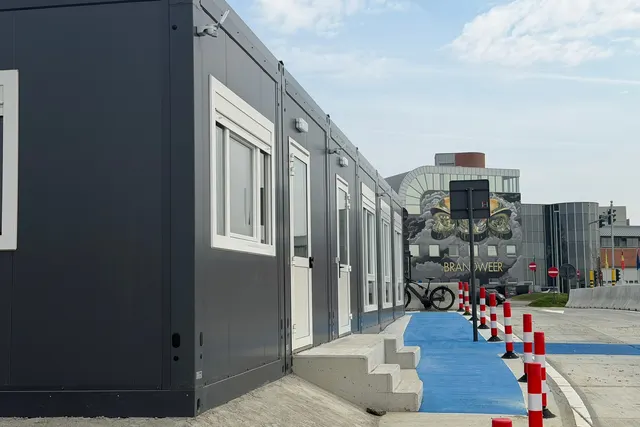
Marcel Zoons, Buildings and Engineering Manager at AZ Rivierenland, explains more about the project: “The idea of refurbishing the hospital came about in 1999. The building was already bursting at the seams, so we had to bring in containers to create extra space. What’s more, the oldest part dated back to the 1950s.”

Two-phase project
In 2006, more space was needed following the takeover of the hospital in Willebroek. A major refurbishment was called for. AZ Rivierenland, then still known as the Sint-Jozefkliniek, appointed construction company Cordeel to carry out the work. Project manager Rudi Put explains: “The project was carried out in two phases. From 2013 to 2017, we worked on blocks E and F. Block F contains two nursing wards.” Zoons adds: “Block E houses the medical and technical services, including Medical Imaging, Nuclear Medicine, the operating department and the day hospitals. In the second phase, we worked on block A, which contains the administrative services, entrance, technical areas and Surgery department, among other things. During the same period, we also refurbished blocks B and C: we renovated all the wards and converted the old operating department into a geriatric ward.”
Left: Rudi Put, project manager, Cordeel. | Right: Marcel Zoons, Buildings and Engineering Manager, AZ Rivierenland.
Refurbishment without the noise
Hospital services continued throughout the construction work. Put explains: “That was sometimes a challenge. We had to take account of the patients in the nearby wards. But in construction, it’s not always possible to work quietly. We therefore did as much as possible to keep the noise down: for demolition, we used pneumatic nibblers instead of jackhammers. We covered the rubble chutes and insulated wherever possible.” Zoons adds: “It often came down to finding compromises. We did, however, always stick to one rule: absolute silence between 13 and 15 hours. That gave patients the chance to have an afternoon nap.”
Moving patients
Patients could not always stay in the same place during the refurbishment. Zoons explains: “Because of the work, we had to set up the Surgery department on the floor below. Fortunately, moving the patients went smoothly: most of them go home at weekends.” Moving the patients from the Willebroek campus to Bornem was a different matter: “They only came here once the work had progressed far enough. Transferring the geriatric patients was a challenge: six ambulances travelled back and forth between the two hospitals. It was a bit of a sweat getting everything organised smoothly.”
New plans for the Willebroek campus
The Willebroek campus is becoming a day hospital. Zoons explains: “Some of the Willebroek departments can now be found in Bornem. The campus itself has become a day hospital, with a day ward, a Medical Imaging department, consultation rooms and so on.” There are also construction plans for the campus: “A lot of areas are currently empty. We therefore plan to demolish a small section by the end of 2021, build a compact new facility and then move all the activities from the old section into it. There’s no getting around that demolition. With so much of the building empty, it’s necessary to make the whole site energy-efficient. Activities will not be interrupted in Willebroek either: they will continue in the section that is currently empty, and then move to the new facility.”
Twice the size
Refurbishing a hospital is a challenge for a contractor. Put explains: “We had to comply with various requirements: architectural standards, hygiene regulations, air cleanliness, and so on. Refurbishing the operating theatres was quite nerve-racking, because everything had to work perfectly first time. We couldn’t afford to make a mistake there, as these are sterile rooms. You can’t just come back later to fix a skirting board. At Cordeel, we’re used to projects like this: this isn’t the first hospital we’ve refurbished.”

The work doubled the size of the hospital. Zoons explains: “It used to have a floor area of 16,000 square metres, and now it’s 32,000. There are also additional facilities: the kiss-and-ride zone means patients and visitors no longer have to get out on the street every time. And the cafeteria is another important addition, as there was always a lot of demand for one. We’re pleased that we can now offer it to our patients, visitors and staff.”
A view of the urinals
The project also led to some amusing situations. Put explains: “It’s only natural that people aren’t always happy about refurbishment work while they’re in hospital. So we were occasionally asked to turn our radio down. The funniest complaint came from a woman who asked us to move our urinals. She could see them from her room. So we moved them straight away.”
Question about this story? Ask your question
Who worked on it
Sint-Jozefkliniek in Bornem
- construction companyCordeel
Keep following this
Get an email when a new story is published. No account needed.
- ProjectSint-Jozefkliniek
- SubjectHospitals
- CompanyCordeel