Reduce, reuse and recycle
Text and images NHL Stenden
Reducing healthcare waste
Every operation in a hospital leaves a trail of waste. An open-heart operation alone generates 27 kilos of waste, equivalent to the weight of a nine-year-old child. Many medical products are used just once before ending up in an incinerator, from gloves and IV lines to sterile packaging. The Dutch healthcare sector produces more than 328 million kilos of waste every year. Researchers and students at NHL Stenden are tackling this problem through the Care2Change project. The motto is reduce, reuse and recycle.
What is safe and efficient in the operating theatre has a major impact outside the hospital. The healthcare sector is responsible for around 7 per cent of CO2 emissions, 4 per cent of the country’s waste and 13 per cent of its raw material consumption. Plastics play a major role. They are safe, lightweight and cheap, but they also create huge mountains of plastic waste.
Smarter and different
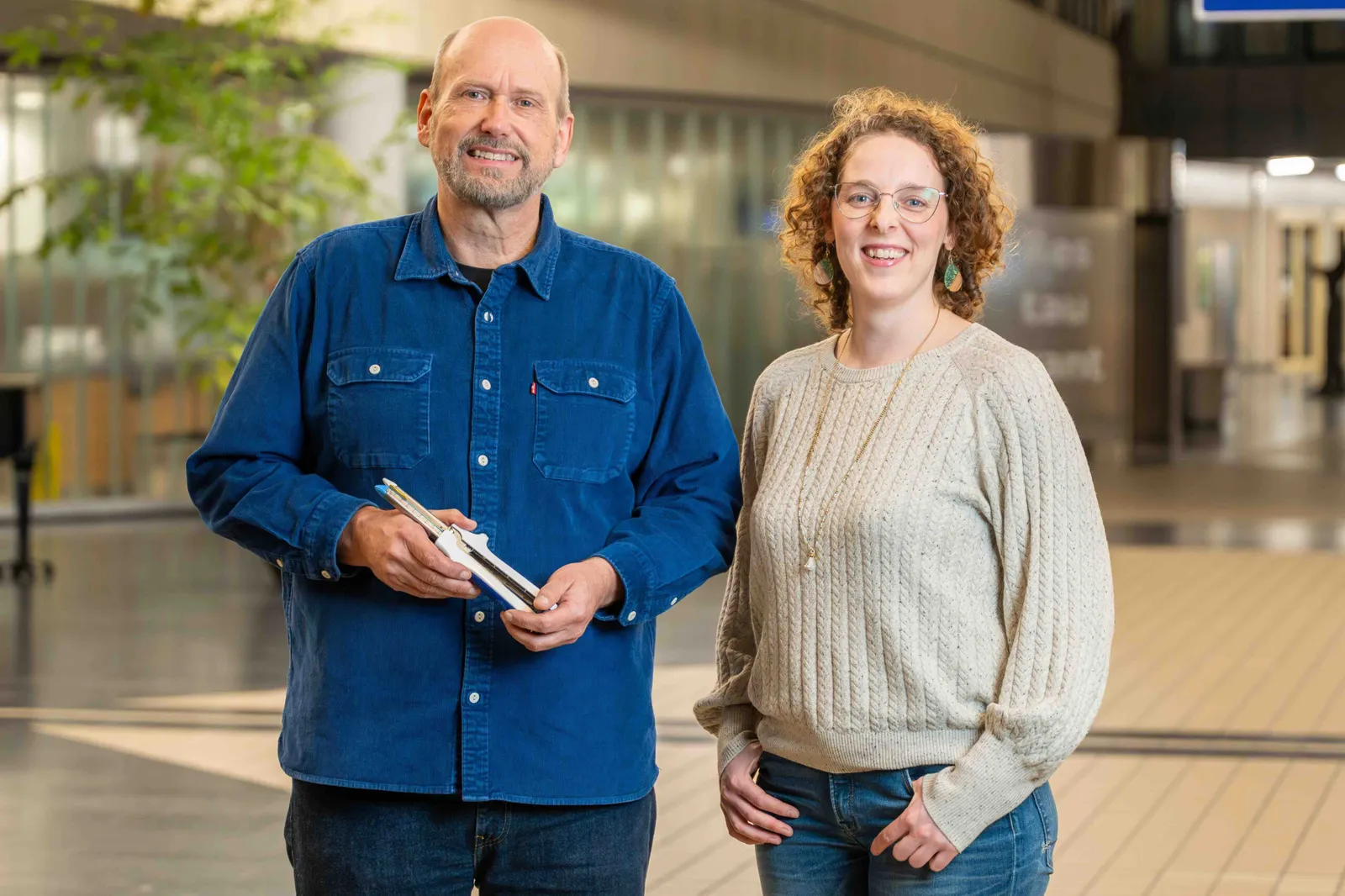
As part of Care2Change, NHL Stenden’s Circular Plastics research group and its partners are investigating how things can be done differently. Not by questioning safety, but by organising processes more intelligently. Researcher Rudy Folkersma says: “It’s not just about technology, but the whole system, from procurement and use to waste processing. Analyse the process properly and you can see where it could be made more efficient.”
Fewer disposable staplers
Students play an active role in this work. They map out current practice and turn abstract ambitions into concrete action. For example, they are examining products that are routinely thrown away after a single procedure. These include plastic staplers used to close large areas of tissue. A device costing €300 to €600 ends up in the bin after one operation. NHL Stenden researcher Willemien Veele says: “The question is whether a product like this could be designed differently. Can parts be made reusable without compromising safety? Students investigate what is technically possible and what would work in the operating theatre.”
Pilots with impact
Students and researchers mapped 22 commonly used healthcare products. What materials are used? Why are they single-use? And where are there opportunities to reduce, redesign or separate materials more effectively? Over the coming years, Care2Change will work towards three practical pilots in which waste streams are genuinely handled differently and recycled. Students match products with suitable processing routes, while researchers assess what is safe and feasible. “These pilots will give hospitals first-hand experience of how they can organise their waste streams differently,” says Folkersma. “And which regional partners they can work with.”
Care2Change shows that making healthcare more sustainable need not be a paper ambition. Taking a critical look at what we use and how we use it creates scope to reduce waste and use materials more intelligently. With practical steps that have an immediate impact, NHL Stenden is underscoring its role as a knowledge partner in the transition to a circular healthcare system.
Question about this story? Ask your question
Keep following this
Get an email when a new story is published. No account needed.
- SubjectSustainability