The best wayfinding starts before the first sign
Text Kris Vandekerckhove Beeld Signburo
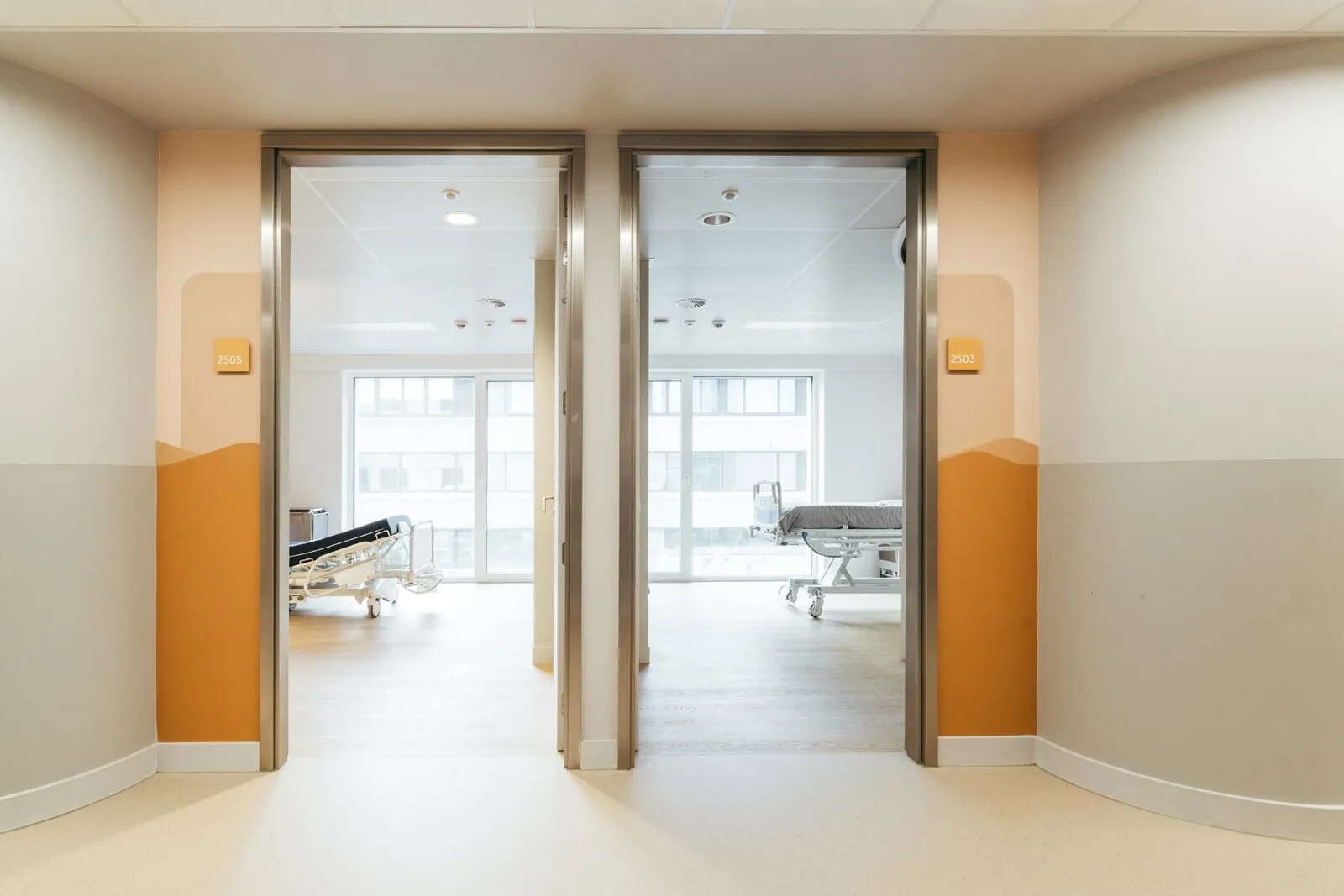
When people cannot find their way around a hospital or residential care centre, they lose more than time. Uncertainty and stress increase, staff are interrupted and appointments can be delayed. Good wayfinding therefore starts not with choosing a sign, but with understanding the building and its users.
First the route, then the form
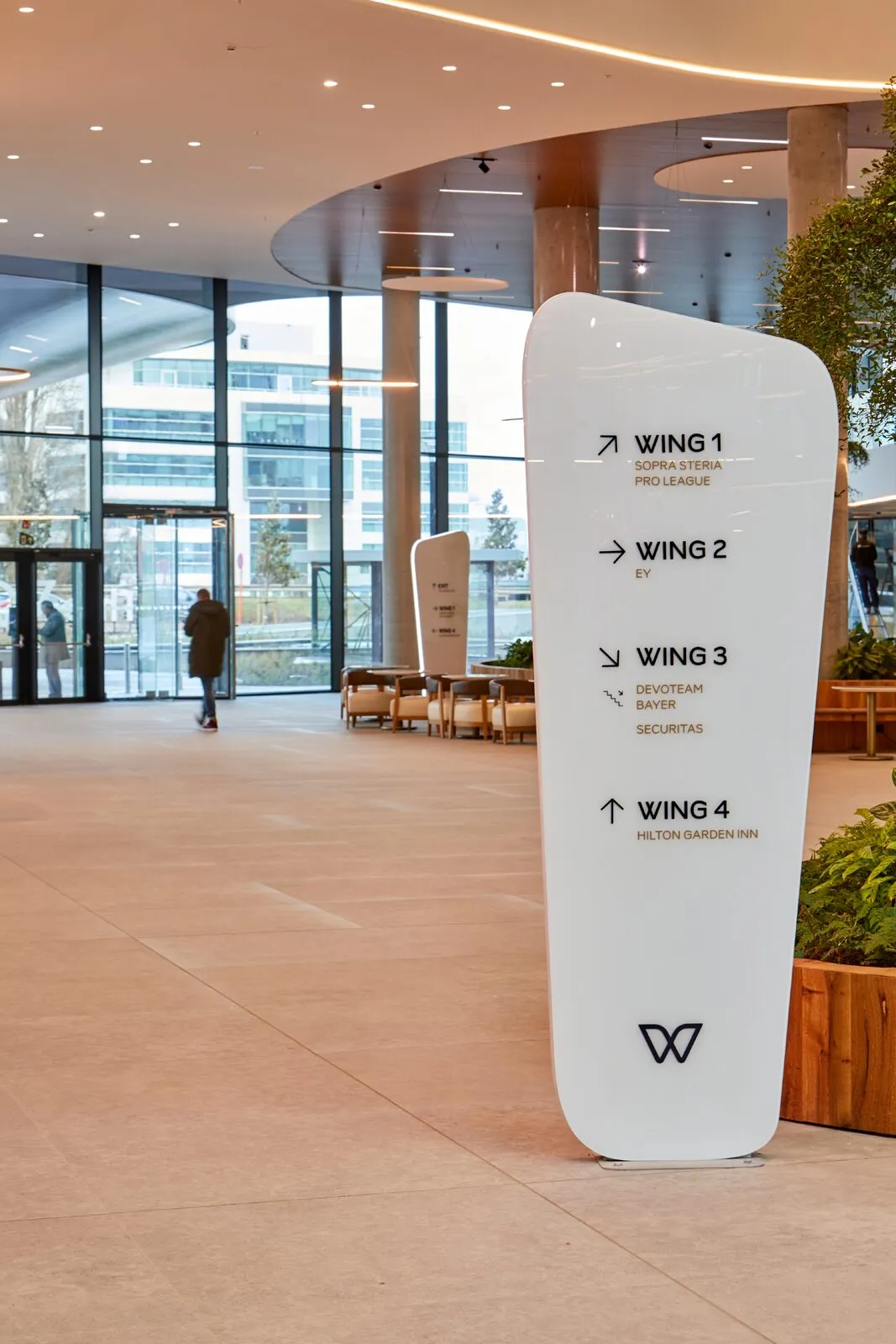
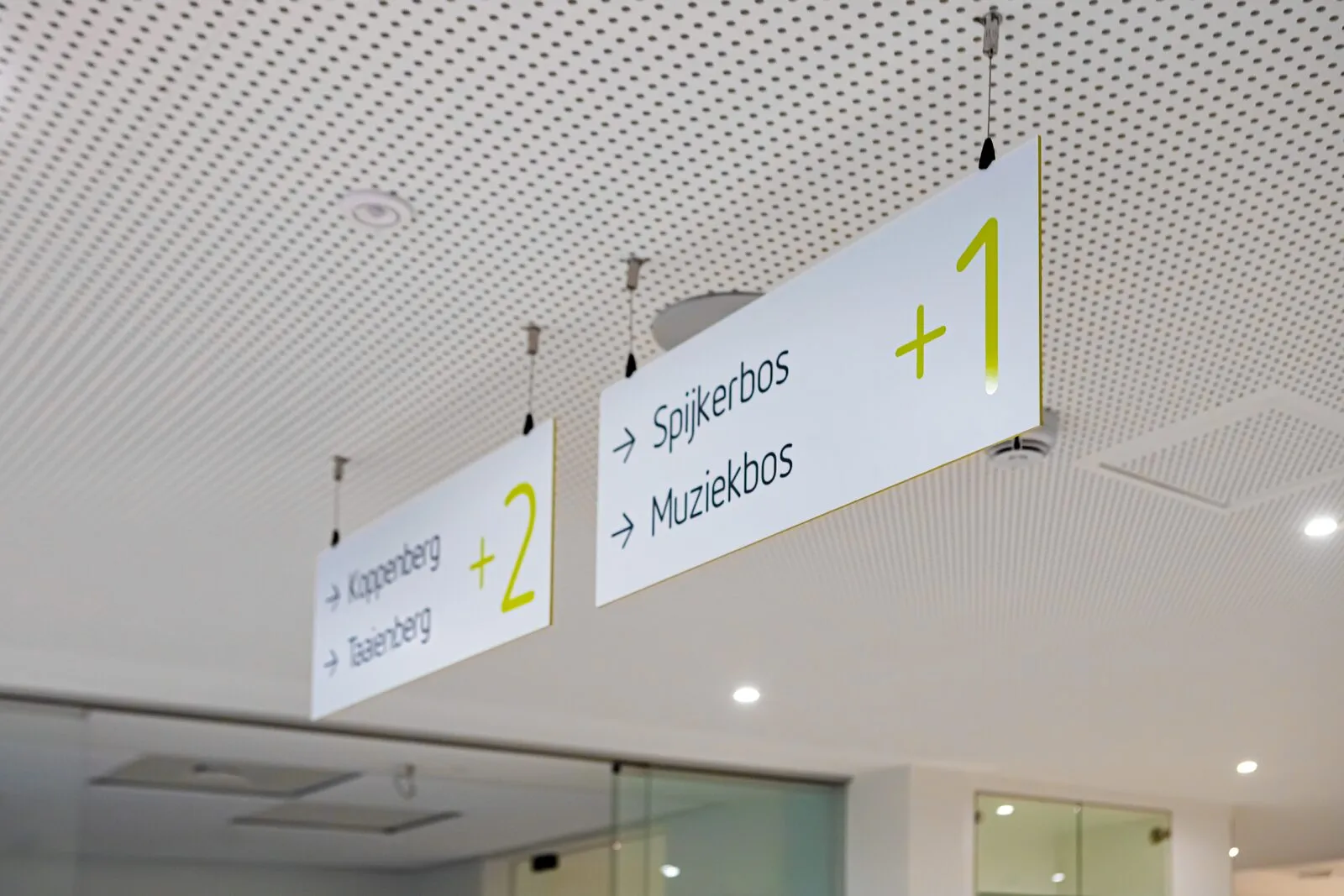
In practice, signage is still too often introduced only when a new build or refurbishment is nearly complete. By then, a series of signs has to make up for aspects that were not properly considered earlier in the design. Signburo takes exactly the opposite approach. The consultancy treats wayfinding as an integral part of the architecture and first maps out how people move through the building. The distinction between wayfinding and sign design is essential. Wayfinding is about how people understand an environment, orient themselves and choose their route. Sign design then translates that logic into a clear visual information system, using typography, symbols, colour and materials. ‘The right information in the right place’ matters more than providing as many signs as possible.
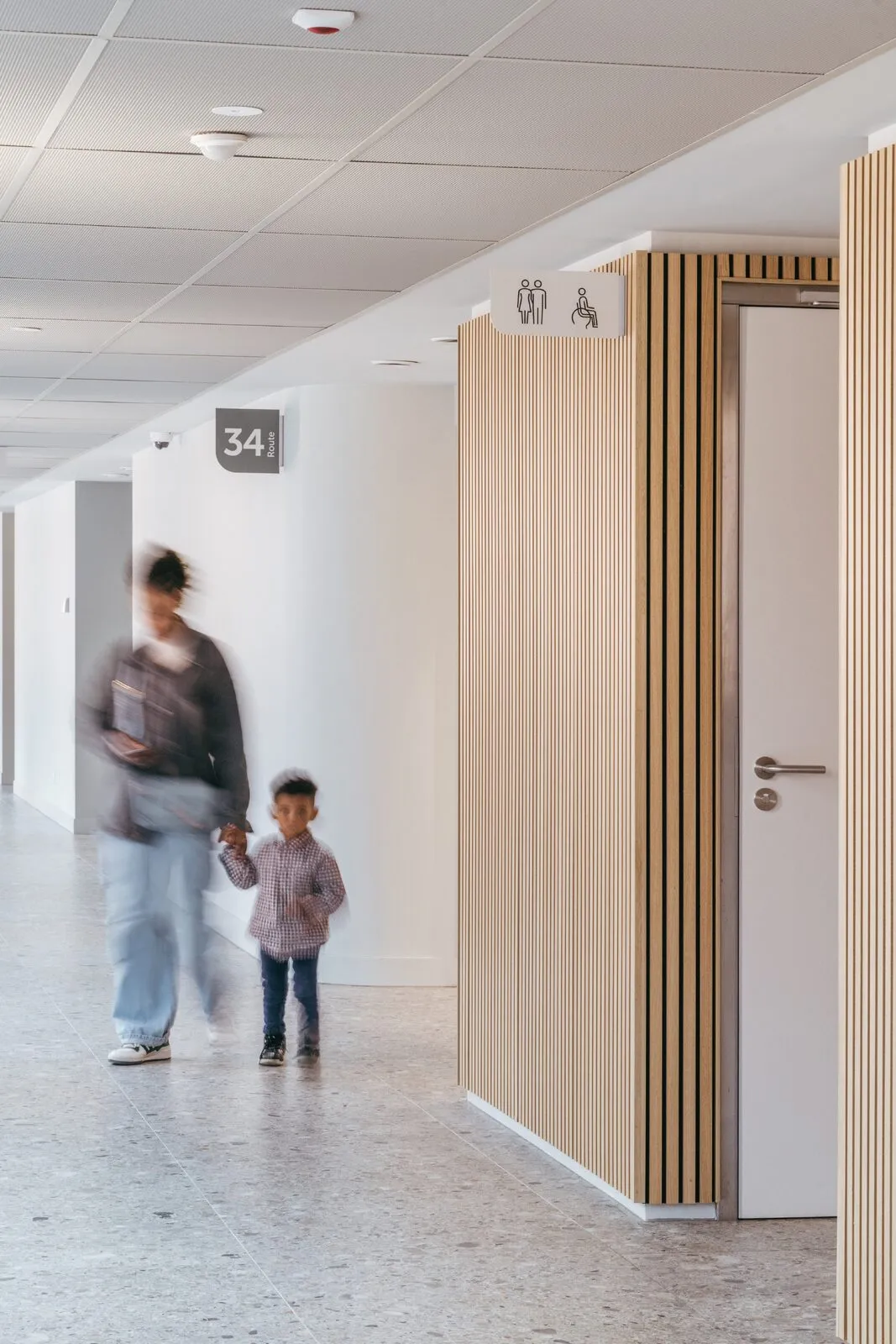
Through the eyes of a first-time visitor…
As a wayfinding and sign design specialist, Signburo conducts studies. It also develops a concept for each project and designs the signage and related elements. A graphic manual, plan or specification can also form part of the commission, enabling a contractor to implement the design correctly. Because the study and design are considered separately from implementation, each solution is based on how the wayfinding system works, not on a predetermined product or standard solution.
The analysis deliberately starts from the perspective of a first-time visitor. Where do people start to feel unsure? Which route makes sense for a patient, visitor or member of staff? How do the entrance, reception, corridors and sightlines support orientation? And where could colour, light, materials or a subtle architectural intervention achieve more than another sign? By asking these questions early, the building itself can help guide the way.
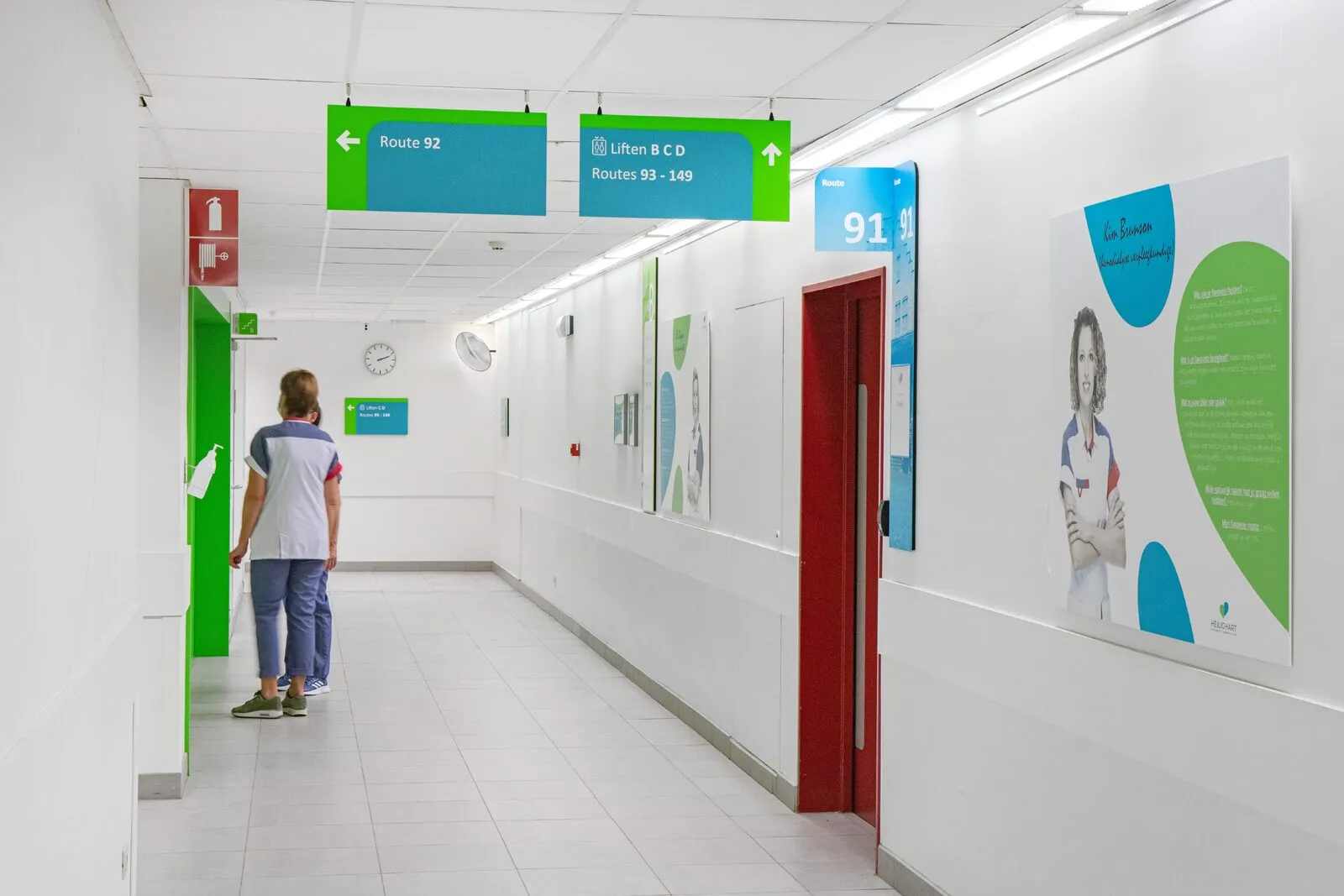
Tailored solutions for a complex care environment
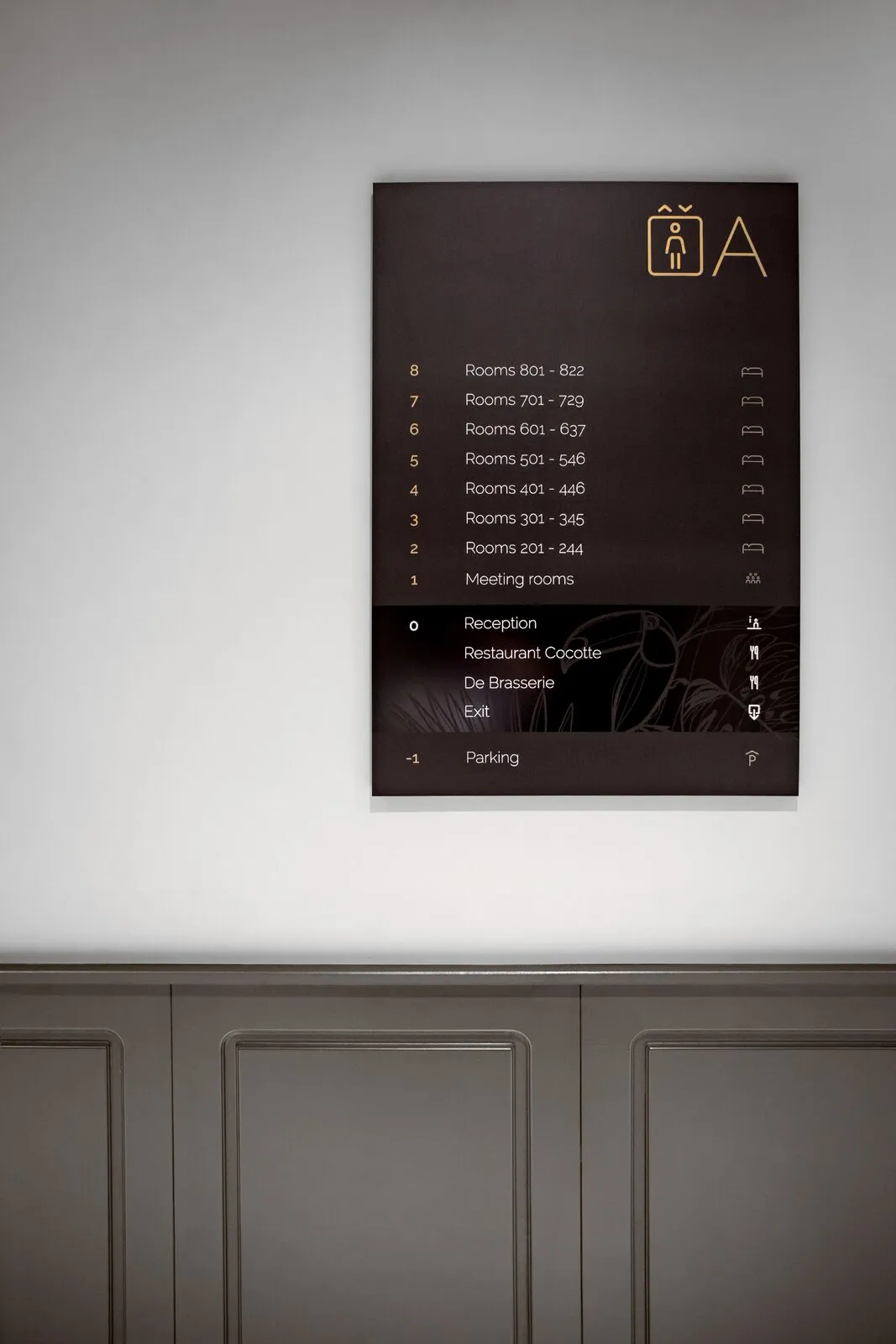
Healthcare buildings have specific requirements. Users vary widely, many are unfamiliar with the environment, and some are anxious or have limited mobility. At the same time, hospitals and healthcare campuses often grow in stages, so old and new buildings need to form one coherent, easy-to-navigate whole. A wayfinding study therefore takes account of the building structure, care processes, user groups, the organisation’s identity, accessibility and potential future changes. The result is different every time. For Heilig Hartziekenhuis in Lier, Signburo developed a wayfinding study and a new concept with a distinctive corporate identity. At De Lovie in Poperinge, functional signage had to complement the heritage character of the castle and park. It is the context, then, not the sign, that determines the design.
Ultimately, a good wayfinding system requires very little effort to understand. Routes feel logical, information appears at the right moment and users move around the building with greater confidence. This is precisely where Signburo’s expertise lies: turning complex environments into a clear, people-focused and visually coherent whole, long before the first sign is installed.
Question about this story? Ask your question
Keep following this
Get an email when a new story is published. No account needed.
- ThemeHealing environments
- SubjectInteriors