Healthcare is becoming hybrid
Text and images Tamara Brouwers

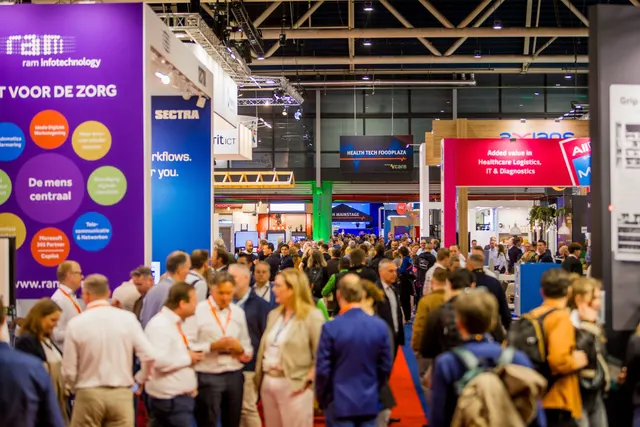
Anyone visiting Zorg & ict, Zorg & food, Zorg & facility and Zorg & hr could not help noticing that healthcare is becoming hybrid. Sometimes quite literally, as with the rise of hybrid food, but also in a more figurative sense. AI is increasingly there to support staff, but the human touch at the bedside remains paramount. In this article, Bouwen aan de Zorg highlights a number of tangible developments.
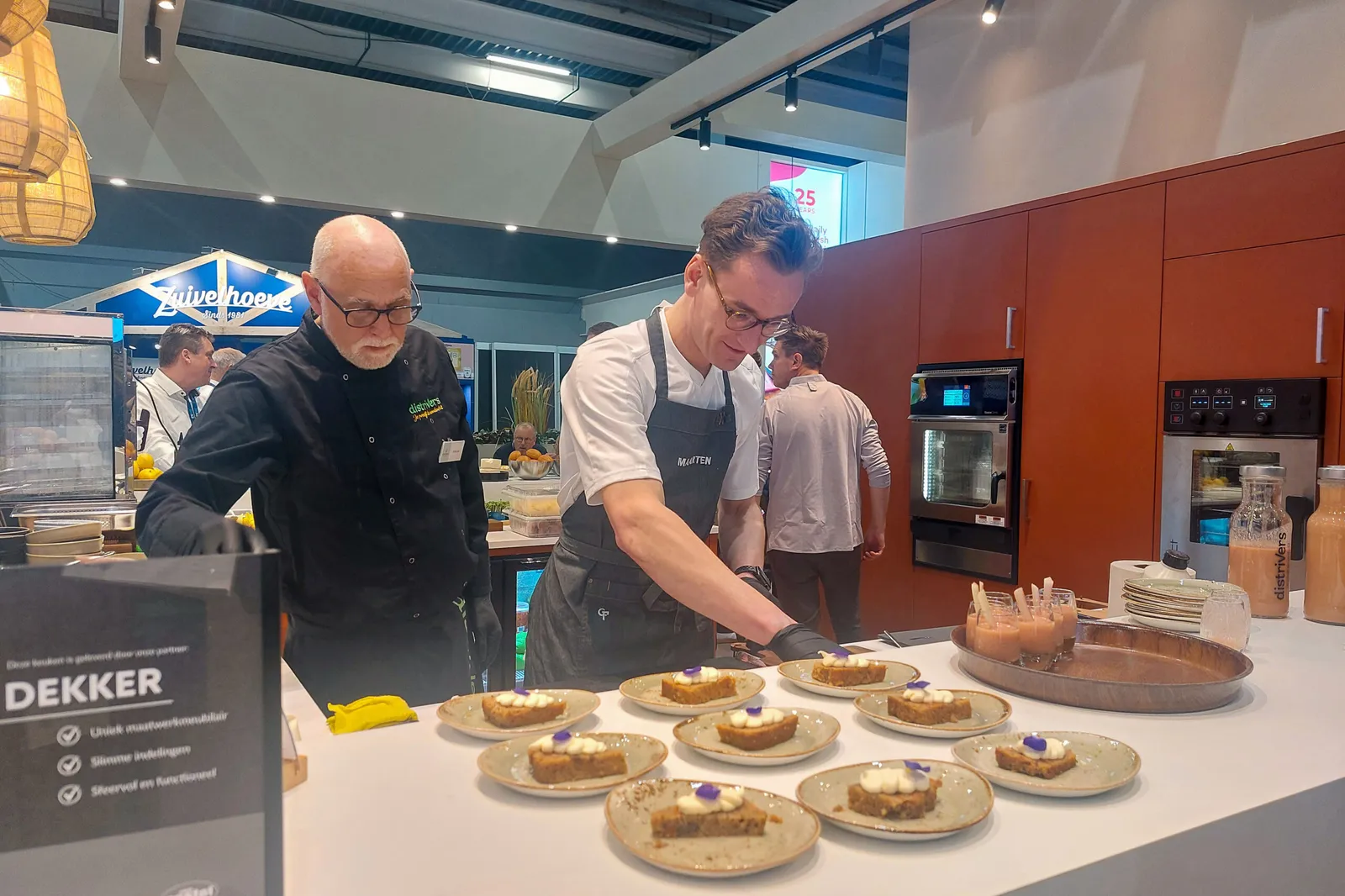
Visitors arriving at the exhibition went straight to Zorg & food. Distrivers joined forces there with partners Daily Fresh Food and Van Gestel. “This allows us to show that we offer healthcare clients a range of solutions, from ready meals to fresh cooking,” says marketing and communications coordinator Miranda Kosse-Muis. “We use innovations from our partners, such as sous-vide cooking. The meal is vacuum-packed in bags. This is healthy because the vitamin content of fresh vegetables remains virtually unchanged from harvest onwards. The meal is also quick to prepare.”

Tasty, healthy and sustainable
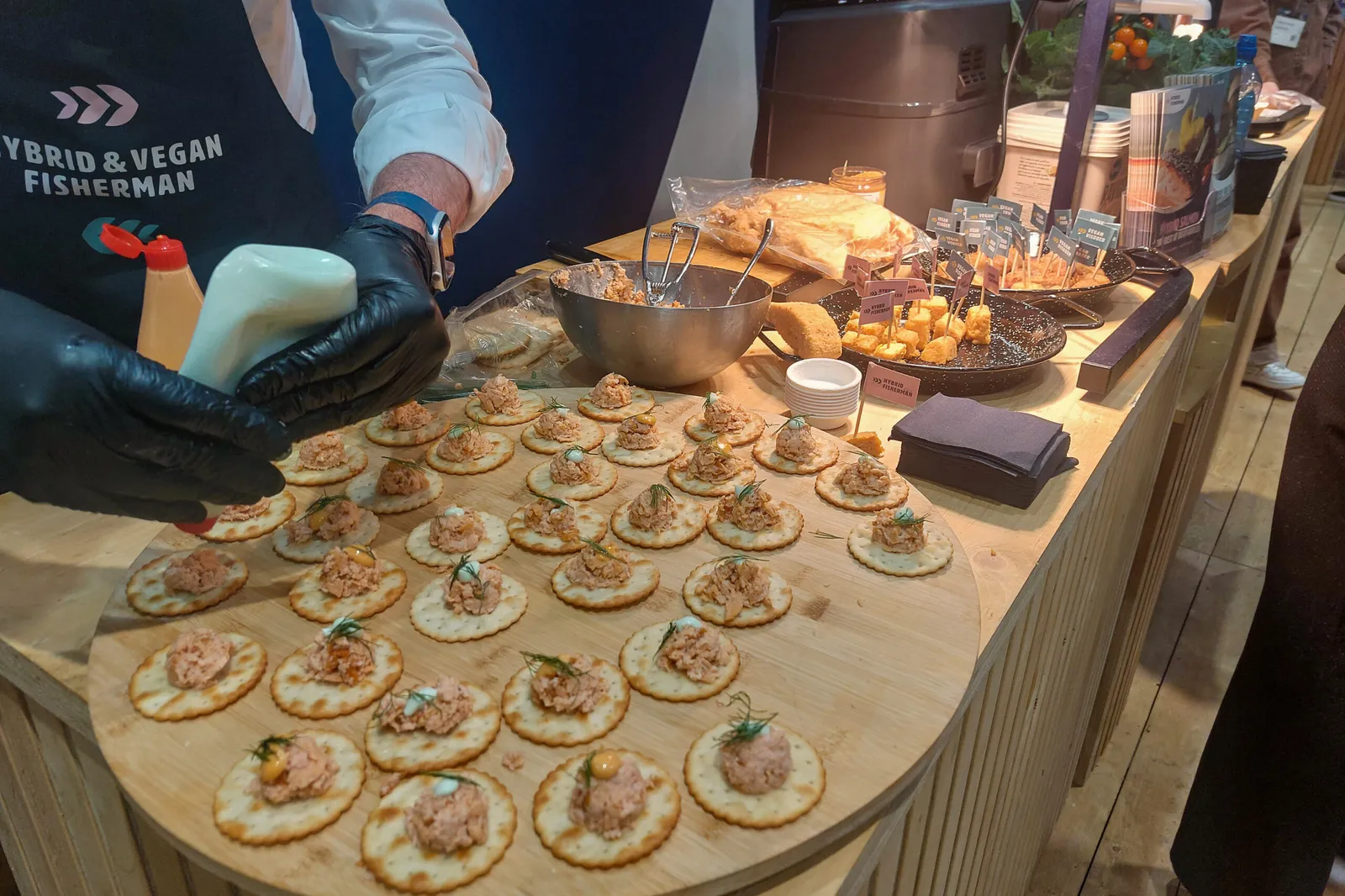
Distrivers is committed to tasty, healthy and sustainable food, with plant-based food playing an increasingly important role. “Combining animal-based and plant-based foods is an important development in this respect.” Visitors to the exhibition saw several examples.
Wholesale supplier Bidfood also believes that sustainability goes beyond plant-based food alone. The company supplies food and non-food products to the hospitality sector and care organisations, and showcased new developments in sustainable, convenient and tasty food at Zorg & food. A total of 23 suppliers presented their products. “We are seeing growing acceptance of sustainable and more plant-based products, as care staff are also increasingly interested in them in their personal lives,” says health & care target group manager Julia Alexandrou. One example is hybrid products, such as a hybrid salmon fillet from Hybrid Fisherman. This product has the texture and flavour of salmon (the author can confirm this from personal experience), but is made up of 46 per cent plant-based ingredients. “This enables care organisations to work towards their sustainability goals without compromising on what clients want.”
In a quieter part of the stand, Bidfood’s sustainability team advised care organisations on the bigger picture. Using a tool, the team looks at factors including the use of animal proteins and CO2 emissions. This provides a baseline for further sustainability measures and raising awareness.
AI supports processes, not care itself
AI was firmly on the agenda at Zorg & ict, including at TOPdesk. The supplier of service management software for healthcare showcased a platform that centralises reports and requests, automatically routing them to the right department and shortening turnaround times. Account manager Sven Mols says: “This leaves more time for actual care. AI makes it relatively easy to automate small tasks. Reports are assigned automatically, and the system suggests answers based on the question asked. Once an issue has been resolved, the system saves the information as a knowledge item, enabling it to get better and better at answering frequently asked questions.”
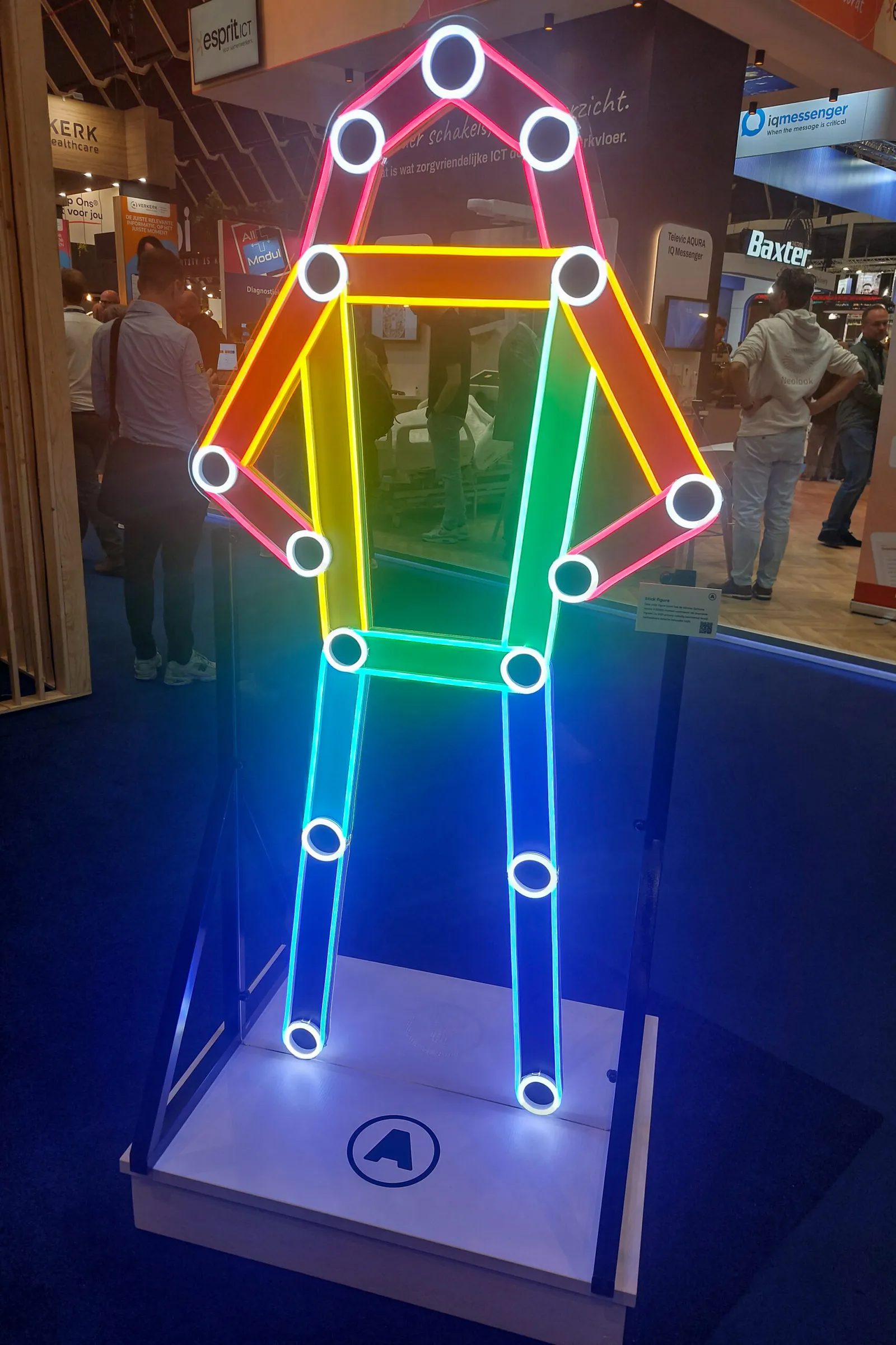
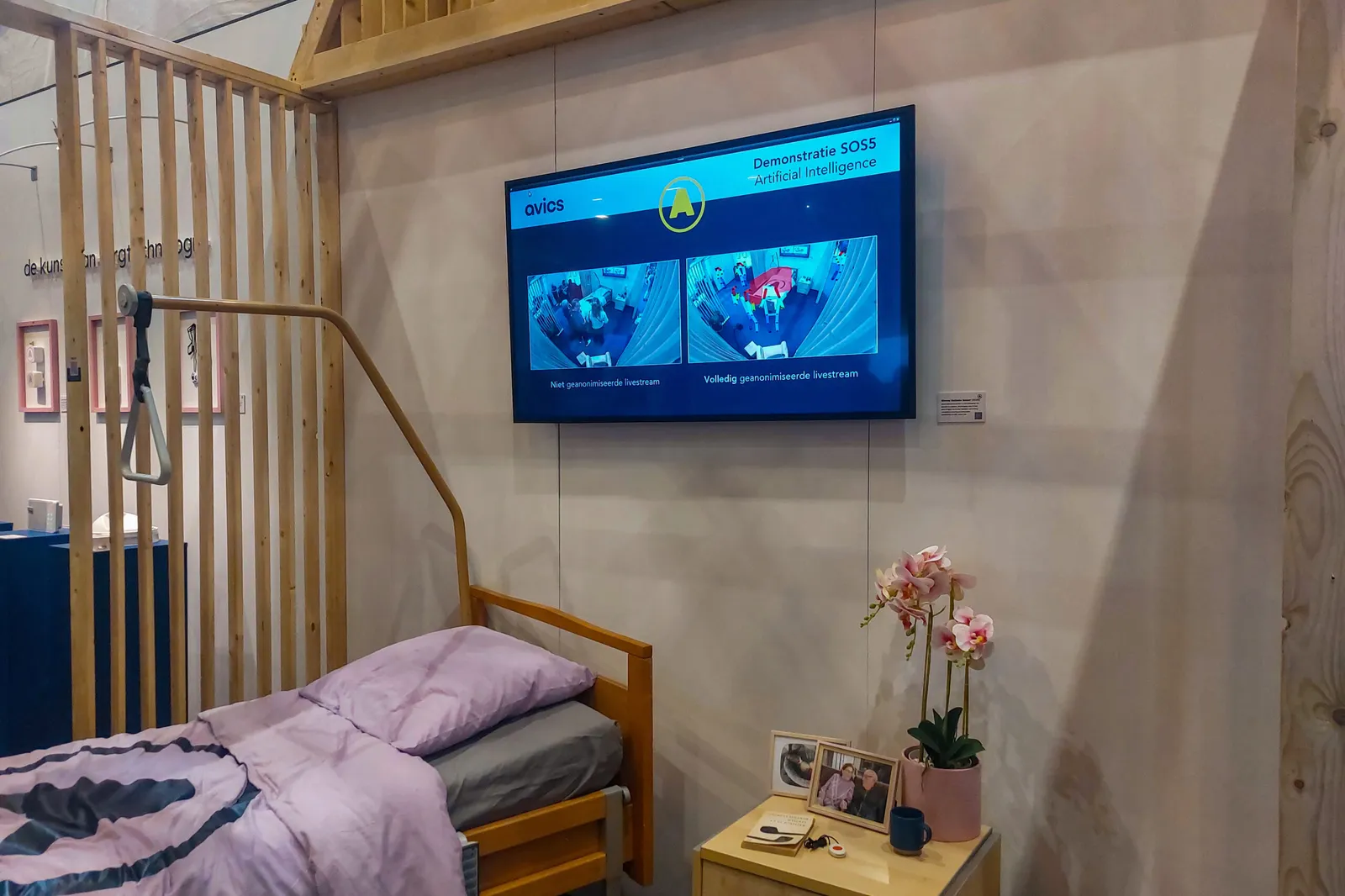
Avics also demonstrated how technology can provide support. The company presented monitoring and alerting solutions that detect behaviour and help care staff better coordinate their visits. Care coaches also play a role in implementation. “They speak the same language as care staff and help build trust in the technology,” one of the care coaches explained. “This means it can become an extension of care, while never replacing the human touch at the bedside. By letting go of some control, our smart solutions can improve quality of life and job satisfaction.”
The core of the care technology is an optical sensor that analyses behaviour in the room and translates it into targeted alerts. This means care staff need to carry out fewer checks and can better judge when intervention is needed. Images are converted into abstract silhouettes, so people cannot be identified and their privacy is protected. Avics is also developing wandering detection without a wearable, based on facial recognition.
Dementia-friendly music player
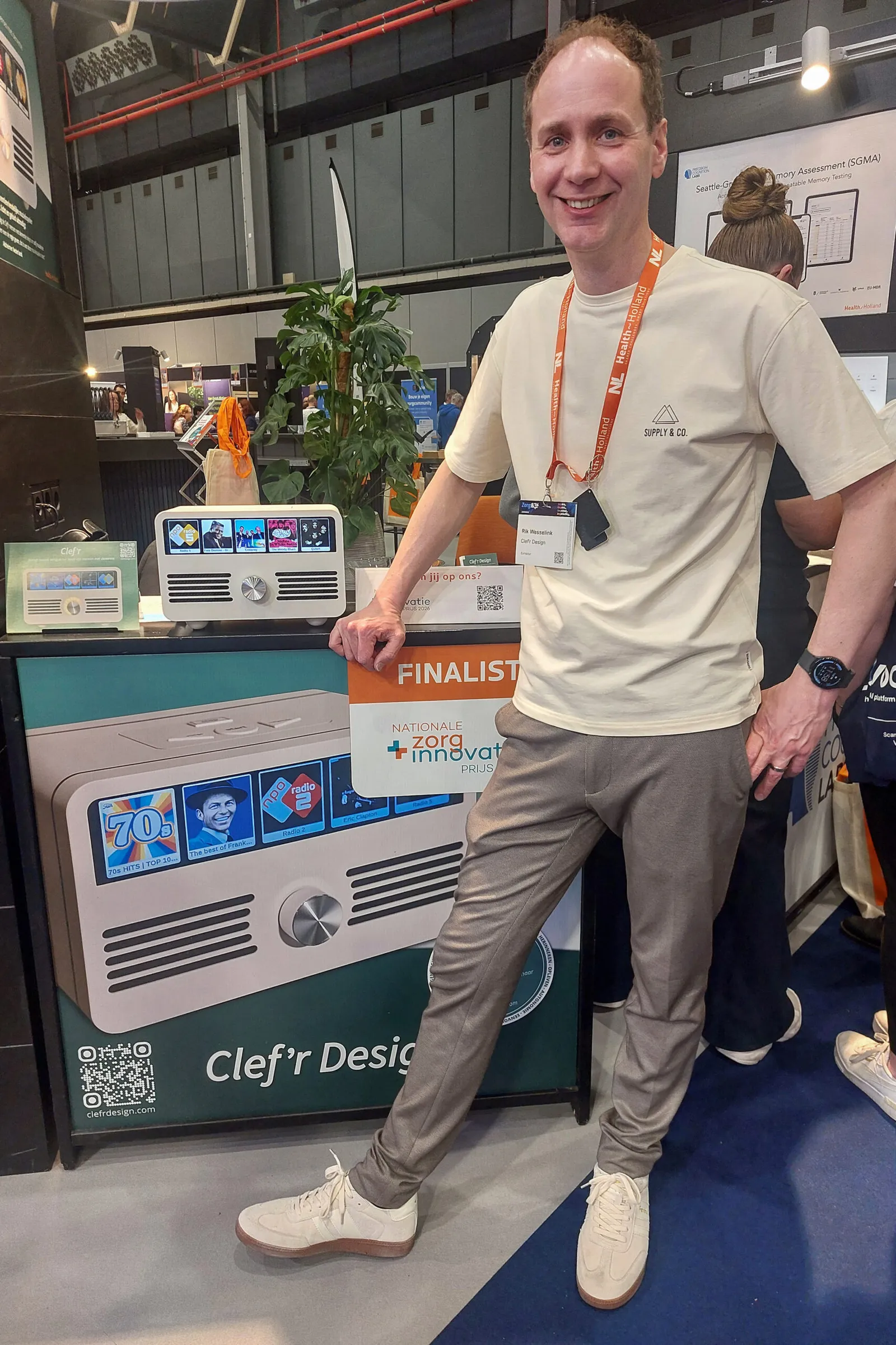
The National Healthcare Innovation Prize was also present at the joint exhibitions. The prize supports healthcare innovations that are ready to be scaled up for wider use in practice. Finalist Clef’r has developed a dementia-friendly music player that gives users direct access to their favourite music and actively encourages them to listen. As the system can be used independently, it reduces reliance on care providers and strengthens users’ autonomy. Founder and developer Rik Wesselink based the concept on his PhD research.
Robots and aids take over tasks
At Zorg & facility, the robots from Fulin robottechnologie caught visitors’ attention. The company imports PUDU robots into the Netherlands. Whereas delivery and serving robots were previously the main applications, the range is expanding to include delivery and cleaning robots. The cleaning robots work almost autonomously: they clean for up to three hours, refill with clean water, recharge and then resume work. Delivery robots are increasingly being used in hospitals. Sint Antonius Ziekenhuis is also testing a robot that follows staff and helps with lifting tasks.
Medifix was working on a new prototype right up to the last minute, before presenting it at the exhibition. The Pharmasafe drawer trolley stands out for its domestic appearance, combined with an integrated RFID system. The trolley is secure and can be configured modularly, for example by assigning compartments to medication.
Een zakelijke vraag aan Avics? Get in touch
Companies in this story

Keep following this
Get an email when a new story is published. No account needed.
- SubjectEvents
- CompanyAvics
- CompanyMedifix