Cindy Van Leemput: ‘Public healthcare buyers encourage free-market competition’
Text Koen MortelmansImage Roan Vermeyen / Zorgbedrijf Antwerpen
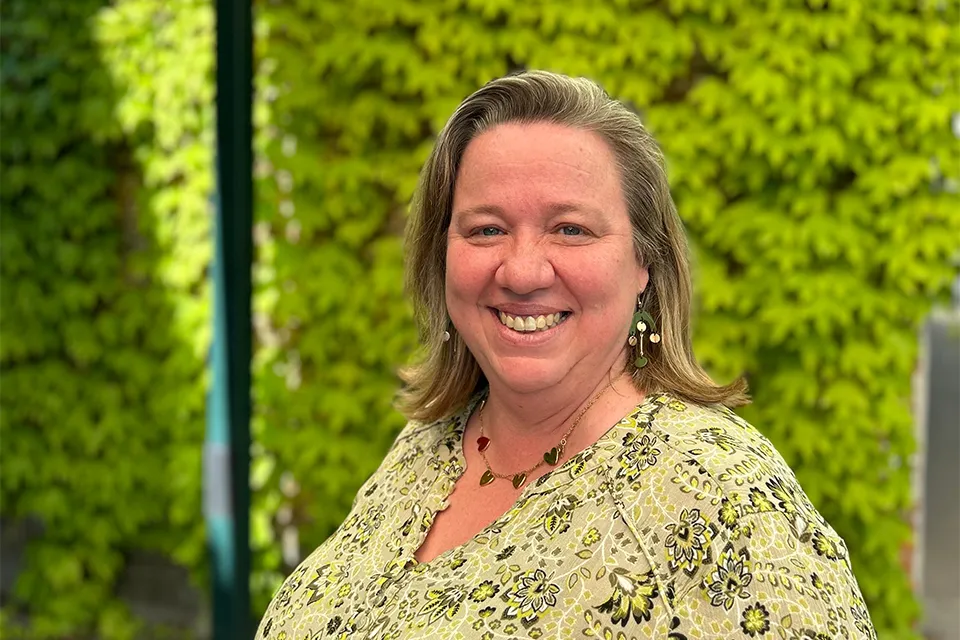
In Europe, buyers at public healthcare organisations must take the many aspects of public procurement legislation into account. At the same time, they seek to build partnerships with their suppliers. Cindy Van Leemput, purchasing manager at Zorgbedrijf Antwerpen, explains.
“Zorgbedrijf Antwerpen comprises 52 service centres, a wide range of home services (cleaning assistance, domestic help, personal alarm systems, …), more than five thousand assisted-living units in Antwerp and Flanders, eighteen residential care centres, a (web)shop selling products for and tested by older people, and fourteen youth care centres. Four thousand motivated employees help twenty thousand clients every day. We also carry out management tasks and act as a purchasing centre for various other public healthcare providers in Flanders.”
Strong position
This scale gives the organisation a stronger position as a buyer in the market. “That’s right. We are bound by the procedures and thresholds set out in legislation. Neither we nor other public authorities can make a purchase at the drop of a hat. We have increased our scale further by acting as a purchasing centre. This also creates opportunities for other public authorities, as they can join our tenders. It works: around forty public-sector organisations currently use our framework agreements through the purchasing centre.”
Public procurement
Does Zorgbedrijf Antwerpen’s size mean its suppliers also need to be large? “Not at all. We are just as keen to work with small and medium-sized businesses. In fact, the government has recently focused strongly on this, as these businesses do not always have the administrative capacity and expertise in-house to comply confidently with all the requirements of public procurement legislation. That is why it is investing in courses for such businesses, together with training providers.”
“When we put a contract out to tender again, we try to inform those who were previously interested. We often do this during our market consultation. We seek partnerships based on collaboration that works both ways. This means communicating openly, so that we can discuss any problems easily and, ideally, avoid them altogether. We always inform bidders when a contract has not been awarded to them. This may be due to legal considerations or price, but it may also be because other bidders proposed a more innovative product, for example. This gives them the opportunity to work on improvements themselves. Our aim is to grow together with our partners.”
Partner relationships
“Of course, price remains very important. But so does the quality of the products and services provided. We also expect our suppliers to think along with us. How can we further improve the customer experience? How is care evolving, and how can we respond to those changes?”
“This kind of customer-client relationship means we expect suppliers to keep us informed about changes in the market or within their own company. We want to keep our finger on the pulse when it comes to new trends and products. We expect them to work with us to find solutions.”
Open to dialogue
“We listen to the problems our suppliers may face because of external circumstances, such as the coronavirus measures in 2020 and 2021 and restrictions on certain vehicles entering central Antwerp. We then discuss possible adjustments to their delivery arrangements. How and to what extent we can address their concerns depends on the specific issue.”
Zorgbedrijf’s buyers attend trade fairs, demonstrations and other events. “We want to know what innovations are coming. Trade fairs are also ideal networking forums. In this context, various other public authorities also schedule meetings where, alongside discussions of legislation, there is scope to talk to one another, in our case with other buyers in Antwerp. Sometimes this leads to genuine collaboration, for example on how best to put a particular contract out to tender. This interaction is very important for everyone.”
Question about this story? Ask your question
Keep following this
Get an email when a new story is published. No account needed.
- ThemeInteriors for housing and care
- SubjectInterviews & columns