Healthcare technology company brings production back from China in ‘reshoring’ move
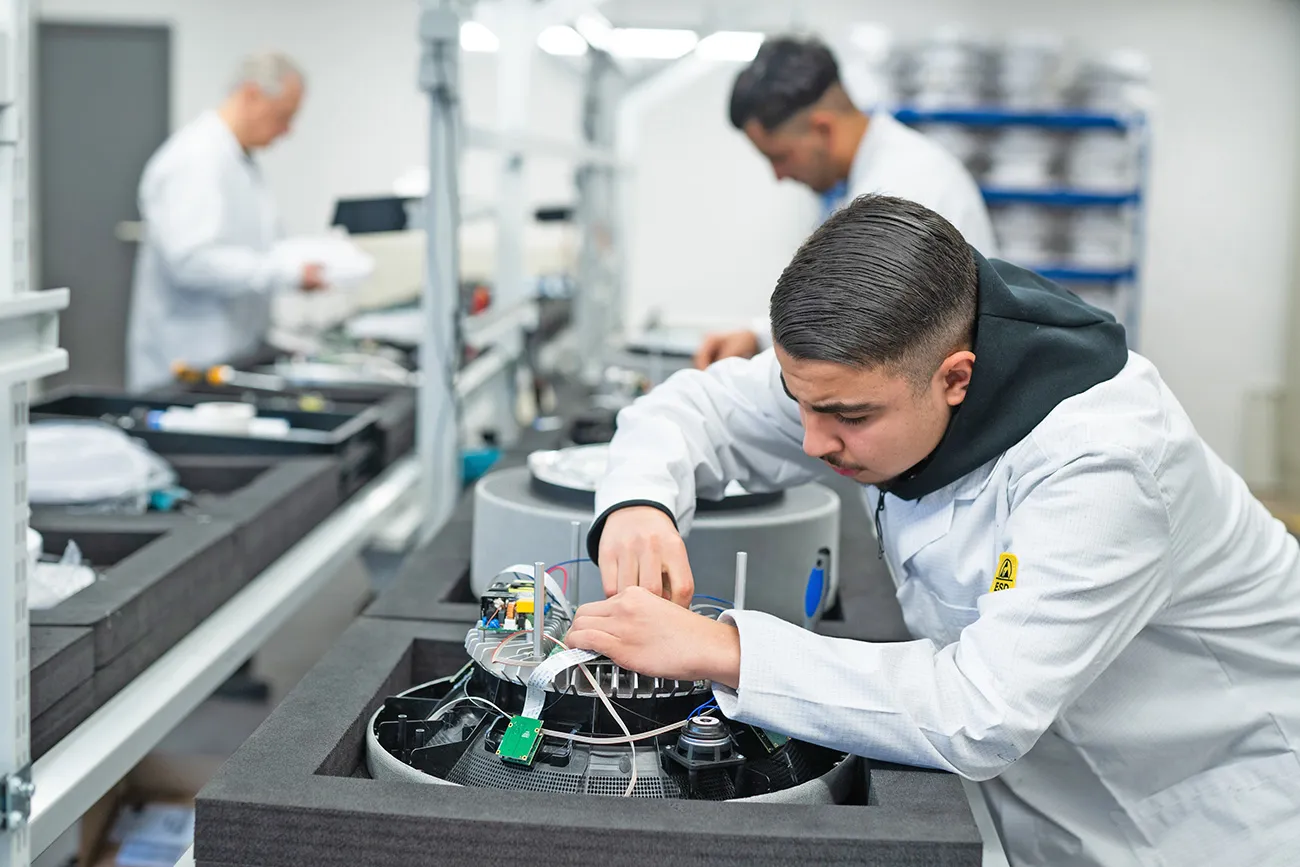
Belgian age-tech company Nobi, which makes smart lamps for the care sector, has halted production in China. It is continuing the broader trend of ‘reshoring’, as companies resolutely opt for a ‘Made in Europe’ label. “Six months after deciding to resume local production, we put our production site in Aartselaar into operation,” says Roeland Pelgrims, CEO of Nobi.

His company makes smart lamps that use artificial intelligence to help keep older people safe. Their core functions are fall detection, fall prevention and fall prediction, complemented by monitoring vital signs such as breathing and coughing. Nobi’s smart lamps support older people at home, and also assist care staff in residential care centres and assisted living facilities. They help make care for older people more targeted and relieve busy care workers of repetitive tasks. This frees up their scarce time for the tasks that really make a difference to older people’s lives and happiness.
For an increasing number of companies, the cost of shipping components from China to Belgium offsets the high cost of local labour. Geopolitical considerations also play a part in the decision to bring production back. “We are effectively bringing the makers back together with the developers,” says Pelgrims. This decision is also reflected in a sustainable and inclusive HR policy. By the end of this year, Nobi will employ 20 people at its production facility. Nobi also offers broad opportunities when building its team, including to people who find it difficult to enter the mainstream labour market. These include people with disabilities, refugees from countries such as Afghanistan and Ukraine, and people with a migration background. Professor Rudy Aernoudt of UGent points to the enormous impact of both the coronavirus pandemic and the war in Ukraine. “Those factors accelerated the ‘reshoring’ trend. We really need to bring our industry back,” he says. “We can also speed this up by developing a policy tailored to individual needs. Subsidies are not necessarily needed. We need to listen to what companies practically need in order to return.”
Question about this story? Ask your question
Keep following this
Get an email when a new story is published. No account needed.
- ThemeDigital technology in healthcare
- SubjectHealthcare technology