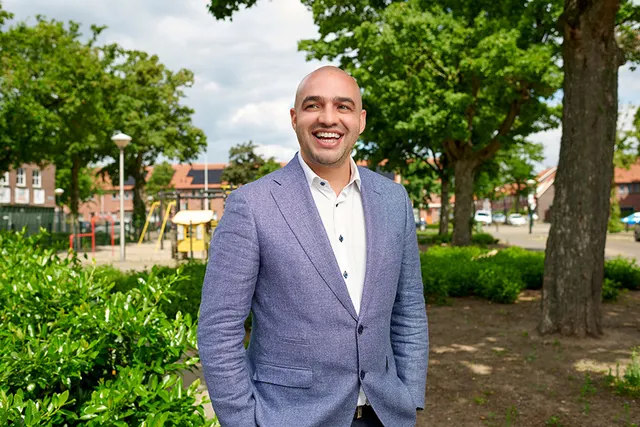
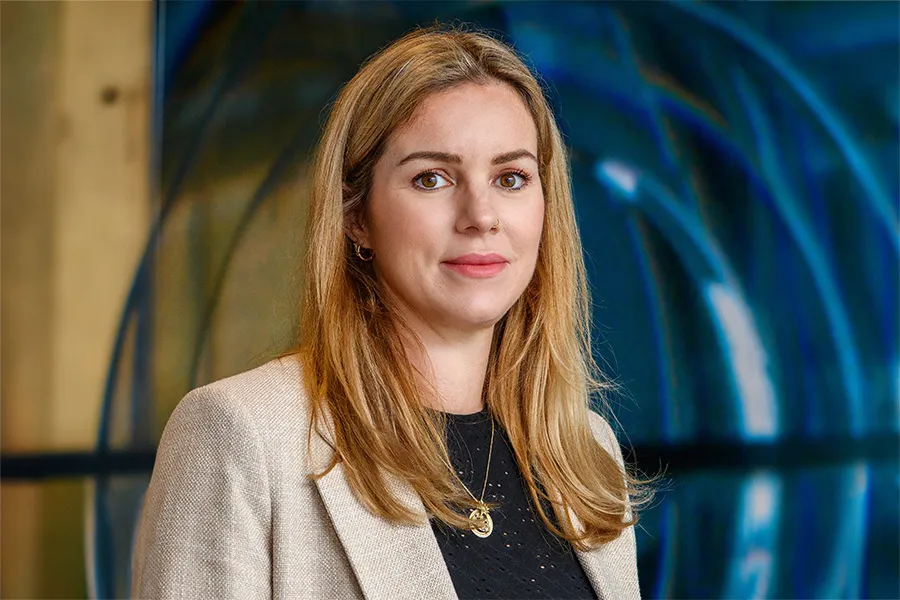
Hilde de Wit van der Zanden: From vision to connection
How Oss is making care future-proof
Society is changing rapidly. The population is ageing, financial resources are becoming scarcer and more and more people are having to rely on themselves. At the same time, there is growing recognition that care is about more than professional support alone. According to Hilde de Wit van der Zanden, alderman for care in Oss, a strong social foundation is therefore needed, based on the principle that everyone should be able to participate, young and old, in towns and villages alike.
The municipality of Oss is strengthening the future of care through its Social Foundation vision. This vision focuses on normalisation, prevention and substitution: how can we identify problems earlier, organise care more efficiently and support one another better? De Wit van der Zanden says: “To make demand for care future-proof in the broadest sense, the municipality has several responsibilities. If we keep thinking in terms of professional care, we will be in for a shock; there simply aren’t enough people working in care. It is also important that people who need care retain a sense of purpose and their self-esteem. We can achieve this by focusing on self-reliance and mutual support. Rather than eliminating every risk in advance, we need to work together to consider what is needed for a good life.”
Building to meet needs
Meeting growing demand for care will require building to meet needs. “But before we do that, we will sit down with different groups. What do they really need, and how can we design the environment to respond to those needs as effectively as possible? Alongside its Social Foundation vision, Oss also considers its Environmental Vision equally important. Oss aims to make new neighbourhoods diverse and complete, with homes for different groups, a supermarket, a health centre and schools. By carefully considering where such facilities are located, they can also serve as places for social interaction. Thinking about the location of various facilities can help them function as social meeting places.”
Creative solutions amid the housing shortage
The housing shortage is severe and planning procedures take time. In the meantime, Oss is pursuing creative ways to tackle the various challenges, including making it the norm to look out for one another. A good example is the recently opened Zorgbuurthuis. The conversion of an old school building has created an innovative form of housing for older people, centred on independence and a sense of community. Thanks to a citizens’ initiative and collaboration between the municipality of Oss, property company Patrimonium, home care provider Interzorg and the local community, an environment has been created where older people can live independently while still receiving the care and social interaction they need. “A wonderful project, driven by goodwill. Local residents in particular have played an important role. After all, informal care will play a much greater part in the future.”
Care through connection and technology
Specialist care will of course continue to be needed, and it must be available. Yet a strong social foundation can meet people’s basic care needs. “Everyone needs contact and social interaction. By meeting and getting to know one another, we can better understand each other’s care needs and help one another.” De Wit van der Zanden says technological innovations will also help simplify care. “Smart sensors, for example, can make it easier to monitor people. E-health also offers opportunities, such as digital appointments and apps for fall prevention. At the same time, human attention remains crucial: technology should support, not replace.”
De Wit van der Zanden refers to nurse and care innovator Teun Toebes: “We don’t need to regulate everything away; we need to help one another be human. By normalising care and humanity, we are truly building a future-proof society.”
Question about this story? Ask your question
Keep following this
Get an email when a new story is published. No account needed.
- SubjectInterviews & columns