Healthcare kitchens need more than cooking technology
Text Kris Vandekerckhove Image DELABIE
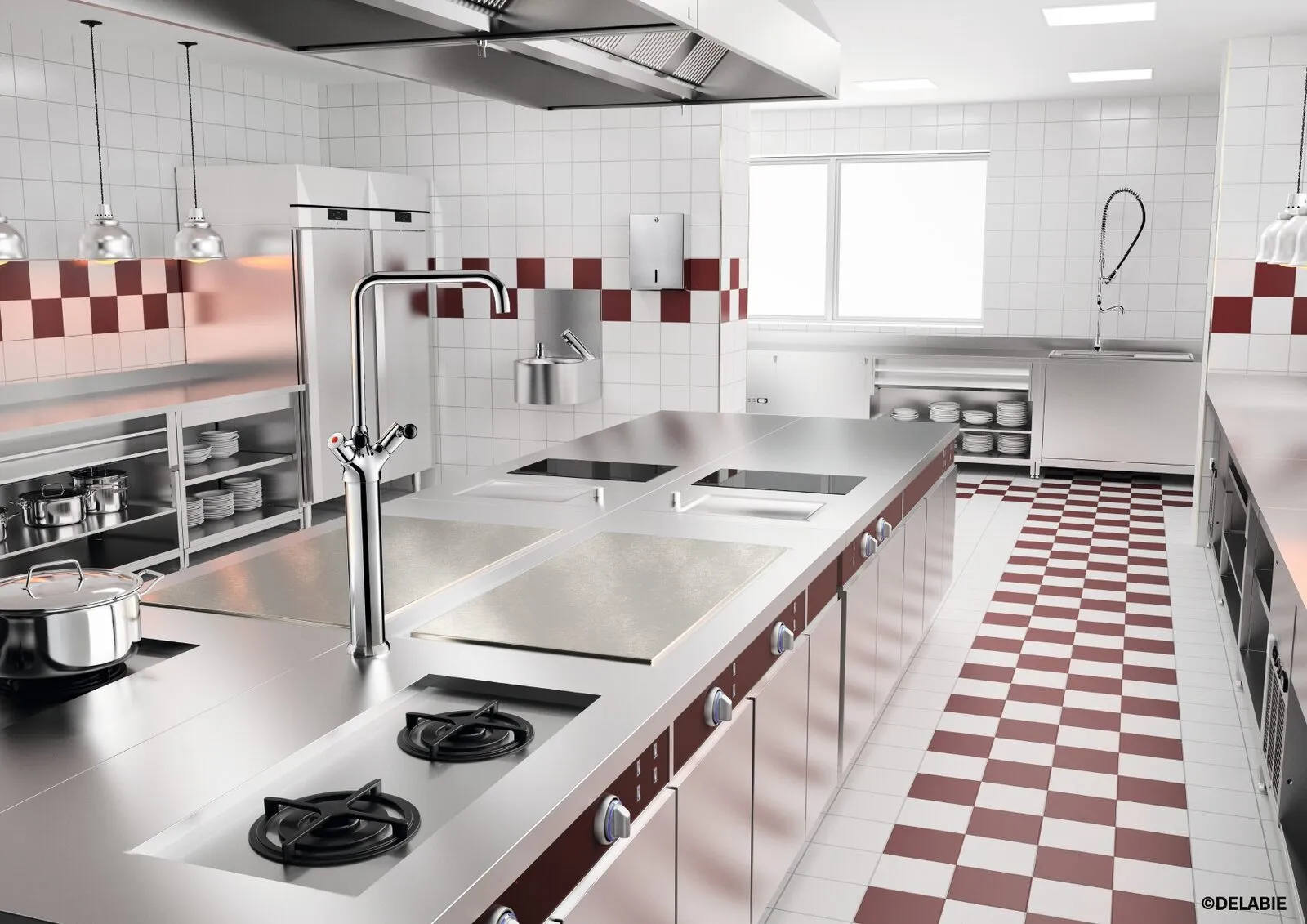
In hospitals and residential care centres, the professional kitchen is an important part of day-to-day operations. Meals must be prepared and distributed efficiently and under controlled conditions. Alongside cooking and refrigeration equipment, sanitary fittings also play an essential role. The right taps, handwashing facilities and washing-up solutions support hygiene, make work easier and must withstand intensive use.
Sanitary choices therefore cannot be considered separately from the kitchen’s layout and operation. DELABIE develops taps and sanitary solutions specifically designed for professional kitchens and intensive use.
Every work zone needs its own solution
A commercial kitchen consists of different work zones. Preparation areas, washing-up areas, handwashing stations and other workspaces each have their own function. The tap that is right for filling a large cooking pot is not necessarily the best choice for a smaller washing-up or preparation task.
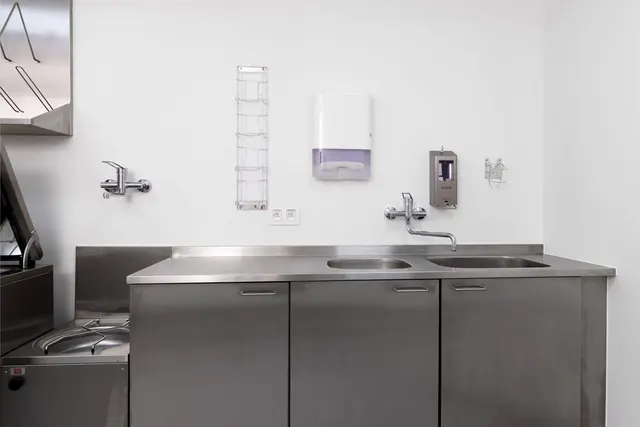
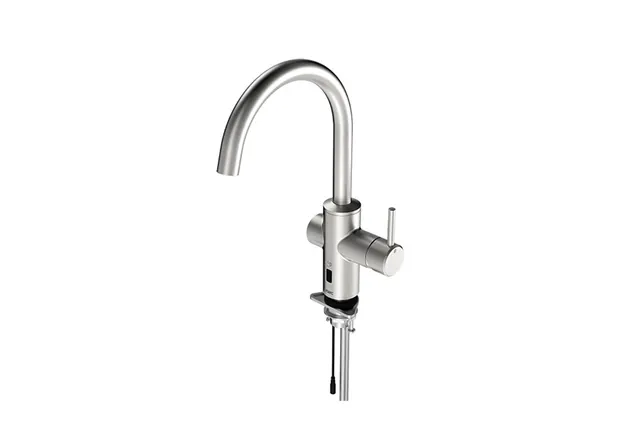
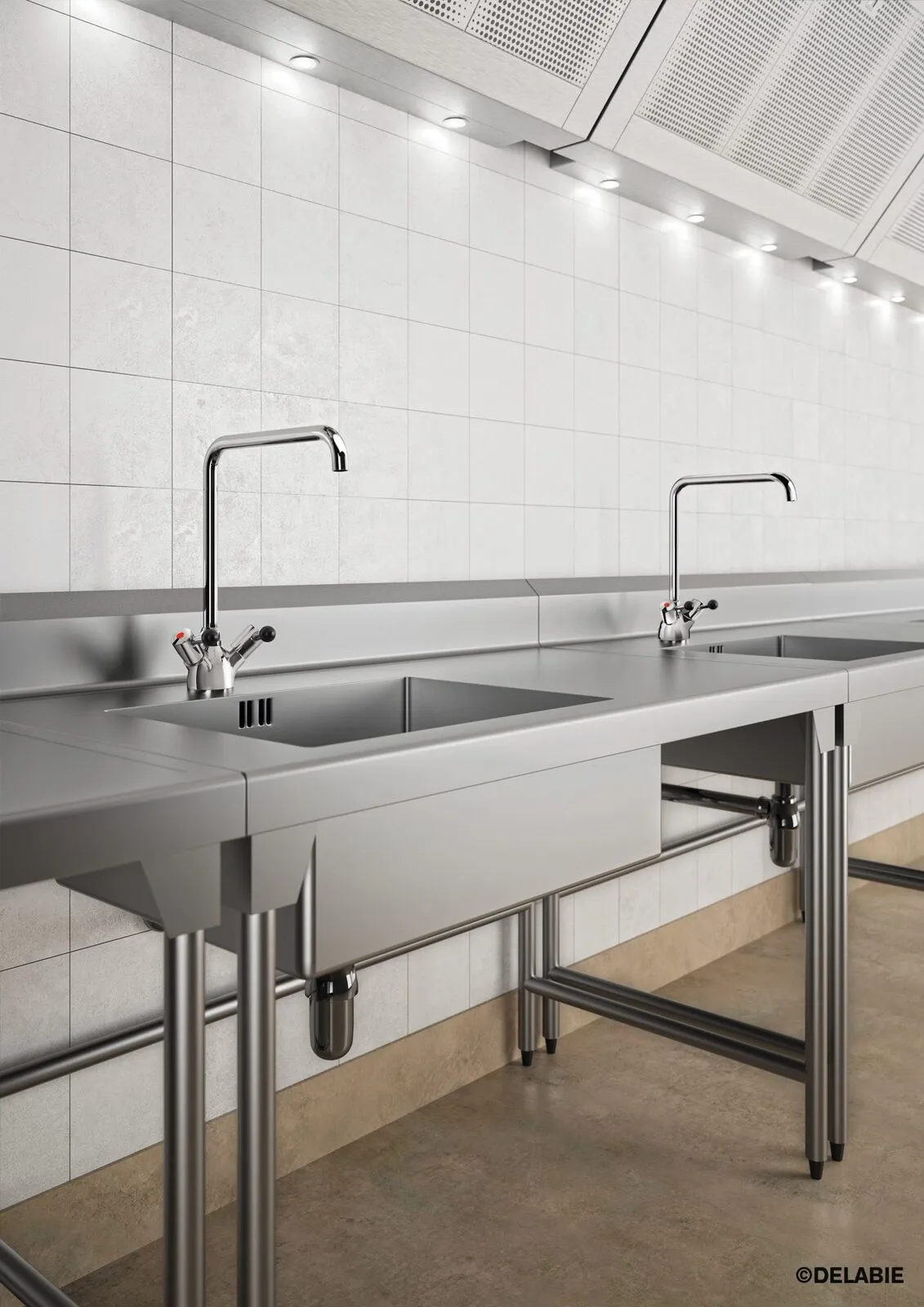
A high flow rate can be important for quickly filling large pots. DELABIE’s 5650T2 single-hole mixer tap delivers 60 litres per minute at a pressure of 3 bar. The tap has a swivel spout with a smooth interior, a hygienic flow straightener and reinforced mounting. Its high flow rate reduces the time needed to fill pots and sinks, helping to support workflow.
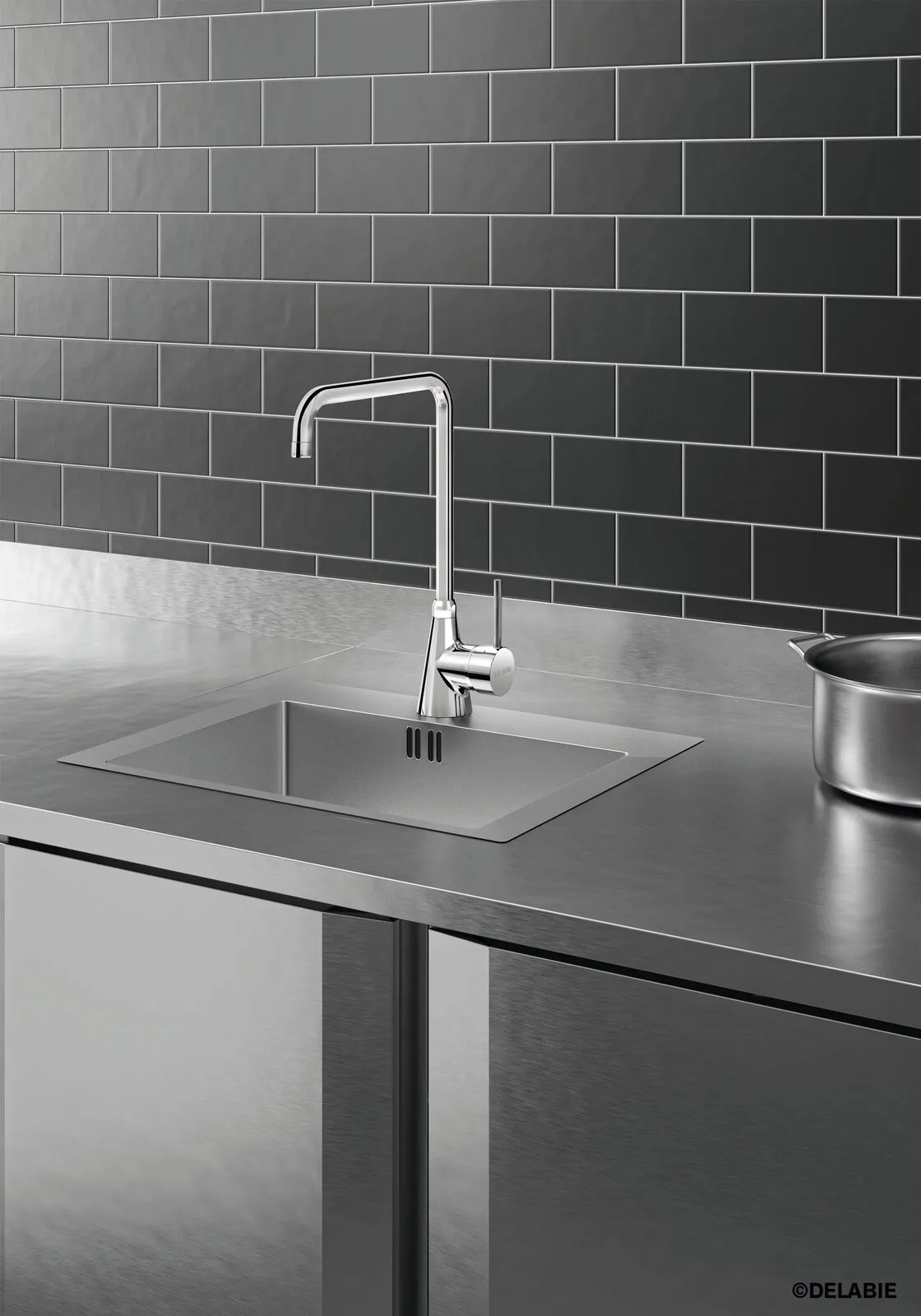
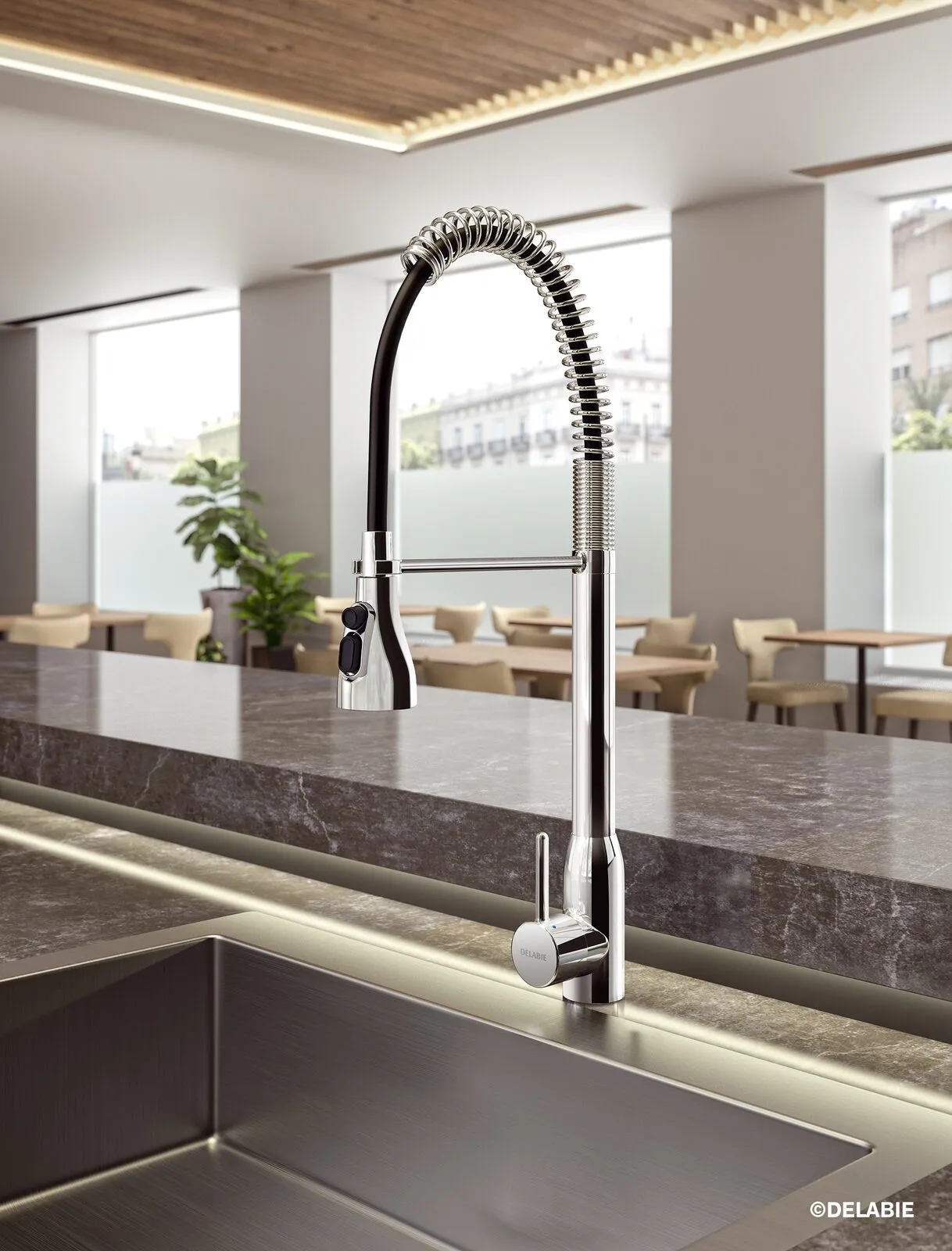
For workspaces that require flexibility and greater reach, DELABIE offers the 2526T2, among other products. This mechanical mixer tap has a swivel, self-supporting hose with a maximum length of 535 millimetres. Its flow rate is 9 litres per minute at 3 bar. The lever handle and flexible spout are designed for ease of use and good access to the work area.
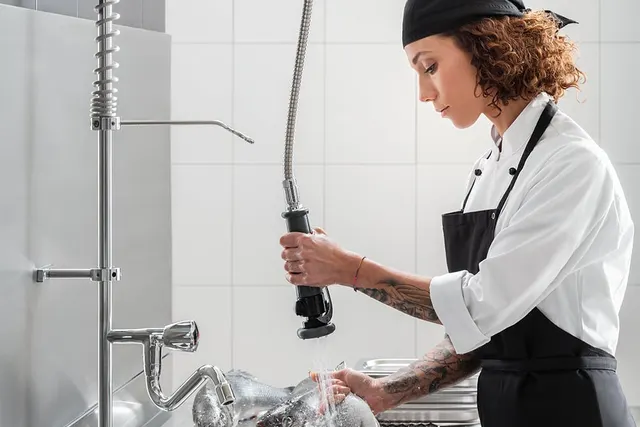
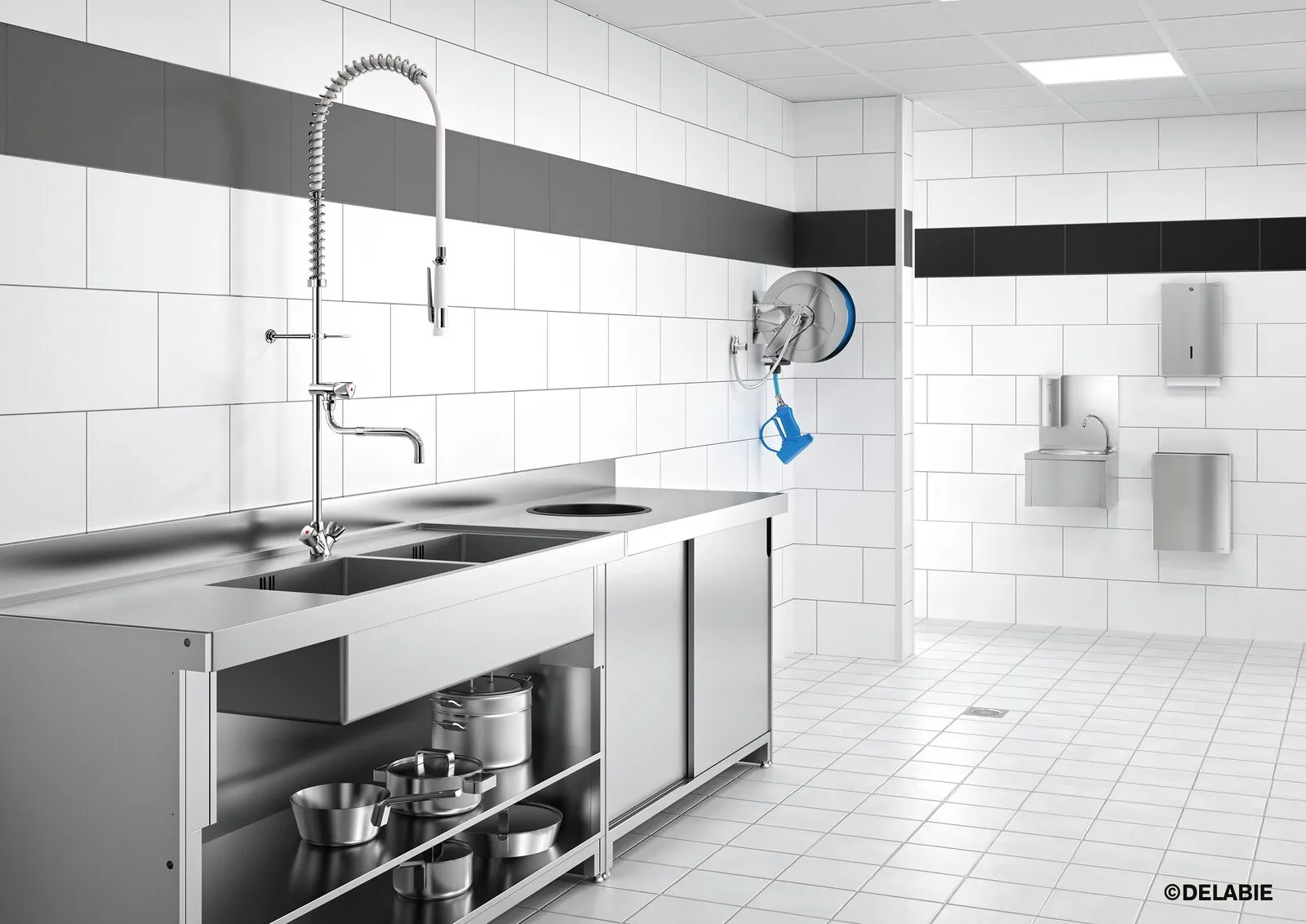
A pre-rinse unit can be a practical solution in a heavily used washing-up area. The G6632 combines a tap with a swivel telescopic spout and a spray head with adjustable spray. The tap delivers 20 litres per minute and the spray head 9 litres. The set is fitted with a reinforced flexible hose suitable for the food industry.
Match the flow rate to the task
Water management in a professional kitchen does not automatically mean aiming for the lowest possible flow rate. A tap should first and foremost be suited to the task for which it is used. A flow rate of 60 litres per minute makes it possible to fill a large pot quickly. A lower flow rate may be sufficient for a smaller workspace. A high flow rate does not in itself save water, but it can significantly speed up a task. Choosing the right solution for each zone results in an installation that is better suited to the kitchen’s daily operation.
This decision should be made during the design phase. Flow rate and dimensions are not the only factors to consider: positioning, spout reach and the space required for movement are also important.
Hygiene starts with the layout
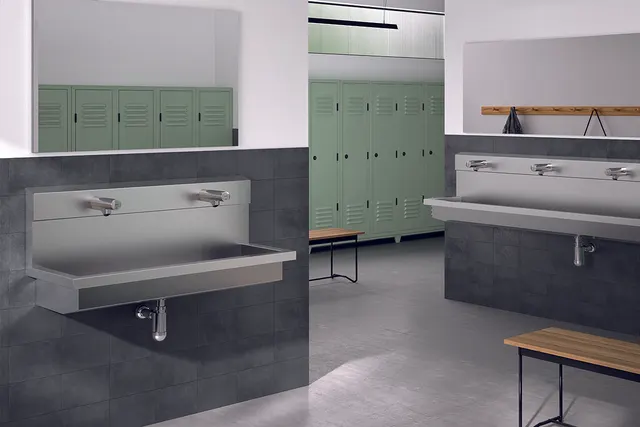
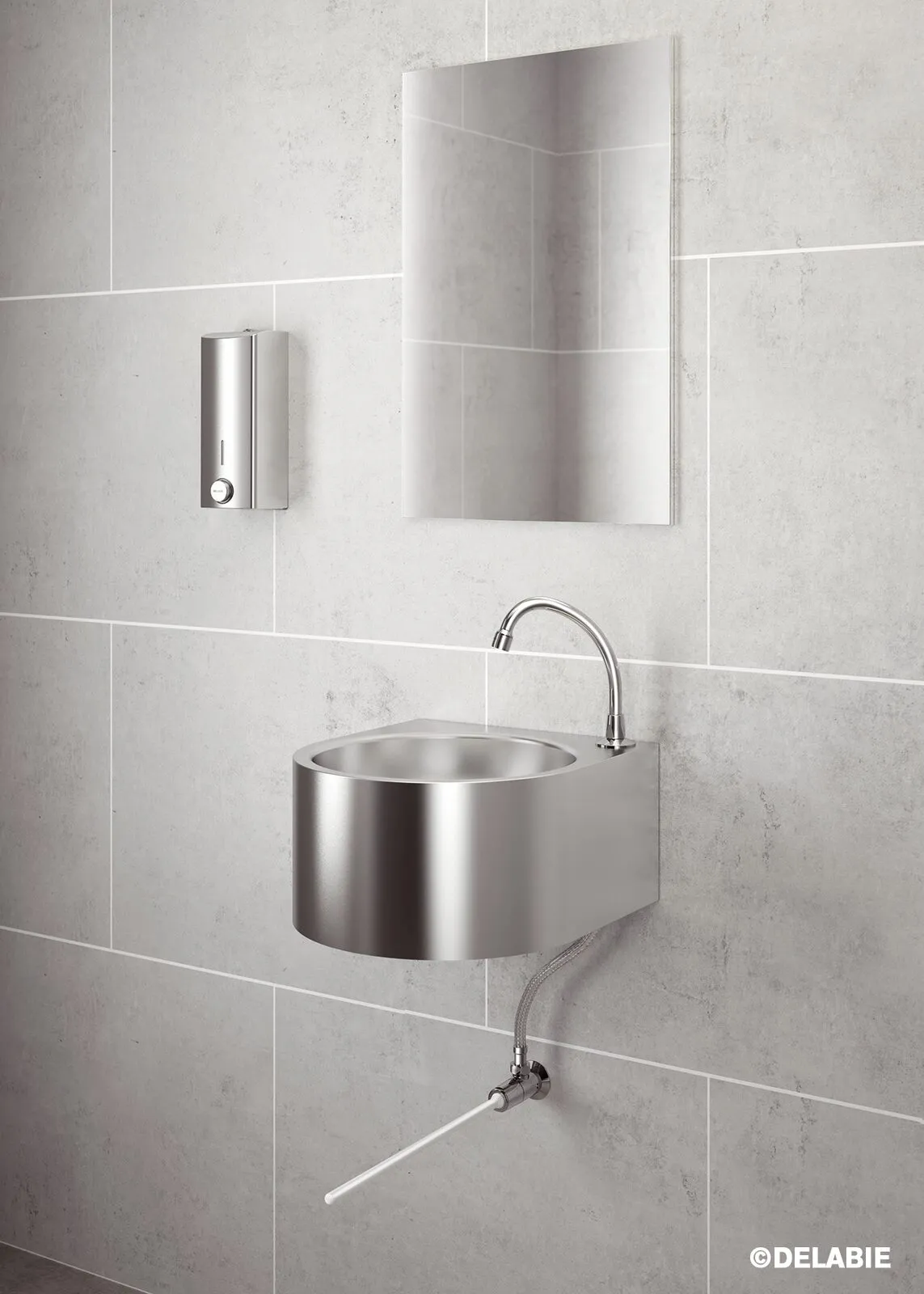
Handwashing facilities, taps and accessories should be chosen and positioned to support correct working practices and help limit the risk of cross-contamination. Well-designed handwashing stations help staff wash and dry their hands hygienically and correctly. The tap’s construction also matters. Spouts with a smooth interior limit areas where dirt can accumulate. Surfaces and controls should also be easy to reach for cleaning. Soap and paper towel dispensers, handwash basins and other stainless steel sanitary fittings are therefore part of the overall layout. They should be positioned logically within the workflow so that staff can easily follow the hygiene procedures in place.
Built for daily use
In a healthcare kitchen, equipment is used intensively every day. Reinforced mountings, robust materials and replaceable parts help ensure operational reliability. The DELABIE kitchen taps mentioned above are designed for professional use and come with a thirty-year guarantee.
Ergonomics also deserve attention. Swivel spouts, flexible hoses and easily accessible handles can make repetitive tasks easier. The right solution depends on the task, the space available and how staff use the workspace. Sanitary fittings are therefore much more than a technical addition to kitchen equipment. By carefully matching taps, washing-up solutions and handwashing facilities to the different work zones, healthcare kitchens can bring hygiene, efficiency and day-to-day use together.
A business enquiry for Delabie? Get in touch
Companies in this story

Keep following this
Get an email when a new story is published. No account needed.
- ThemeInteriors for housing and care
- SubjectProduct information
- CompanyDelabie