Why a play area makes a big difference in healthcare
Text Tamara Brouwers Beeld International Kids Concepts
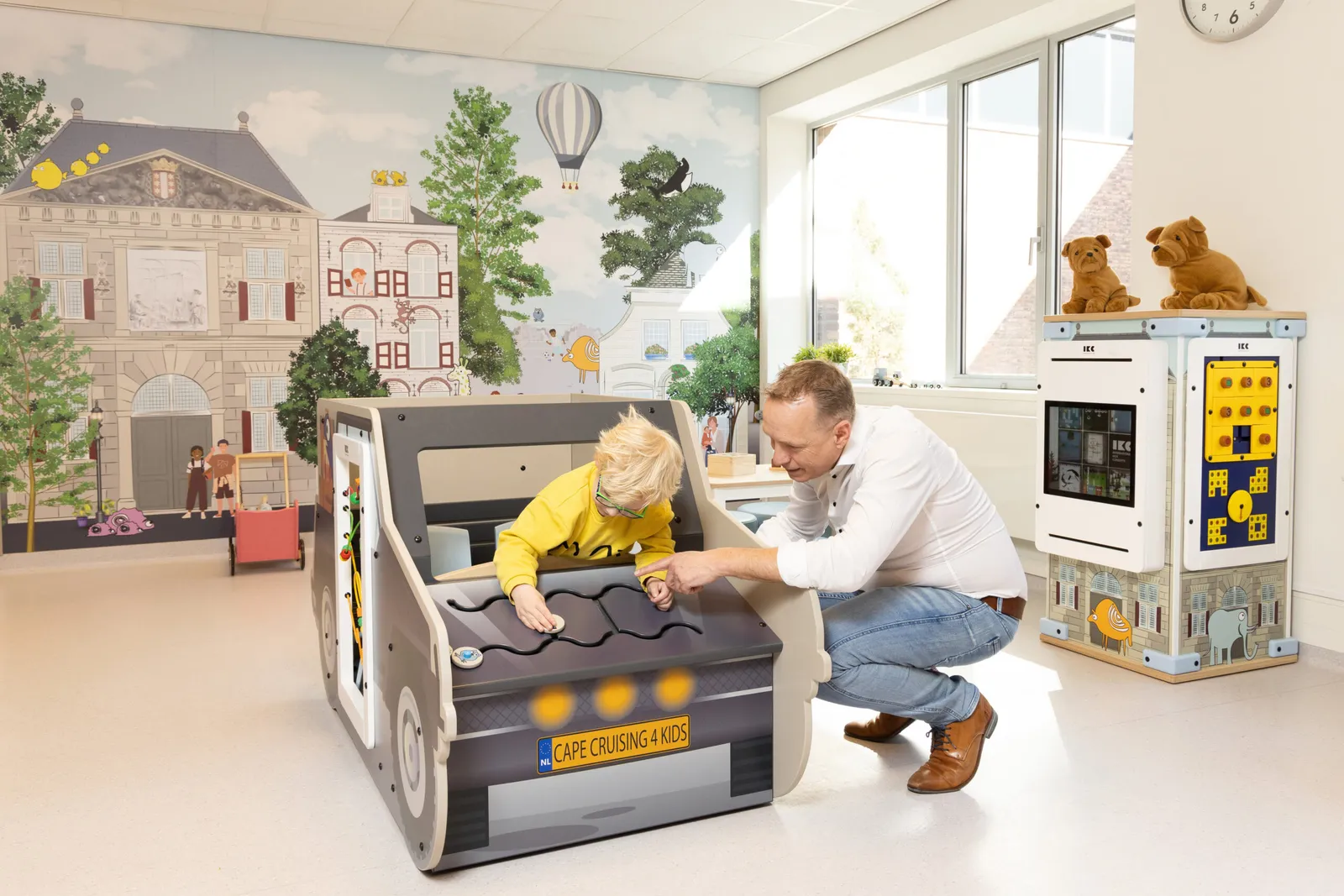
The same question can be heard in many waiting rooms: “Mum, how much longer?” It shows that children can become tense or bored more quickly in a healthcare setting. That tension affects parents and influences the atmosphere in a room. Yet in healthcare environments, where care and trust are central, helping people feel relaxed is particularly important. A welcoming play area can help in a natural way.
According to Marco Lankman, CEO of IKC Global, relaxation plays a bigger part in the healthcare experience than is often realised. “A play area is not a decorative feature, but a functional part of the environment. When children feel at ease, you see parents and healthcare professionals relax too. This makes conversations more effective and can even shorten appointments.”
The effect goes beyond the moment itself. “Positive experiences at a young age lower the barrier to future healthcare visits,” says Lankman. “A child who feels safe builds trust. This helps create a lasting relationship with their healthcare provider. In practice, a play area simply makes things more pleasant for everyone who comes in, from children to healthcare professionals.”
International Kids Concepts (IKC) has been developing safe, sustainable and imaginative play solutions around the world for more than twenty years. “We want to show that play is possible anywhere, including in a healthcare environment.”
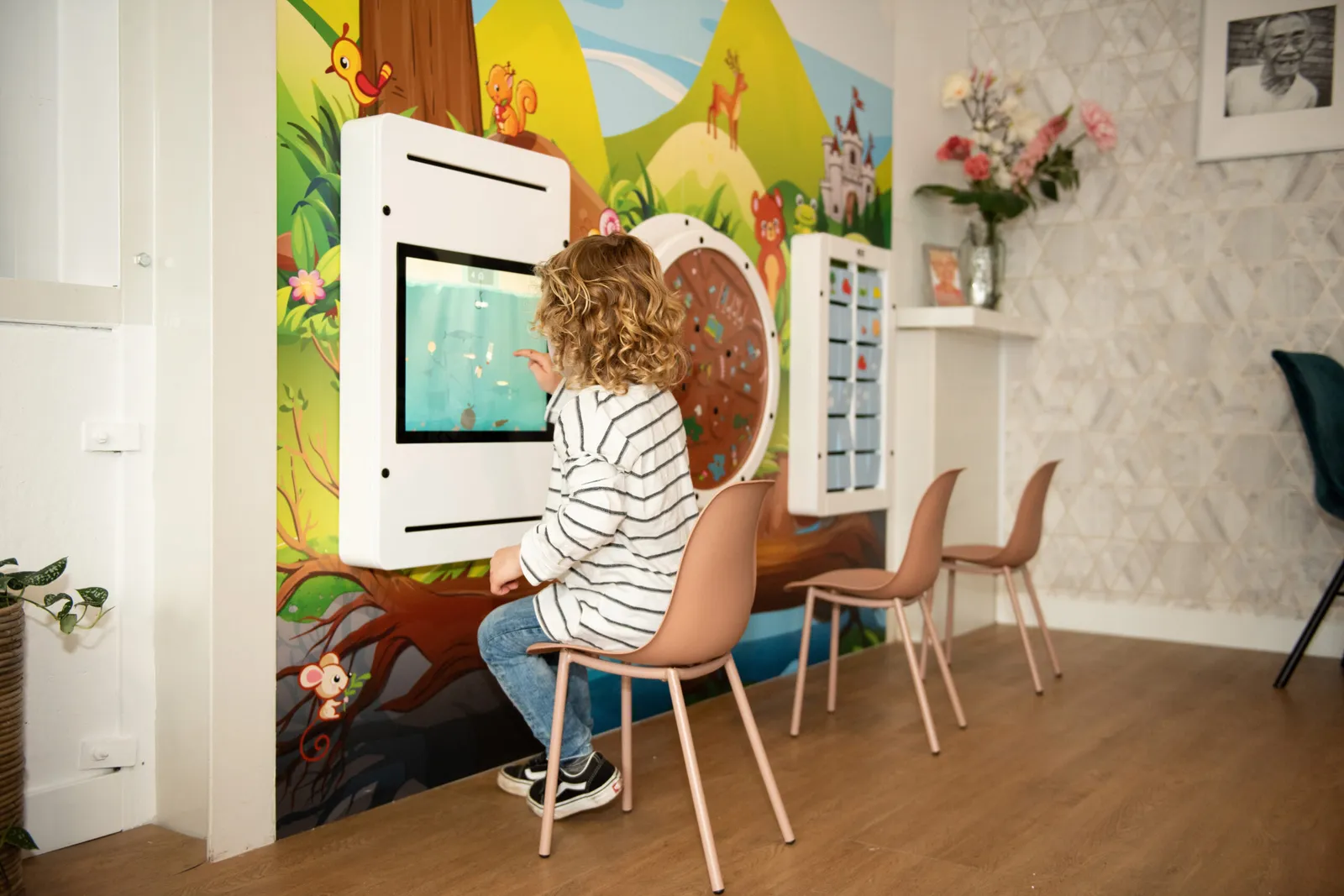
An integrated approach as a major advantage
Creating a play area may seem straightforward, but Lankman says it requires careful planning. “Our integrated approach sets us apart. From the initial design to the final screw, our clients have one dedicated partner who works with them, designs the solution and delivers it.” IKC’s designers and play specialists create play solutions that fit seamlessly into healthcare environments. Hygiene, safety and maintenance are key considerations in the design. “Materials must be easy to clean and the construction must withstand intensive use,” Lankman explains. “Loose parts or small play elements that could break off are not suitable in a healthcare setting. This calls for specialist designs.”
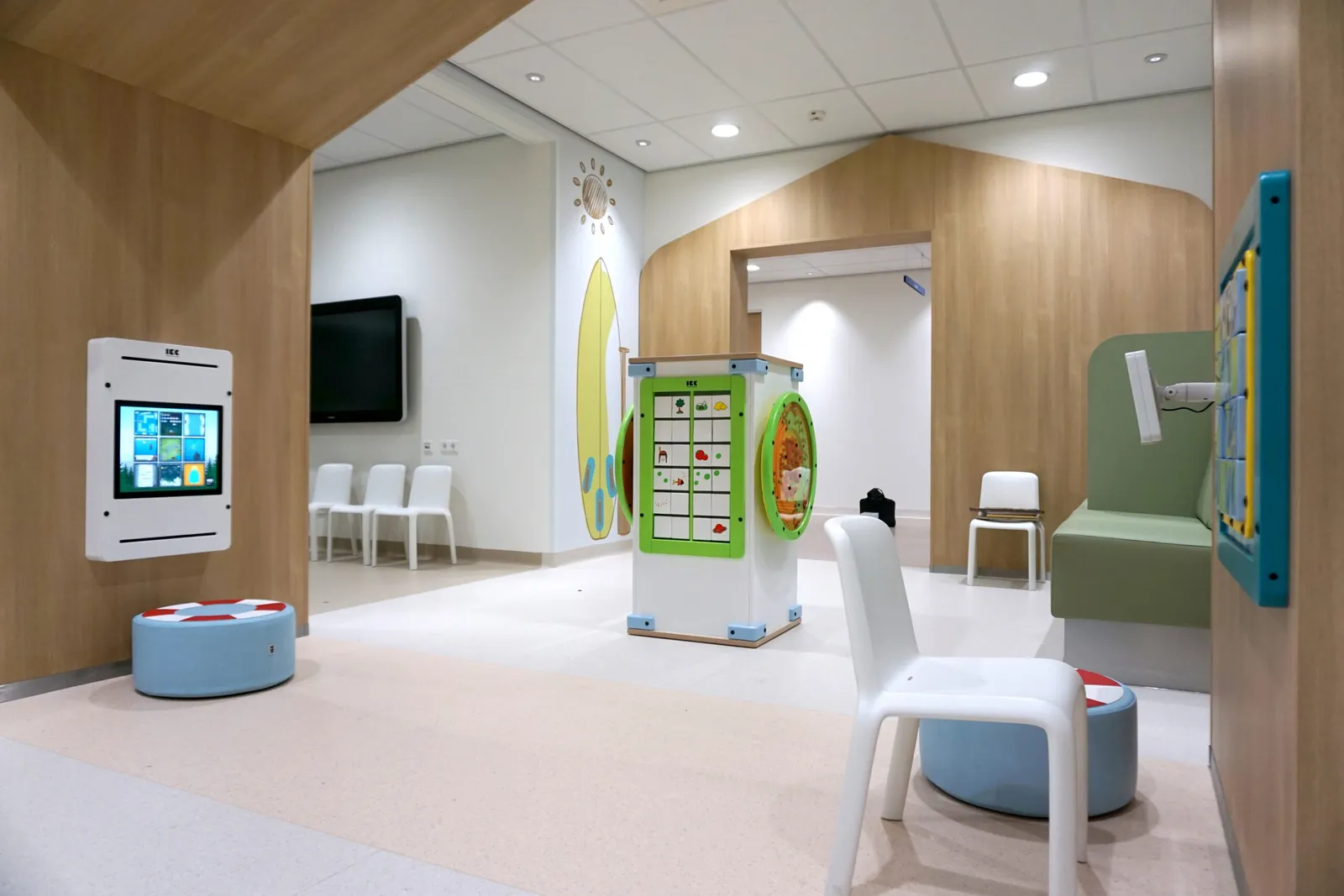
Approach and scalability
Depending on the space available, a play area can range from one square metre to a complete 500 m² play zone. Some institutions opt for a compact solution to make a waiting room calmer, while others incorporate play facilities into the circulation route or as part of a treatment room. By handling design, production and installation as a single process, a suitable solution can be developed for any space. This avoids ambiguity and takes account of regulations, maintenance and circulation within the room. Both standard solutions and bespoke concepts are available. The choice depends on the layout, the floor area available and the intended use.
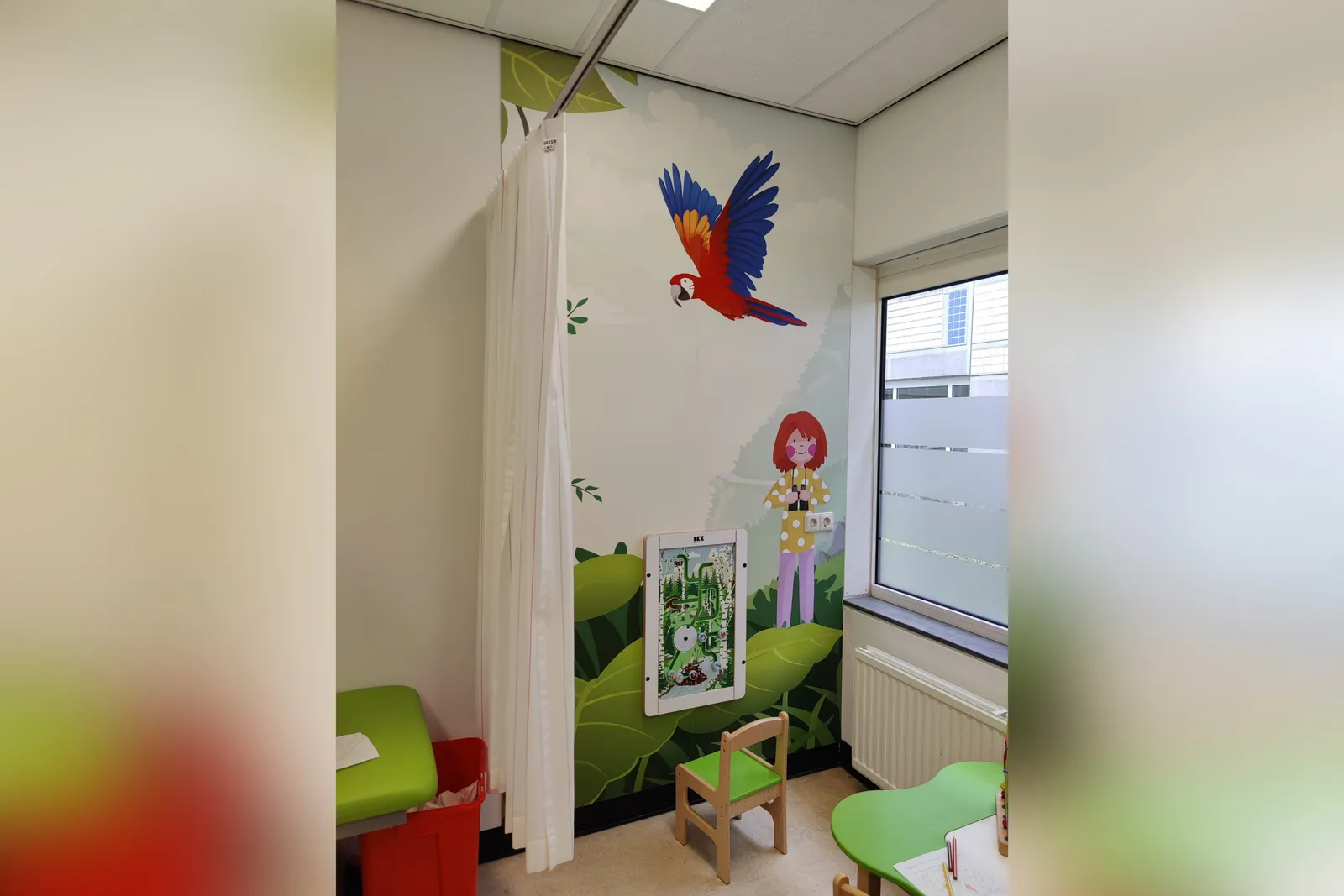
Sustainability and safety
Safety remains a basic requirement. Play solutions in healthcare settings must comply with the European toy safety standard EN-71. Sustainability is also playing an increasingly important role. FSC-certified wood, hard-wearing materials and long-lasting construction are important, according to Lankman, for reducing environmental impact and maintenance needs. “Consistent quality and durability are essential for healthcare institutions. You want a play area that will last for years without intensive maintenance.”
A play area may seem like a small feature in a room, but it has a major influence on visitors’ behaviour and how they feel. “When children feel comfortable, it has a positive effect on everyone present and on the care being provided. Play makes a significant contribution to that.”
Een zakelijke vraag aan International Kids Concept? Get in touch
Companies in this story

Keep following this
Get an email when a new story is published. No account needed.
- ThemeHealing environments
- SubjectInteriors
- CompanyInternational Kids Concept