Maastricht | Maastricht UMC+ Emergency Department
Maastricht UMC+ opens refurbished emergency department, AOA and HAP
“Renovating through the patient’s eyes”
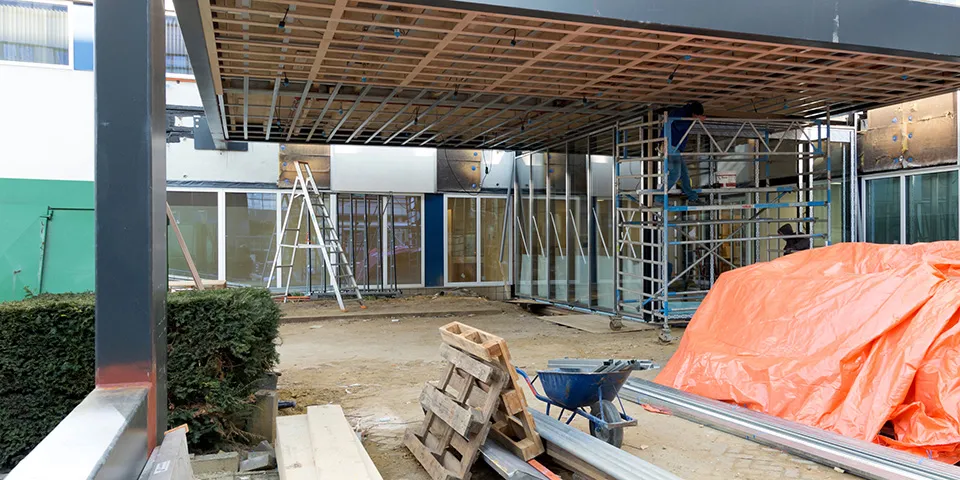
At the end of January, Maastricht UMC+ officially opened its acute care cluster, comprising the GP out-of-hours service (HAP), Emergency Department (SEH) and Acute Admissions Unit (AOA). This marked the end of an almost two-year refurbishment, during which all three departments remained operational. “Thanks to exceptionally meticulous preparation and an intensive communications programme,” says Ed Slangen, head of the Emergency Department.
The acute care cluster as it stood in 2016, just before the major refurbishment, was outdated, explains Ed Slangen. “It dates from 1991 and, despite a number of previous refurbishments, no longer met the requirements of a modern academic hospital. We decided on a radical overhaul, using Lean thinking as our starting point, a method for optimising processes. The patient was at the heart of it. In a sense, we renovated through the patient’s eyes. At first, this took some getting used to for the builders, but they soon got the hang of it.”
Located together
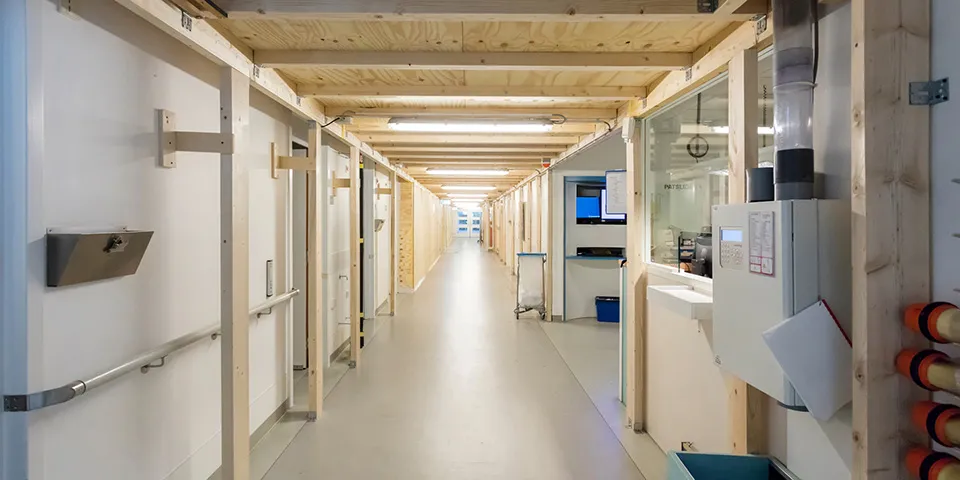
Where the Emergency Department and HAP each had their own reception desk in the old layout, and the AOA was elsewhere in the building, the three departments were to be brought together in the new layout. There would also be just one reception desk, from which patients could be directed efficiently to the care they needed. Since all three departments remained open, the refurbishment was divided into several phases, Slangen explains. “During the first phase, for example, a significant amount of the pipework was installed. To minimise disruption to day-to-day operations, a tunnel was built. We were able to continue working underneath it, while the pipes were installed from above. Dust screens were also put up during the construction work. Hygiene was, of course, a daily priority. We repeatedly checked that we were still meeting the requirements and took measures where necessary.”
Challenges
During the second phase, the Emergency Department was relocated and temporarily split in two. “The construction work had less of an impact then, but we did have to work with two teams for a while,” says Slangen. “That meant we needed more staff.” Another challenge, he says, was levelling the ambulance entrance corridor. “While that work was being carried out, we could not use the corridor. We had decided to do it at night. But an ambulance can arrive at any time of day or night, so an alternative route was available while the flooring work was under way. Patient safety always came first.” There were many issues to think through, Slangen says. “It is obviously an unusual situation: providing care in the acute care cluster while major refurbishment work is taking place. It required meticulous planning and a great deal of consultation.
All the parties involved met once every two weeks, the steering group held monthly meetings, and each morning before work began, there was a discussion about what would happen that day and whether any additional measures were needed.”
Fit for today
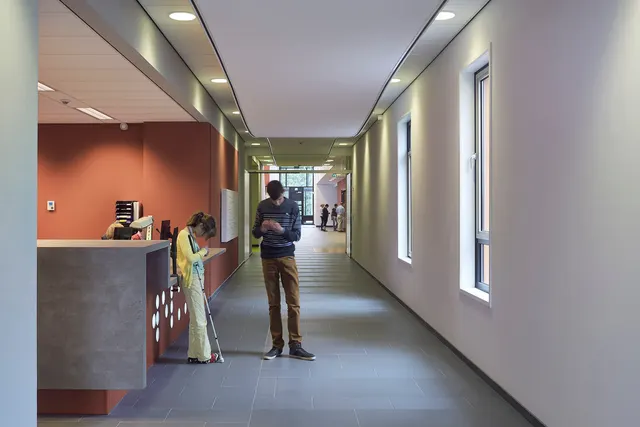
But the result speaks for itself, Slangen notes. The Emergency Department, AOA and HAP are fully up to date, with the latest equipment, more spacious rooms, “while using the same total floor area as before”, and an efficient layout. The refurbished HAP opened in the middle of last year, the refurbished Emergency Department in November 2018, and the new AOA was completed in January this year, after which the official opening took place. Slangen looks back on an exceptional project with a result that meets all expectations. “We hear that from people too. No one wants to come here, but if you do have to, it is better to be in a welcoming, clear environment with the latest equipment, so that the best possible care can be provided.”
Preventing damage in emergency situations
How can patients be helped as effectively as possible? That is the central question in Maastricht UMC+’s acute care cluster, comprising the refurbished GP out-of-hours service (HAP), Emergency Department (SEH) and Acute Admissions Unit (AOA). M-Wall contributes with practical solutions. The walls in the acute care cluster take a lot of wear and tear because healthcare professionals have to act quickly. Project leader Dirk-Jan Verberne: “In Maastricht, we therefore supplied and installed several types of wall protection: corner guards, impact protection and protective panelling, and full-height wall protection for the trauma rooms. M-Wall Hygienic was used throughout, a product designed for clinical environments of this kind. Functionality comes first: it prevents damage and is easy to clean. The product is 2 millimetres thick as standard, and the colour was chosen in consultation with the architect.”
M-Wall installed the wall protection in the departments itself. In the trauma rooms, it was decided, once again for functional reasons, to heat-weld the joins between panels to create a seamless finish. Was it difficult that the departments remained in use during the work? “No, that is something we deal with regularly,” says Verberne. “We often work in healthcare settings and have the knowledge and experience to respond effectively.”
A business enquiry for M-Wall? Get in touch
Companies in this story

Keep following this
Get an email when a new story is published. No account needed.
- SubjectHospitals
- CompanyM-Wall