Rijnstate Elst boldly builds a low-carbon hospital
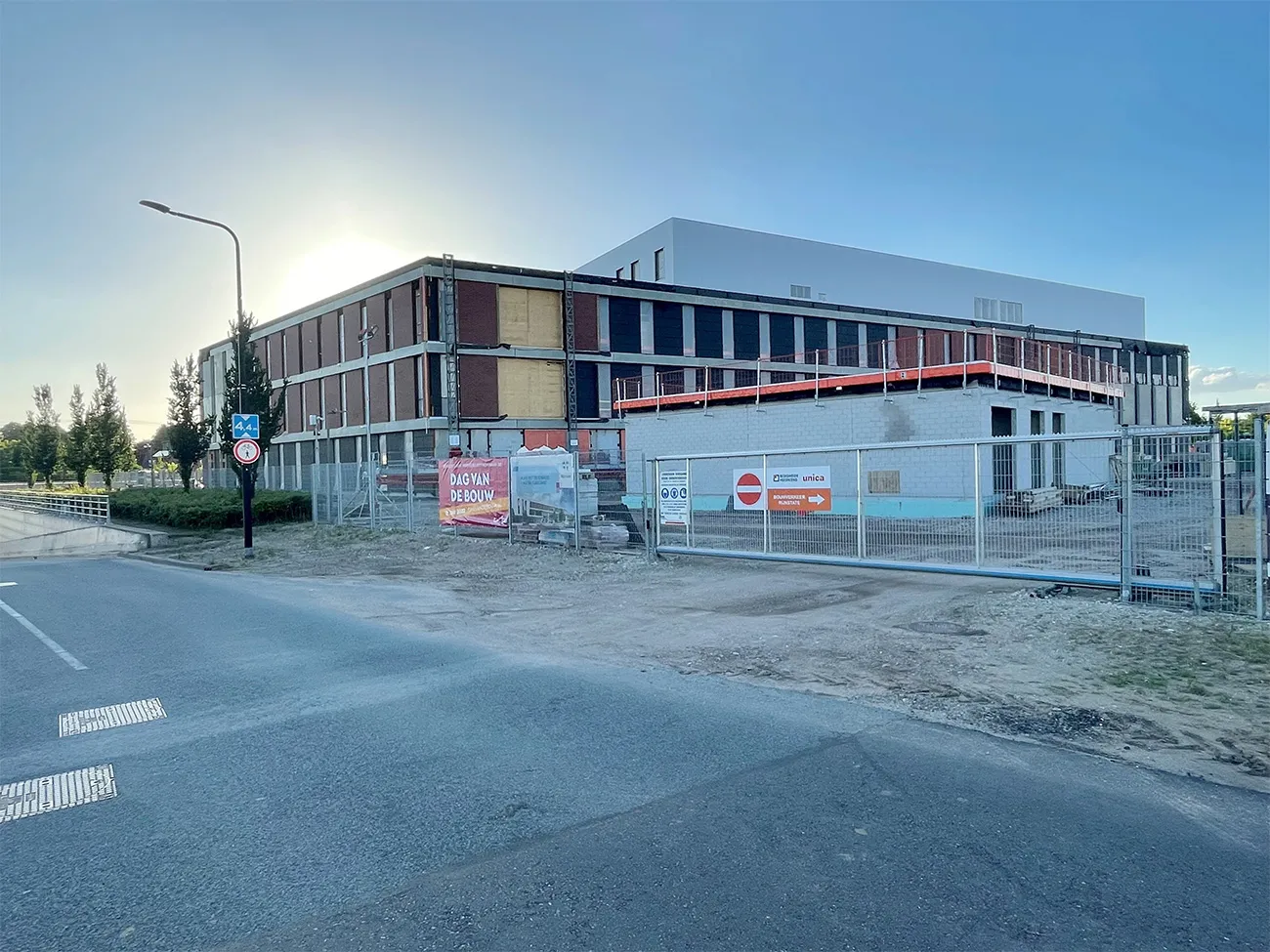
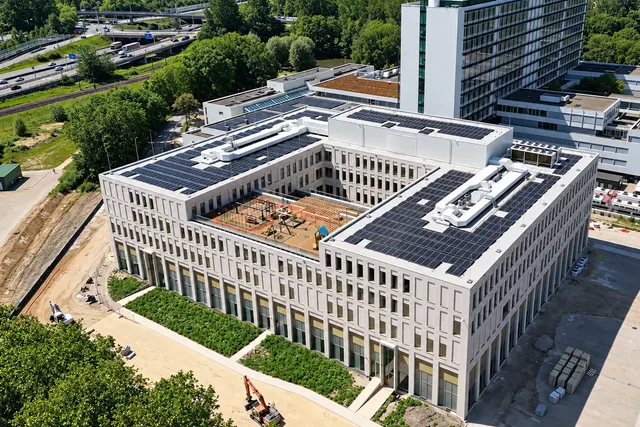
Rijnstate’s ambitions to develop the hospital of the future in Elst are taking increasingly concrete shape. A look around the construction site makes that clear. The hospital building recently reached two milestones: the new building has reached its highest point, and Berghege Heerkens bouwgroep is now making the sustainable building wind- and watertight. In addition, a huge hydrogen tank was installed on the hospital grounds in early May. Rijnstate Elst is the first hospital in Europe to get its energy from hydrogen, explain Rijnstate’s construction director Willem Jan Hanegraaf and project delivery manager Martine Oudenbroek, and Tom Bongers, director of construction company Berghege.
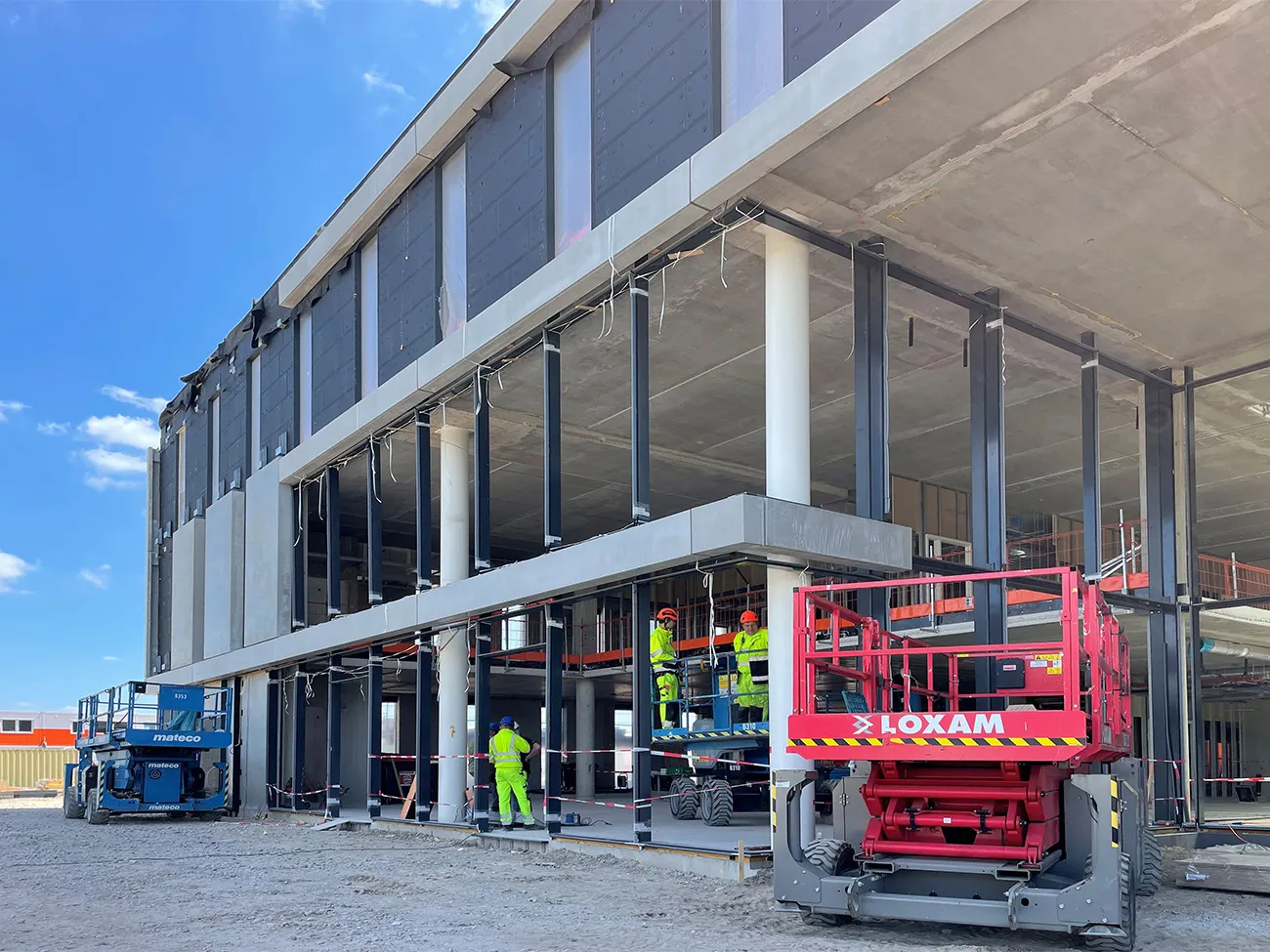
“With its all-electric hospital, Rijnstate is leading the way in delivering the sector’s roadmap towards low-carbon healthcare solutions by 2050,” says Hanegraaf. “Developing our portfolio roadmap coincided neatly with plans for a new hospital site in Elst. We were also looking for a solution to the electricity grid, which is expected to become less available and less reliable in the Netherlands over time.” The ‘eureka moment’ came during a holiday in September 2019. Hanegraaf recalls: “I read an article about a hydrogen solution for the Eusebiuskerk in Arnhem and thought: if you can run an old church on hydrogen, surely you can do the same with a state-of-the-art hospital. So I messaged Martine: ‘We should talk to that company’. And so we did, working with HyMatters and other parties to develop a business case.”
Teamwork
Gortemaker Algra Feenstra (GAF) is the architect for the new building in Elst. The Berghege Heerkens Unica consortium was brought in early on as contractor and building services installer, as was consultant K&R. “The parties went abroad to gather knowledge and experience,” says Bongers, “because there was no expertise in this field in the Netherlands.” “This was new for everyone, so nobody could say: I know better. That takes you back to the essence of working together, which is pioneering as a team,” says Hanegraaf. Initially, a Plan B was also in place in case the hydrogen solution proved unfeasible, Bongers recalls, but the hospital decided to drop it. “Rijnstate was ambitious and wanted to go all in on innovation. I find that enthusiasm inspiring. Teamwork is a key success factor in this project.”
TWO TANKS MADE OF 17,000 KILOS OF STEEL
In practice, this means that 2,300 square metres of solar panels will be installed in Elst, partly on the hospital roof and partly alongside it, Oudenbroek explains. They will supply the hospital with electricity. When solar power generation exceeds demand, the electricity will be used to produce hydrogen. This will be stored in two large tanks made from 17,000 kilos of steel, the first of which was installed in May. The tank came from Norway and was transported to the Netherlands by water. As part of its commitment to circularity, Rijnstate chose to take over this existing tank from a European research project. The enormous structure is not yet in its permanent position, but will be installed next to the environmental services area beside the hospital. The two tanks can store up to 200 kilos of hydrogen. The system will save 42,000 cubic metres of gas a year. Rijnstate will also emit 1.1 million kilos less CO2. The electricity generated by the hydrogen system, in addition to heat, will reduce CO2 emissions by 55,000 kilos a year. Rijnstate opted for an open-source solution for the measurement and control technology connected to the hydrogen system, Hanegraaf explains. “We can connect different systems to it and so obtain more control data. It is proven technology, but had not yet been used in healthcare.”
Atrium
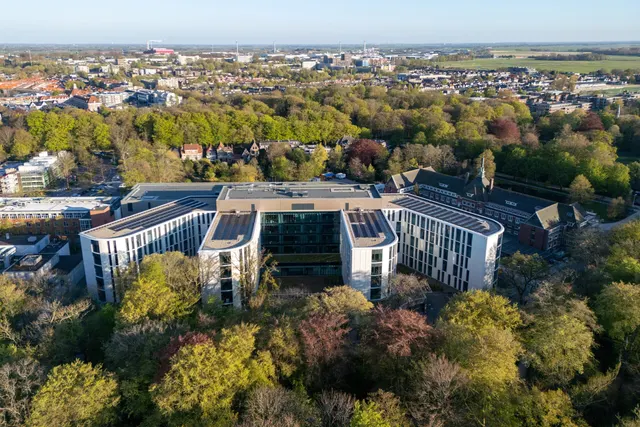
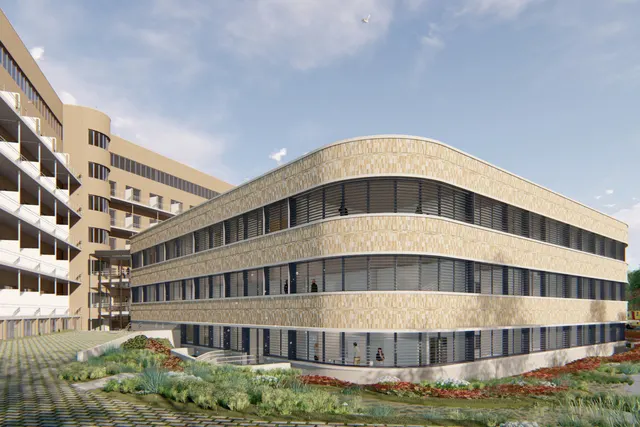
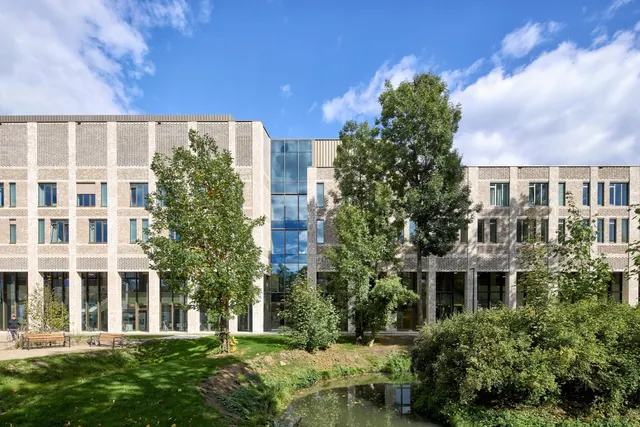
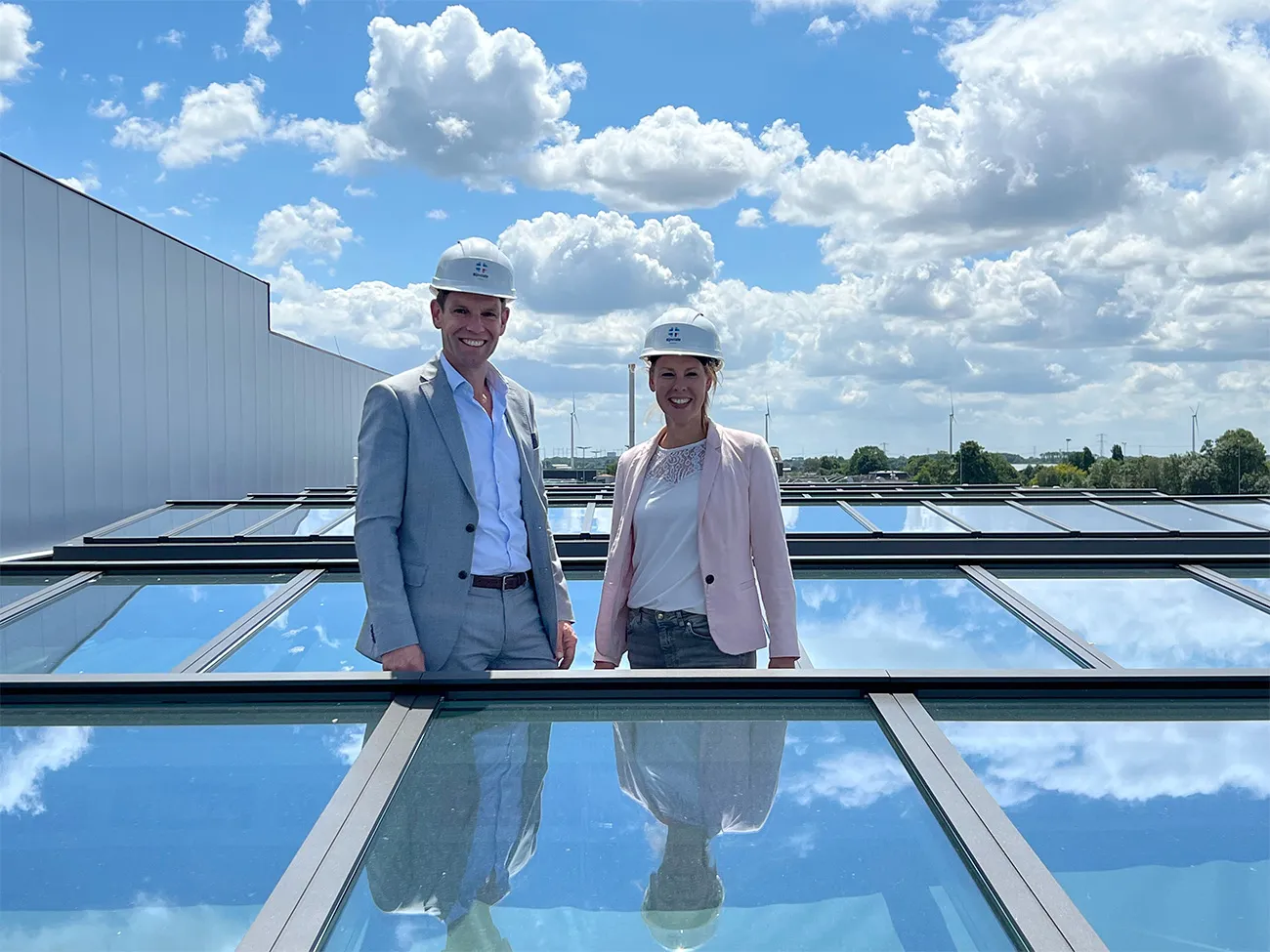
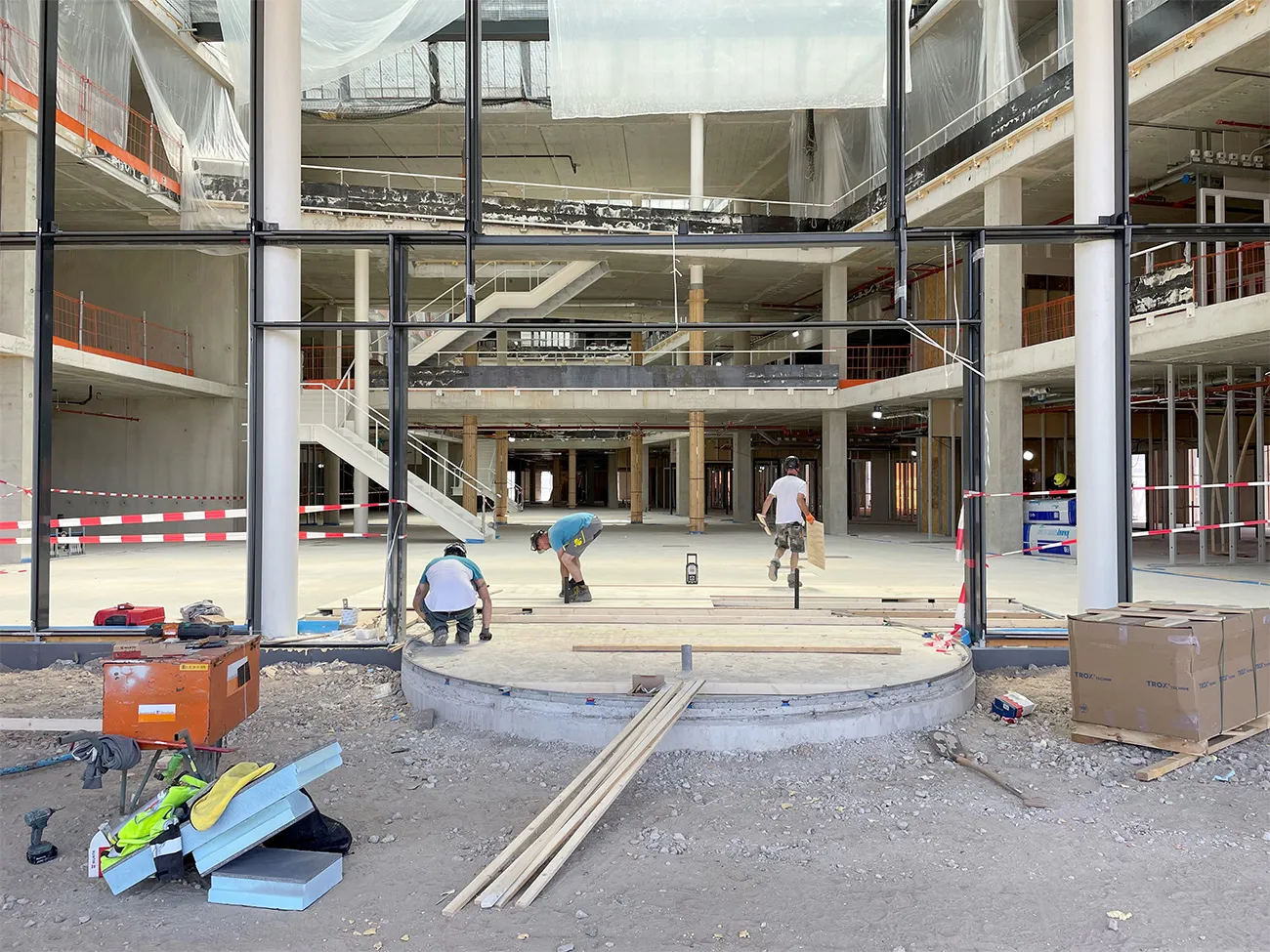
The new building will have a floor area of 13,000 square metres and will border a residential area in Elst, sandwiched between the railway and a main road. The new hospital comprises a number of outpatient clinics and diagnostic areas, Oudenbroek explains. There are no inpatient rooms. The spaces are arranged around an atrium. Oudenbroek says: “The atrium is covered entirely with glass panels, allowing daylight to reach every area. This could also cause the building to heat up, so we studied that carefully. We modelled the entire building in 3D and combined it with all available climate data, sun positions and solar irradiation data. We based the atrium design and our choice of systems on this. During construction, we made a small change to the roof cavity design because the steel originally specified had too long a lead time.”
Boldness
“Apart from that, construction is proceeding exactly according to the schedule drawn up in 2020,” says Bongers. This means the first phase of Rijnstate Elst will be completed next April. “The first patients can use it from early July 2023, but before then, countless colleagues from across healthcare have already had a good look at this building and its hydrogen solution,” says Oudenbroek. “We are constantly receiving visits from interested parties.” Rijnstate is keen to share the knowledge and experience it has gained, says Hanegraaf enthusiastically. “This shows what can happen when you have the courage to think beyond the usual patterns. That is something the construction and property sector could use more of.”
Een zakelijke vraag aan Berghege Heerkens bouwgroep? Get in touch
Wie aan Rijnstate Elst werkte
- adviserK&RIn this story
- Architect
 Gortemaker Algra Feenstra architectsMentioned in Rijnstate Elst marks a new step in healthcare


Keep following this
Get an email when a new story is published. No account needed.
- ProjectRijnstate Elst
- ThemeHospital construction and refurbishment
- SubjectHospitals
- CompanyBerghege Heerkens bouwgroep
- CompanyGortemaker Algra Feenstra architects
- CompanyUnica
- CompanyK&R