Tens of thousands of Bravis patients can receive care closer to home
Bravis Hospital aims to provide care in the right place. That may be in hospital, at home or at a location close to home. Where possible, we even teach patients nursing procedures. We consider who is best placed to provide the care. Is it a hospital care professional, a community nurse, a Diagnovum employee or can the patient manage it themselves, possibly with help from family or friends? In this article, we outline developments in this area over the past year and conclude with plans for 2025 and beyond.
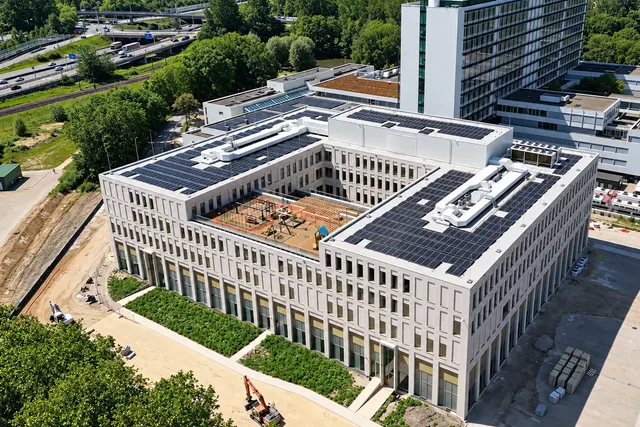
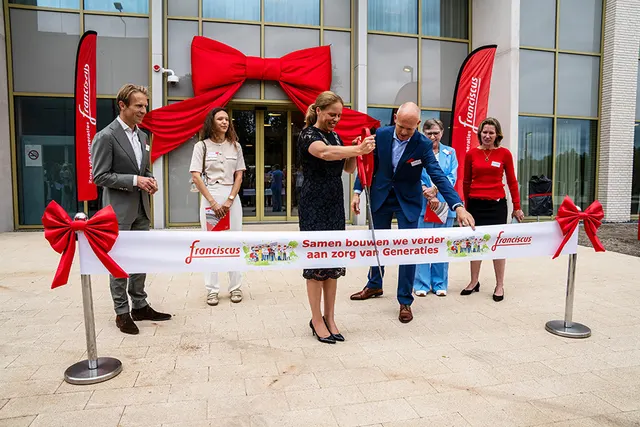
In addition to our two main sites, we have an outpatient clinic in Etten-Leur and five Bravispunten in St. Willebrord, Steenbergen, Oudenbosch, Tholen and Huijbergen. These locations give Bravis a presence throughout the region. At the Bravispunten, we work with Diagnovum, which provides services including blood tests and functional tests. In 2024, almost 37,000 procedures were carried out. Ultrasound scans are also performed at two Bravispunten, and dialysis takes place at three. Blood transfusions can also be given during dialysis. Many of our specialties are represented at the outpatient clinic in Etten-Leur, where consultations are held. In 2024, there were almost 30,000 appointments at this site. Both the Etten-Leur outpatient clinic and the Bravispunten make it possible for patients to receive care closer to home.
Close to home
We also work closely with GPs to provide care close to home. One good example is the assessment of minor eye problems at opticians in the region. We launched this service in 2022 with Huisartsencoöperatie West-Brabant (HCWB) and several local opticians. In 2024, GPs from Het Huisartsenteam also joined. More than 70% of patients seen by an optometrist at an optician do not ultimately need to see an ophthalmologist.
Another example of collaboration with GPs is the specialist advice service, also known as the shared-care consultation. Pauline de Graaf, a GP in Roosendaal, says: “The digital specialist advice service allows GPs to consult a medical specialist without actually referring a patient to hospital. This can reduce referrals, giving patients access to specialist care without a hospital visit or having to pay their excess. It has benefits all round.” In 2024, GPs from HCWB, Het Huisartsenteam and Huisartsen Zorggroep Breda used the service more than 3,300 times.
At home
We also consider what can be done at home. Many cancer treatments can now be given at home. We work with Bloezem Zorg Thuis to provide this service. In 2024, 731 patients received more than 3,400 treatments at home. In partnership with Groenhuysen, tanteLouise and Thuiszorg West-Brabant (TWB), specialist nursing procedures are also carried out at home. These include blood transfusions, infusions for severe pregnancy-related nausea, intravenous antibiotics and infusions to treat osteoporosis. In 2024, 425 patients were referred for care at home. These partnerships enable patients to remain in the familiar surroundings of their own homes, avoid many trips to hospital and free up hospital capacity for treatments that cannot yet be provided at home. In 2024, 513 blood transfusions took place at home. Monique Haneveer, haemovigilance officer, says patients rate home blood transfusions at an average of 8.5 to 9 out of 10: “The service is clearly very much appreciated. Almost all patients see its benefits. They can stay in their own surroundings and no longer have to travel, possibly with someone accompanying them.”
We also work closely with Groenhuysen, tanteLouise and TWB to provide other types of care. Together with our network partners, we have developed 13 care pathways, with positive results. In the pathway for planned knee and hip surgery, the percentage of patients who go on to geriatric rehabilitation after surgery fell from 9.2% in 2022 to 5.6% in 2024. The pathway has also helped reduce the average length of stay after surgery for several years. In 2020, the average stay was 2.9 days; by 2024, it had fallen to 2.5 days.
Self-care
It may seem contradictory to put this section at the end, as it is really where the story begins: ‘What can patients do for themselves?’ Supporting patients to take control of their own care is not only a way to provide appropriate care, it also contributes to their health. Patients can do a great deal themselves, sometimes entirely independently and sometimes with help from those around them. One example is remote monitoring. Patients use an app on their phone or tablet to enter measurements and answer questions. This information is then shared with Bravis’s monitoring centre. Keeping track of these data gives both patients and care professionals a clearer picture of their health, helping to prevent deterioration or detect it sooner. By the end of 2024, almost 2,000 patients were using the remote monitoring app for 15 different applications. These include hypertension, cataract surgery, bowel surgery, heart failure and COPD. One patient says: “Remote monitoring gives me a great deal of confidence. I can now see how I’m doing all the time. If I have any concerns, I can contact the clinical nurse specialist straight away through the app. I’ve also had a few telephone conversations, which meant I didn’t have to go to hospital. The specialist has all my data to hand. Monitoring has given me back my confidence.”
Dialysis is another example of what patients can do for themselves. At our dialysis centre, we encourage patients to do whatever they can independently. This can range from fetching their own pillow and blanket to operating and connecting the machine entirely on their own. This gives patients insight and freedom and, where possible, even the opportunity to dialyse independently at home.
In the region, we work together with Groenhuysen, tanteLouise and TWB under the banner of the ZELF-academie, promoting self-management among patients and clients. One way we do this is by teaching patients procedures during their hospital stay that would otherwise require community nursing care after discharge. We made preparations for this in 2024. On 6 January 2025, we began teaching patients to perform the following four procedures: injecting Fragmin, changing a catheter bag, stoma care and administering tube feeding.
Plans
In 2025, we will continue to expand the initiatives mentioned above wherever possible. We will also launch new ones, including a regional monitoring and coordination centre with TWB and tanteLouise. Read more in this article. We are always open to suggestions and ideas about what else could be done closer to home or by patients themselves. Please contact us at bravisbeterthuis@bravis.nl or visit our website, www.bravis.nl/bravis-beter-thuis, for more information.
Question about this story? Ask your question
Keep following this
Get an email when a new story is published. No account needed.
- SubjectHospitals