











Arnhem, Wiegerinck Symposium
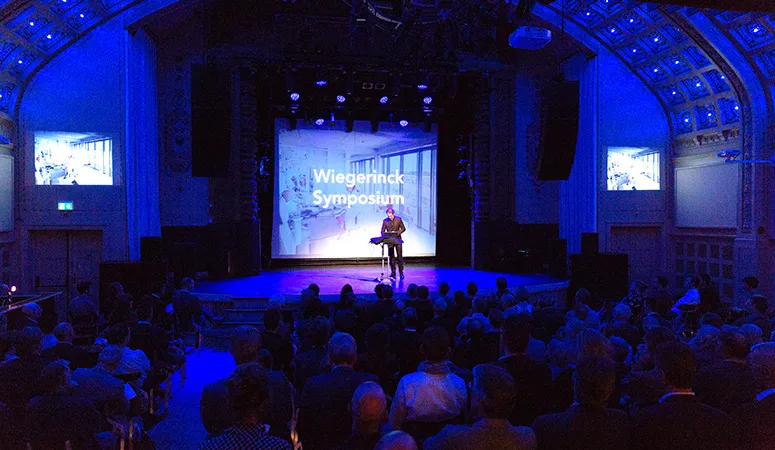
‘Attention makes everything more beautiful’, says a well-known furniture retailer. But how can hard and soft forces be brought together in hospital care? ‘Removing stone, de-institutionalising and breaking down barriers’, more technology or talking to the patient? Or should architects be allowed to shape the healing environment on the basis of evidence-based design? Is shaping the future a matter of tight control or of consensus-building? The 4th Wiegerinck conference in Arnhem provided plenty of food for thought.
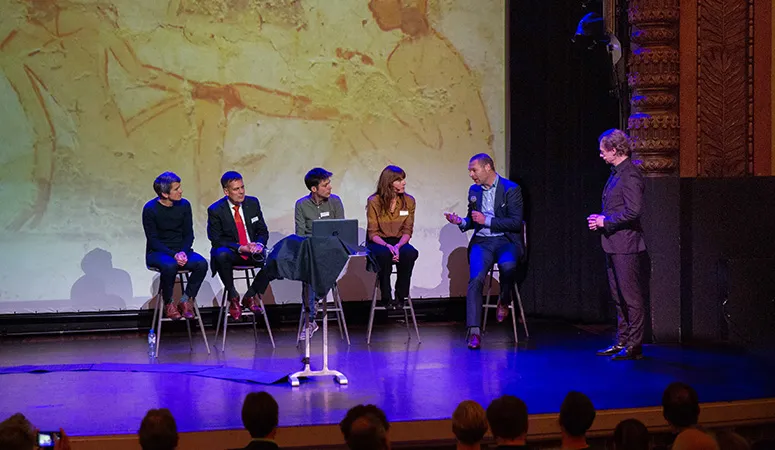
Conference organiser Wiegerinck architectuur stedenbouw has extensive experience designing human-scale hospitals (including Tergooi and Slingeland) and is keen to spark thought-provoking debate on the subject of ‘attention’. On 13 November, a healthcare property consultant, a new-build programme director, a professor of psychology, a medical anthropologist and an architect shared their perspectives on the conference theme, ‘Can human attention be replaced?’, at the Luxor Live pop venue in Arnhem. No definitive answer emerged to this complex question, but it was clear that there is plenty of thinking going on in the Netherlands’ healthcare sector, in research, design practice and care delivery alike. Chair for the day Frank Pörtzgen (architect and partner at Wiegerinck) set the tone with an anecdote about an appointment with a specialist for chronic joint pain. Unable to make a diagnosis, the specialist advised him to let his body heal itself. It was an eye-opener for Pörtzgen, the patient. Do we focus too much on diagnosis and treatment in healthcare? And is meaningful human attention often little more than an optional extra?
‘Hard’ hospital culture
The answer is ‘yes’, but things should be different, says medical anthropologist Klaartje Klaver. In 2016, she completed her PhD at Tilburg University with ‘Dynamics of attentiveness in care practices at a Dutch oncology ward’. The concept of ‘attention’ was examined through several factors in the context of oncology care at St. Elisabeth Hospital in Tilburg. The focus was not only on the instrumental meaning of attention, such as taking medication on time, but also on its social dimension: attention that is not intended to produce a clear clinical outcome. Klaver immersed herself in the work of medical staff and carers, and found that hospital care is entirely focused on diagnosis and treatment, not on that final element of human attention. The researcher faced a difficult task: “I was seen as an intruder, but as an outsider I soon realised how difficult it is to escape the hard realities of hospital practice.” Klaver also observed that patients visibly improved when there was time for a chat, and her recommendations therefore focus on social processes in the organisation of hospital care. “Managers, policymakers and educators can play an important role in this.”
Gerton Groenendijk explains how Slingeland Hospital is managing the organisational transition involved in its new-build project.
Remote monitoring
Bert Jan Grevink of PTG Advies sees various social, policy and technological changes coming to the hospital sector, as well as a lack of leadership that makes it difficult to make choices. “As a result, the pace of implementing change is slow.” Both demand and supply are changing. “Financial resources are shrinking, fewer people are available and the population is ageing. Treatment is shifting to primary care; at the same time, technology can do a great deal, including remote monitoring.” The Slingeland Hospital in Doetinchem has already gained experience with the latter, which is even part of its new-build process. Wiegerinck is designing a new, more compact hospital in a green setting, due to be completed in 2024. New-build projects also require organisational change, says Gerton Groenendijk, director of the new-build transition. “Home care is taking over hospital care in the Achterhoek, which calls for a smaller hospital. We are investing in ICT, not bricks and mortar.” A pilot project with healthcare innovation company FocusCura, Menzis and Sensire led to remote treatment for patients with heart failure/COPD. They send their data to the hospital daily and communicate with staff via ‘smart’ apps. “Most patients see this as an improvement,” says Groenendijk.
Chemotherapy garden
Some patients have even formed groups to play the harmonica, after it proved to help improve their breathing. “A nice spin-off,” says Groenendijk. Remote monitoring must not, however, reduce hospitals’ income. “Agreements have been made with health insurers on this.” After an interlude by Professor of Psychology and ‘odd one out’ Stefan van der Stigchel, who used a DWDD-style presentation to reveal the subjectivity of the concept of ‘attention’, it was the turn of Wiegerinck architect Jörn-Ole Stellmann. He gave a historical overview of the development of hard and soft forces in hospital construction. “The ancient Greeks and Persians were already building hospitals based on the holistic principle that patients should feel comfortable in their surroundings.” Developments in medical science led to hospitals becoming large-scale ‘factories of progress’, designed accordingly, “as seen in post-war hospital construction. Now we are moving back towards combining soft forces with hard ones.” Stellmann cited the Chemotuin at Tergooi in Hilversum, a wooden day-treatment pavilion set in greenery, as a shining example. “Wellbeing leads to faster recovery,” said landscape architect Nico Wissing from the audience during the discussion afterwards. Everyone agreed that the social dimension of care deserves more attention. Who will take the lead?
Words | Jan-Kees Verschuure Image | Wiegerinck Symposium
Question about this story? Ask your question
Keep following this
Get an email when a new story is published. No account needed.
- SubjectGeneral







