











Benelux’s first interactive resuscitation manikin for babies
Text Koen Mortelmans Beeld AZ Sint-Jan, BPD, Dirk Kerstens, Ed van Rijswijk, Fotodesign Emily en ZAS
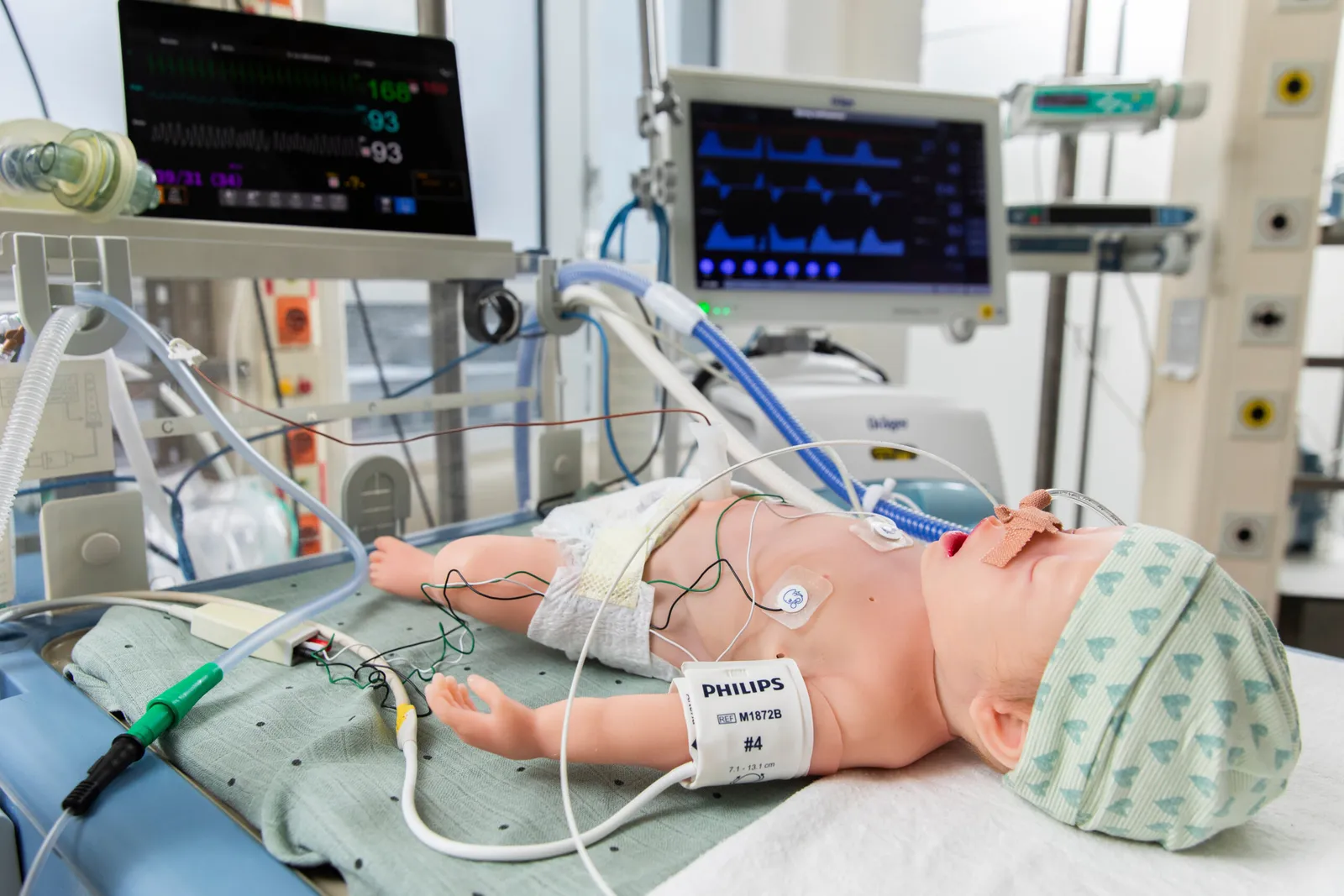
Ziekenhuis aan de Stroom (ZAS, Antwerp) has become the first in the Benelux to use an interactive resuscitation manikin for newborn babies. With Zaskia, nurses and midwives can now practise life-saving procedures on newborns who unexpectedly get into difficulty, under the supervision of neonatologists. This could make a difference when no suitably trained doctor is nearby. ZAS gynaecologists and paediatricians are also joining the training programme. Eight thousand babies are born at ZAS each year, accounting for one in seven babies in Flanders.
There is a pressing need for realistic training. In Belgium, 1 in 65 babies experience complications during birth. Their bodies may temporarily receive too little oxygen, for example. If this is not addressed in time, oxygen deprivation can damage the brain and other organs, and may even lead to the baby’s death. It is not always possible to predict that a baby will have a difficult start.
Previously, healthcare professionals practised with an ‘unresponsive’ manikin that did not react to their actions. Zaskia simulates a full-term baby at 39 weeks and can cry and groan. It responds to resuscitation attempts, displays lifelike symptoms and can be programmed with a range of emergency scenarios. Trainers adjust live parameters such as heart rate and oxygen saturation. Trainees read these measurements on a monitor. With an unresponsive manikin, the trainer has to provide this information verbally.
Isabel Arends appointed new head of RIVM
On 1 April 2026, Dr Isabel Arends will take up her new role as Director-General of the Dutch National Institute for Public Health and the Environment (RIVM). Since 2018, she has held various positions at Utrecht University, including Dean of the Faculty of Science and Professor of Sustainable Organic Chemistry. Before that, she was, among other roles, Head of the Department of Biotechnology at TU Delft. She also founded the Bioengineering Institute there, serving as its Director from 2016 to 2018. Alongside her new role, she will remain a professor at Utrecht University.

Innovative assisted living concept in Nijmegen
BPD Woningfonds has acquired 442 lifetime homes in Living-Inn, an innovative assisted living concept in Nijmegen. Construction is due to begin this quarter.
Living-Inn comprises four blocks in the Winkelsteeg redevelopment area. It offers homes for a range of groups: first-time buyers, families, older people with or without care needs, and people with dementia. The apartments comprise 118 social rented homes, 211 mid-market rented homes, 37 private-sector rented homes and 76 care homes. As a result, more than 90% of the homes in the concept are affordable.
The design centres on around 3,500 m² of courtyard and rooftop gardens, communal spaces and approximately 1,400 m² of commercial facilities, including a restaurant, swimming pool, physiotherapy practice, beauty salon and hairdresser, GP service, dental hygienist and childcare centre. These facilities are open not only to residents, but also to visitors and local people.
Living-Inn is responsible for the day-to-day management of the building. Stichting De Waalboog is responsible for providing care to residents of the 76 care studios, which have been specifically designed for people with dementia.

Bruges pioneers new devices to treat lung damage
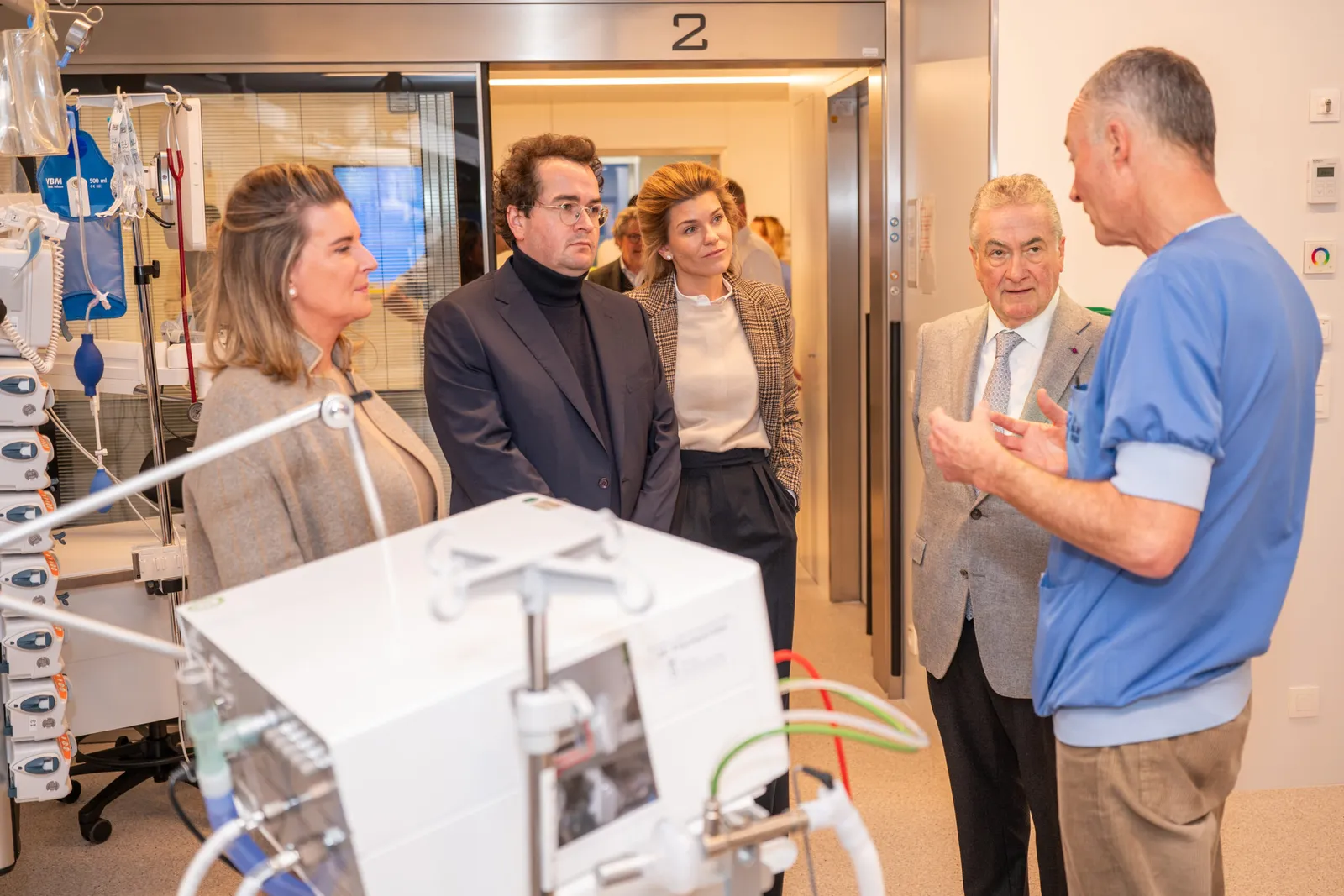
AZ Sint-Jan Brugge is the first hospital in Belgium to use the new TwinStream ventilators, donated by the Ide-Deprez family through its Fonds JE Foundation. The devices offer a new treatment option for patients with severe lung damage or at risk of developing it.
“Conventional ventilation can cause further damage to injured lungs,” explains Dr Marc Bourgeois, Head of the Department of Anaesthesia & Critical Care. “You push air into the lung using positive pressure. But an injured air sac is like a new balloon you are trying to inflate: at first, there is a lot of resistance. If the pressure is too high, you risk causing even more damage.” The TwinStream ventilator combines conventional ventilation with rapid, pulsatile oscillations, around 600 per minute. This causes the pressure to oscillate continuously, rising and then falling again. Harmful peak pressures are avoided. The three TwinStream ventilators replace the older VDR4 ventilators from the 1990s.
Question about this story? Ask your question
Keep following this
Get an email when a new story is published. No account needed.
- SubjectGeneral







