











Brainport region rolls out rapid test for heart attacks: ‘Good news for patients’
Faster access to optimal treatment, fewer unnecessary trips to the emergency department
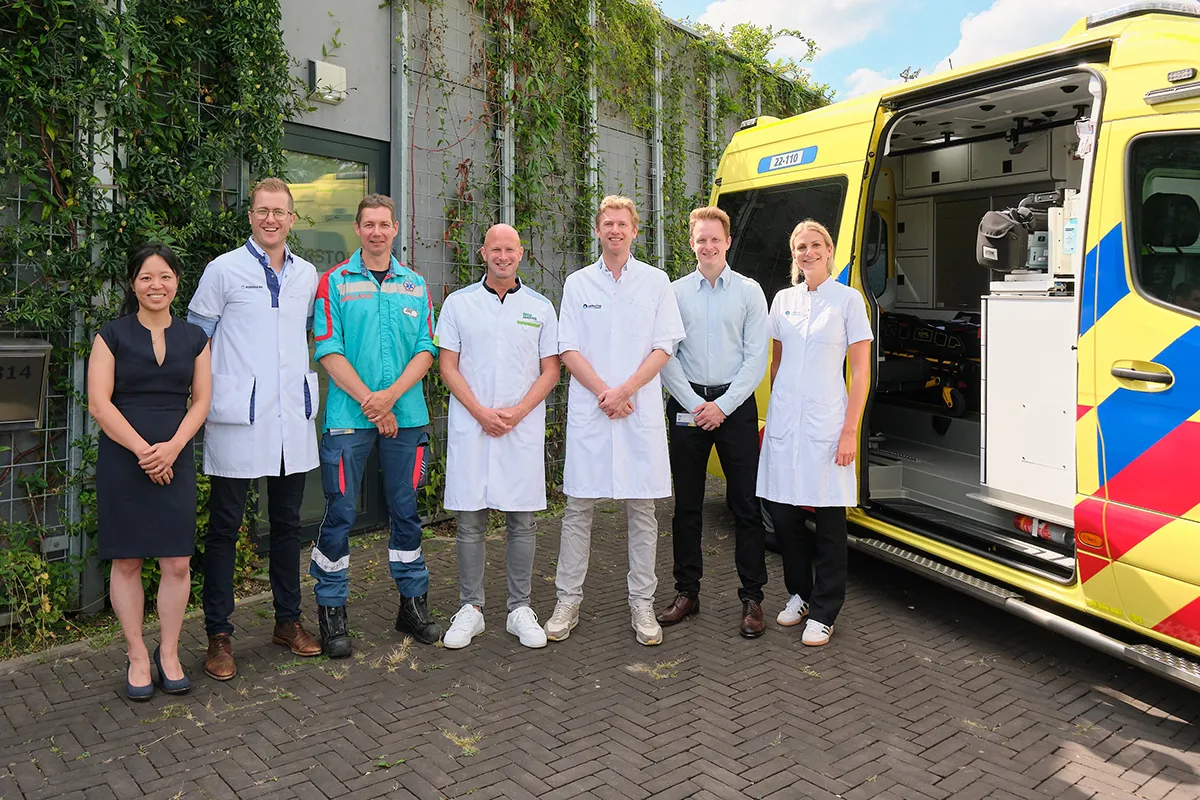
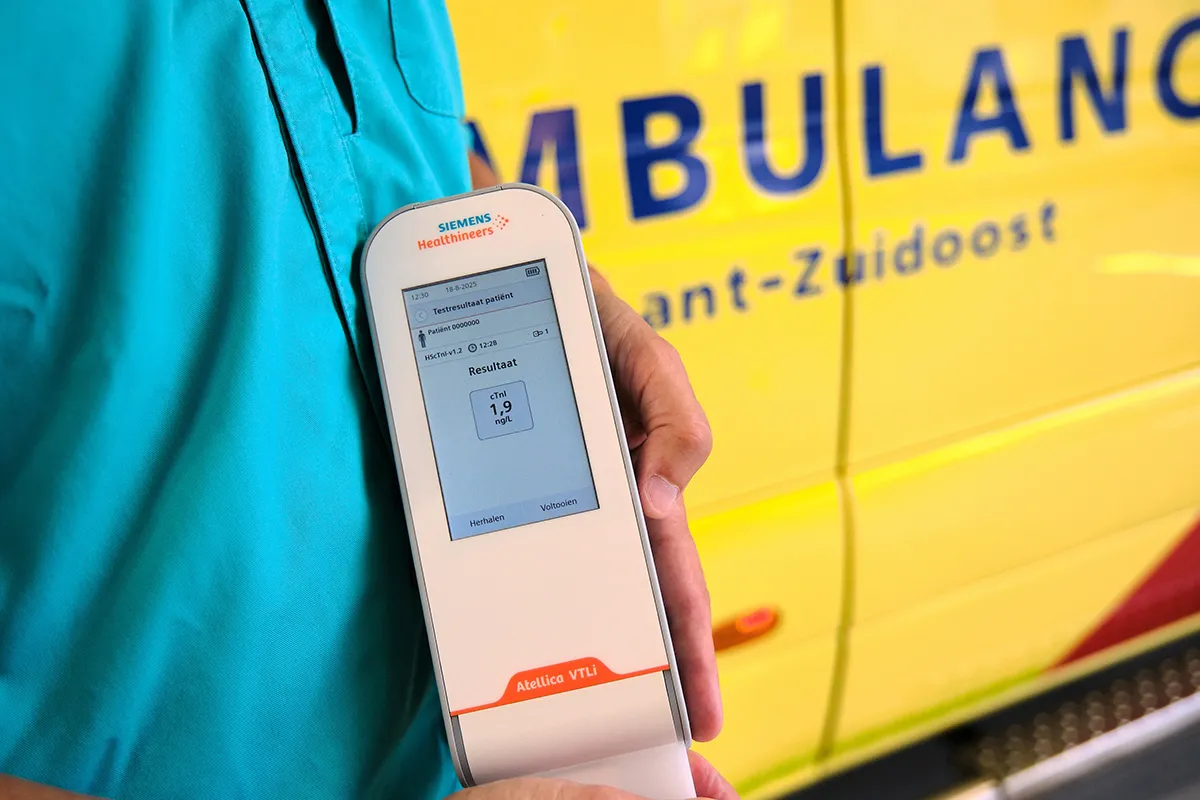
Ambulances operated by GGD Brabant-Zuidoost began using a new method on 1 August to quickly detect or rule out a heart attack. The rapid test, developed and studied in the Eindhoven region, can establish immediately whether a patient is having a heart attack. Previously, this could only be done in hospital. Thanks to this method, patients can be taken straight to the right hospital if necessary, and the optimal treatment can begin immediately.
Each year, ambulance services attend to more than four thousand patients in the Eindhoven region who are suspected of having a heart attack. The new rapid test provides a risk score at the patient’s home, enabling paramedics to assess the severity of the heart attack immediately. They can then take patients straight to the right hospital, or allow them to remain safely at home if their risk score is very low. The updated approach has attracted interest nationally and internationally.
Diagnosis at home
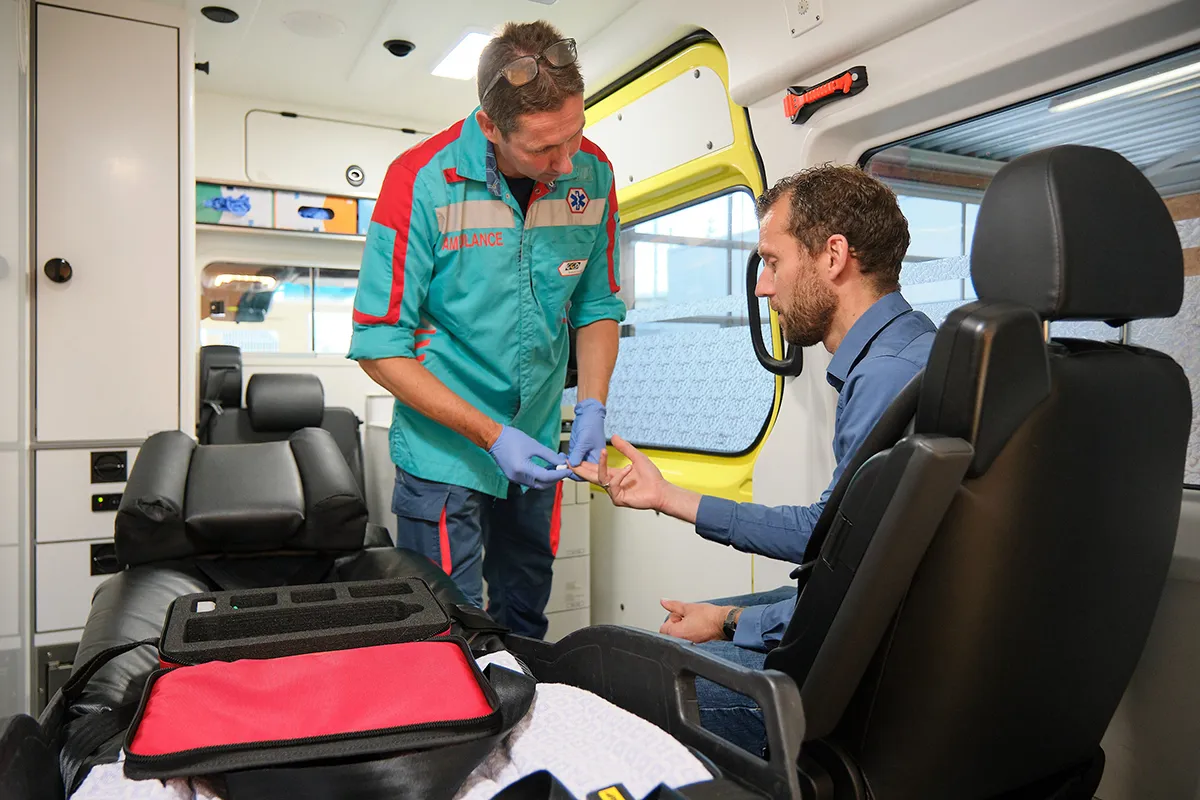
“This is a major improvement in emergency cardiac care,” says cardiologist Tom Vromen of Máxima MC. “For patients with a high likelihood of having a heart attack, it saves a great deal of time in making the initial diagnosis. This now happens immediately at the patient’s home, rather than in the emergency department after an ambulance journey.”
The test can also prevent patients from being taken to hospital by ambulance unnecessarily, only to spend several hours in the emergency department before they can go home. “It means we can reassure patients straight away and avoid unnecessary ambulance journeys and waiting,” says Vromen.
GP Eleana Zhang of the Stroomz primary care organisation says: “This is good news for patients. It is a real example of the right care in the right place. An ambulance journey to hospital can be very stressful for patients. Knowing that a patient can now safely stay at home is a really important step forward. And thanks to the collaboration, both primary and secondary care now have immediate clarity on how care for a heart attack is organised.”
Early detection
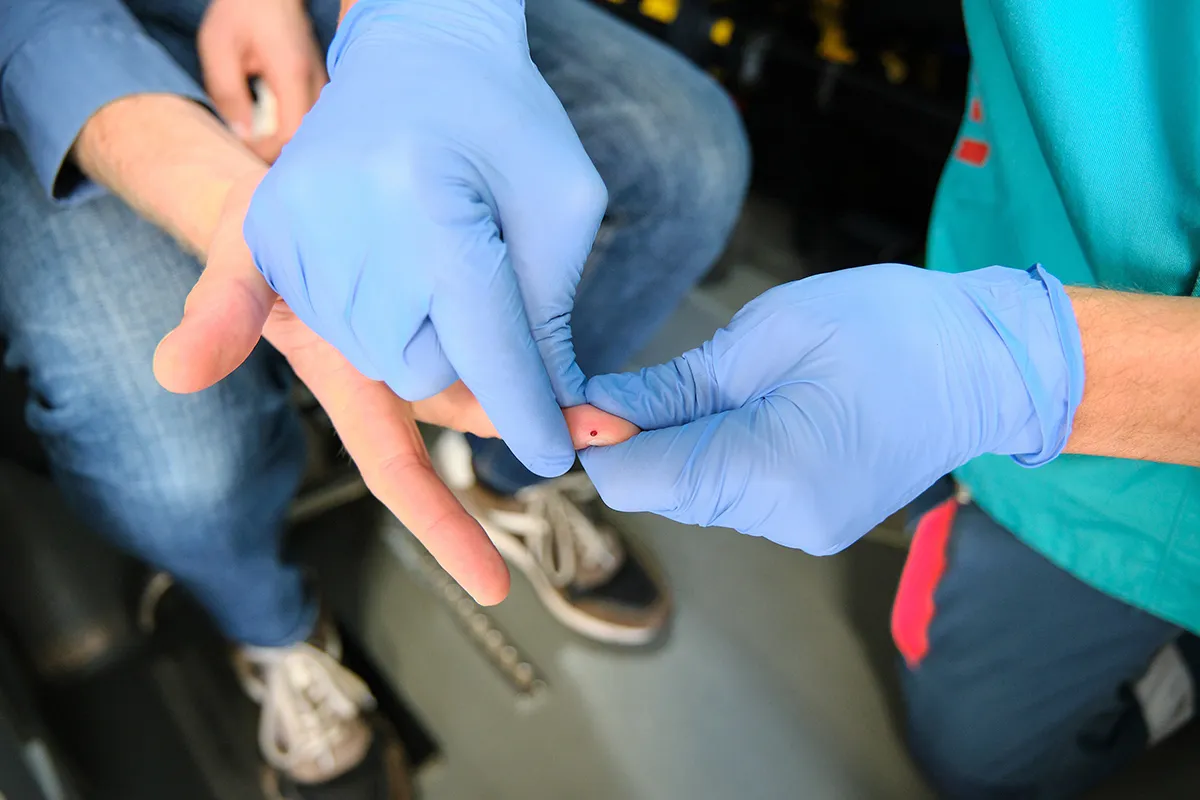
The rapid test is used to detect what is known as a ‘silent’ heart attack. This type of heart attack does not show up on an electrocardiogram (ECG) and can lead to serious complications such as arrhythmias and heart failure. The rapid test and its associated new risk score were studied in collaboration with the Nederlands Hart Netwerk. They have been tested successfully in recent years as part of the TRIAGE-ACS study.
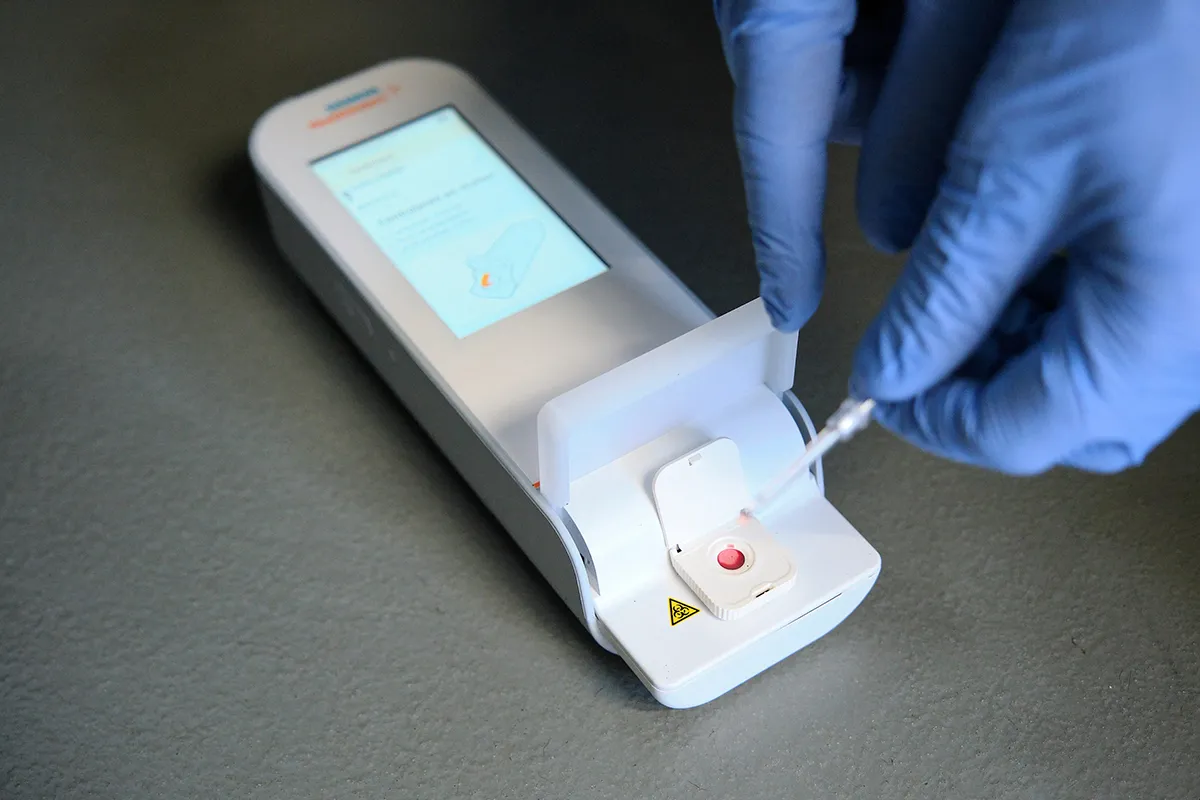
Rutger Haest, cardiologist at Anna Ziekenhuis, says: “This new technology allows us to measure cardiac biomarkers in the blood at the scene using a portable device. If these substances are present, we know the patient is having a heart attack. Their levels also indicate how severe it is. The device therefore enables early diagnosis, leading to faster and more efficient treatment. That is why every ambulance in the region is now equipped with one.” Uniquely, the device was developed in Eindhoven and is now being rolled out across the Brainport region.
Health benefits
This innovation enables paramedics to either leave patients safely at home or refer them to the appropriate care, depending on the severity of the heart attack. This significantly reduces the time to treatment, resulting in better outcomes and shorter hospital stays. “Every second counts when someone is having a heart attack,” says Arjan Koks, physician assistant at Ambulancezorg GGD Brabant-Zuidoost. He acted as the link between the ambulance service and the hospitals during the implementation process. “The sooner we get there, the less damage the heart sustains. That can spare patients a great deal of suffering.”
The findings of the TRIAGE-ACS study, led by researcher and interventional cardiologist Pieter-Jan Vlaar of Catharina Ziekenhuis, were recently published in the renowned medical journal ‘HEART’. A follow-on grant of 250,000 euros was awarded by ZonMw to implement this method. “We have genuinely translated the knowledge gained over the past four years of research into practice,” says Vlaar. “These are the kinds of steps that genuinely improve care for patients. That is what we are all ultimately working towards.”
Collaboration
The successful introduction of this innovation is the result of close regional coordination between Catharina Ziekenhuis, Anna Ziekenhuis, Máxima MC, Ambulancezorg GGD Brabant-Zuidoost and GP organisations Stroomz and Pozob. These care organisations are members of the Nederlands Hart Netwerk, alongside several other care organisations in South East Brabant. The network is a regional partnership in which participating care organisations jointly agree on care pathways, helping to ensure continuity and high-quality care for patients with heart conditions.
More information is available at www.nederlandshartnetwerk.nl.
Question about this story? Ask your question
Keep following this
Get an email when a new story is published. No account needed.
- SubjectGeneral







