











Business opportunities in the Netherlands and Germany for barrier-free living and building
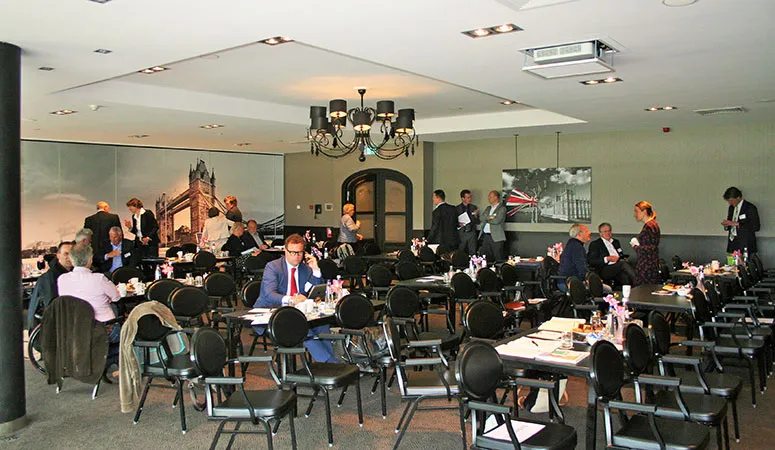
Reforms to the Dutch healthcare system are creating business opportunities for new players in the healthcare market, says the German-Dutch Chamber of Commerce. For this reason, the DNHK organised a business forum on the theme of ‘Barrier-free living and building’. On Wednesday 20 May, suppliers of healthcare aids had the opportunity to present themselves at the Van der Valk Hotel in Vianen. They were also briefed on the far-reaching reform of the healthcare system in Germany’s most important trading partner.
As part of a DNHK trade mission, a programme with a focus on bringing German suppliers and Dutch buyers together was presented in Vianen. Business opportunities are viewed primarily in the context of the growing number of people aged 75 and over and the trend towards living at home for longer. As a result, the Dutch healthcare market, driven by changes in funding arrangements, is increasingly becoming a consumer market. The impact of healthcare reforms on older people in the Dutch housing market was explained during the morning programme by Dutch organisation ABF Research. According to Arjen van der Meer of this research agency, which specialises in housing and demography, demand for ‘housing with care’ is growing at a tremendous rate. Some of the increased demand for care home places will be met by people living at home for longer, but the shortfall in homes with care support looks set to increase sixfold nationwide between now and 2040.
Baby boomers
Van der Meer gave a sobering account of the far-reaching impact of policy changes on Dutch care housing. The transformation of the AWBZ, in particular, is leaving its mark on the care landscape. “Costs have got out of hand and deinstitutionalisation is seen as one of the solutions. Vacancies are leading to care centres closing, and individuals have to make their own arrangements.” According to Van der Meer, the transfer of some home care to local authorities and some to basic health insurance offers opportunities for new players in the market. ABF Research, which counts the Ministry of Health, Welfare and Sport among its clients, is also seeing growing differences in the population profiles of young provinces such as Flevoland and shrinking areas such as Limburg, where people aged 75 and over are becoming an increasingly dominant factor in housing demand. The effects of an ageing population are further compounded by the large group of Dutch baby boomers who will turn 75 in 2021, says Van der Meer.
‘Information welcome’
German companies are clearly keen to receive guidance. “Now that Dutch health insurers have been given a major role in the healthcare system, I would like to know how to get in touch with them,” says the CEO of EasierLife Gmbh, a developer of remote monitoring systems. EasierLife is a partner of the German Red Cross, which plays an important role in providing healthcare aids in Germany. For example, as part of its presence detection services, it offers a mobile phone app. Ten German companies took advantage of a five-minute presentation slot at the Van der Valk Hotel Vianen. The afternoon session included a discussion of how Germany itself is addressing lifelong homes. Marianne Drößiger of Bundesverband Barrierfrei, which brings together German specialists in the field, illustrated that Germany too is facing an inadequate or outdated supply of adapted homes.
Strong demand for new-build homes
There is particularly strong demand for new senior apartments in German cities, which are popular with older people thanks to their good amenities. According to official figures, around 2.5 million adapted homes are needed in Germany in the short term, and 3 million will be needed between now and 2030. In North Rhine-Westphalia, legislation is also in force requiring care centres to be adapted as part of the drive towards ‘barrier-free living’. By 2018, 80% of rooms must be single-occupancy. This affects around 2,000 care homes for older people and 1,000 for people with disabilities. As a result, a great deal of new-build activity is currently under way in the German state. The closing presentation by Platform 31, a knowledge and networking organisation for urban and regional development, focused on the renovation challenge in the Dutch housing market. Who are these older people, and what do they want? The largest group (60%) have below-average incomes; the average older person wants security and peace of mind, and can or must ‘live at home for longer’. According to the Chamber of Commerce, adapting homes for older people represents a €4.5 billion market through to 2040. The DNHK has been in existence for more than a hundred years and has over 1,100 members. The network is the first point of contact for trade relations between the Netherlands and Germany, and also supports a subsidy programme for German companies looking to enter the Dutch healthcare market. For more information, visit: http://www.dnhk.org/nl
Text and photography: Jan-Kees Verschuure
Question about this story? Ask your question
Keep following this
Get an email when a new story is published. No account needed.
- SubjectGeneral







