











Catharina Ziekenhuis builds sustainably and without gas as it looks to the future
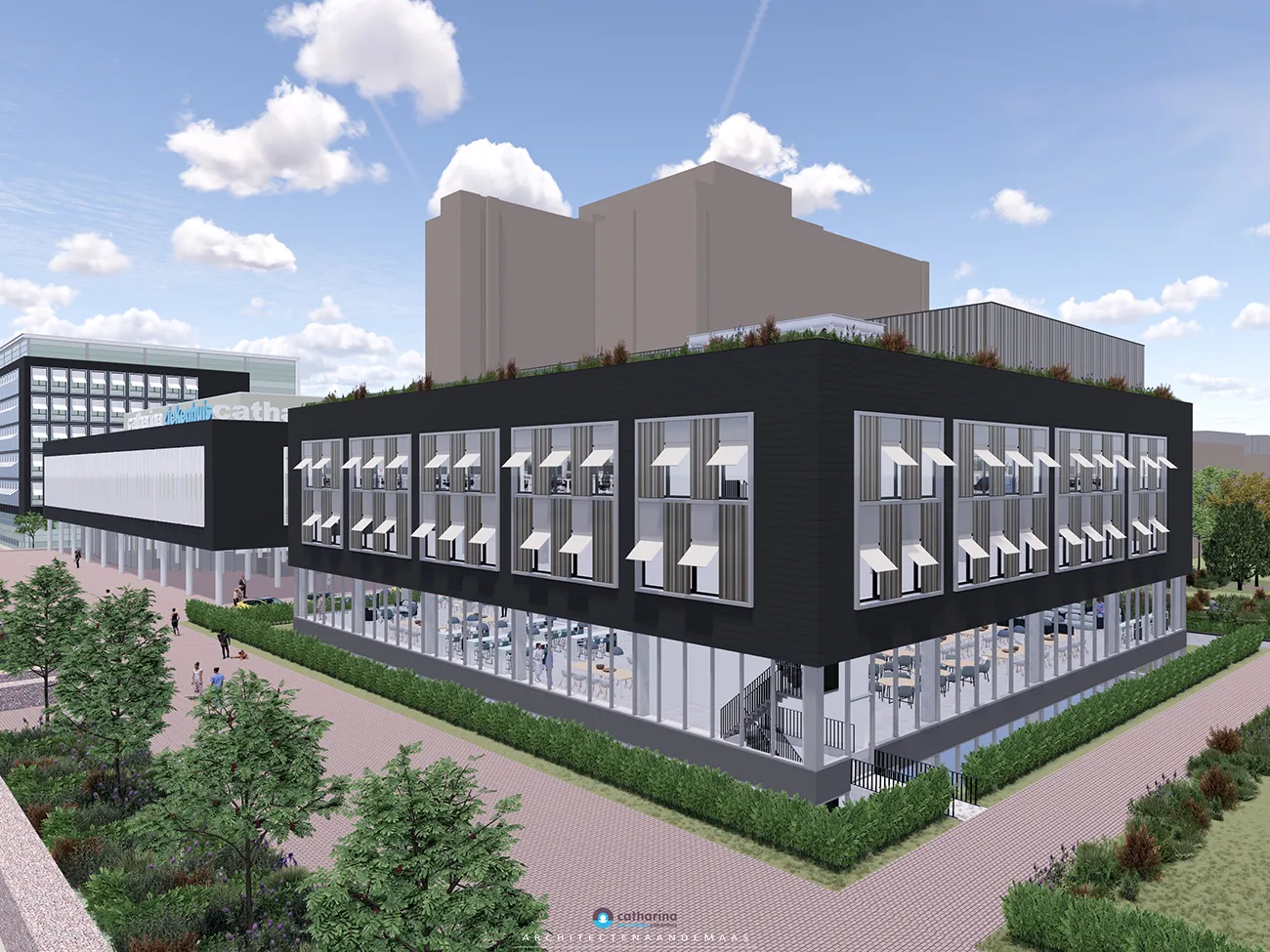
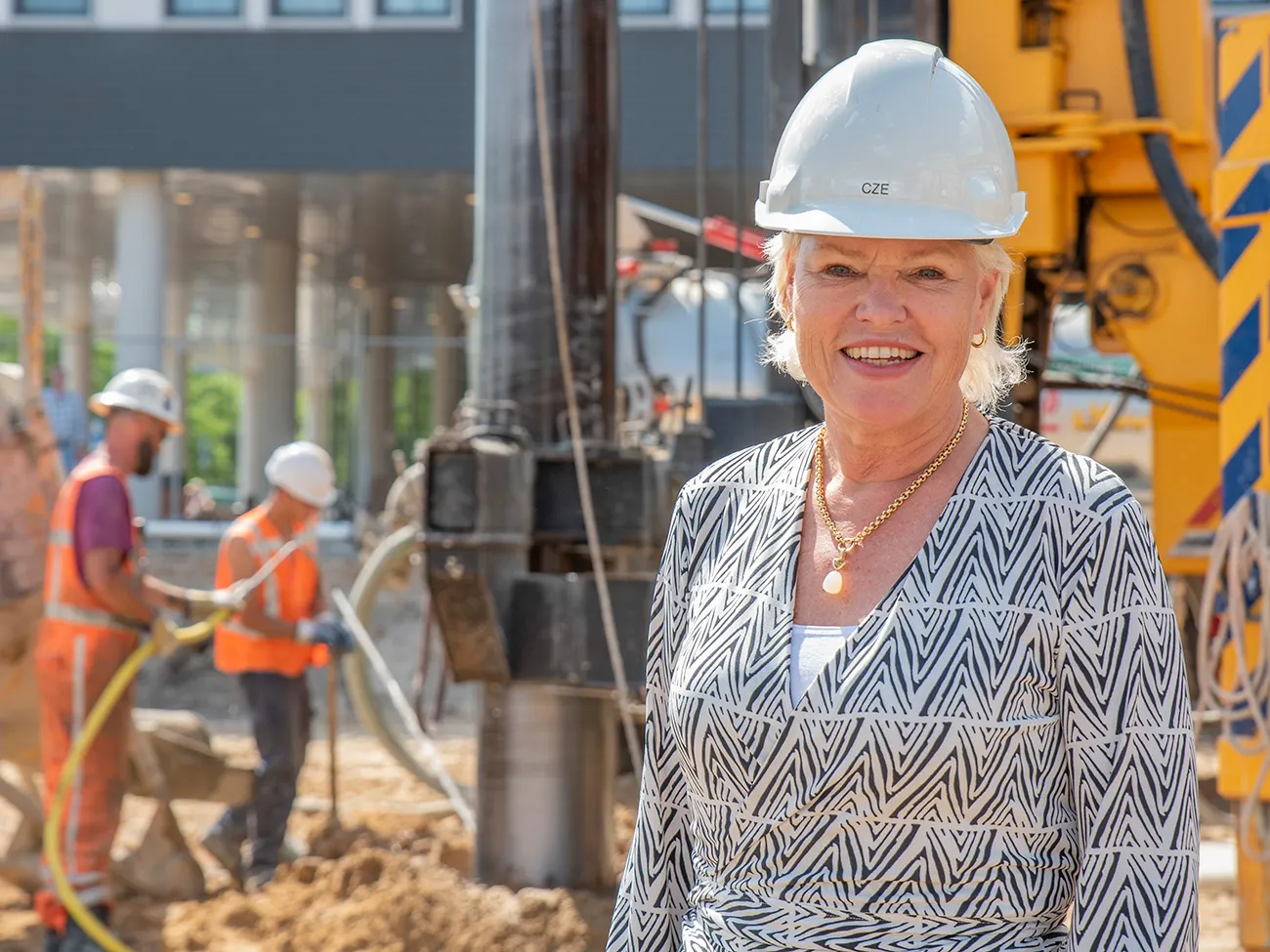
This afternoon, executive board member Geranne Engwirda drilled the first pile for the new multifunctional building, which will stand on the boulevard, right next to the main entrance of Catharina Ziekenhuis. The building will house a completely refurbished Central Sterile Services Department (CSSD) and hospital pharmacy, where medication is prepared for inpatients. Endoscope cleaning, for instruments used in bowel examinations, will also become an integral part of the CSSD.
Sustainability was central to the design of the four-storey building. Sustainable building materials will be used, the building will be delivered without a gas connection, solar panels will be installed and the roof will be covered with sedum (succulents).
The CSSD, where equipment and instruments from the operating theatres are cleaned and sterilised for reuse, will occupy a prominent position on the first floor. “Our surgeons use high-quality materials during operations. Robots are increasingly assisting our surgeons. This has implications for how we clean and sterilise the components of this equipment. We are preparing for this with state-of-the-art machines in the new CSSD,” explains Ralph van Wezel, who has ultimate responsibility for the CSSD as a hospital pharmacist. Cleaning medical instruments is physically demanding work. To reduce the workload for staff, processes will be automated as much as possible.
Using water more intelligently
“We will also use water more intelligently. Cleaning and sterilising medical instruments normally requires a lot of water. With new equipment, we can work more efficiently and therefore more sustainably! By combining the Central Endoscope Disinfection Unit (CSD) with the CSSD, we can also work more cost-effectively!”
Things will also become smarter and more efficient in the five new cleanrooms, where medication is prepared to meet the needs of individual patients. “We are also planning for the future there. The cleanrooms will be designed to allow certain repetitive tasks to be robotised in due course.”
Working from home
The ground floor will house a new staff restaurant for the 4,500 employees, offering a full range of responsibly sourced food and drink. The restaurant will also be designed for meetings, gatherings and presentations. The upper floors will feature a new office-based working concept. As working from home part of the time has become established practice for many colleagues in support services, less floor space is now needed.
The building is due for completion at the end of 2023. The total cost of construction and fitting out the building is 40 million euros.
Question about this story? Ask your question
Keep following this
Get an email when a new story is published. No account needed.
- SubjectGeneral







