











Comfortable, multifunctional ceiling hoists
Text Ramona KezerImage Lopital Nederland
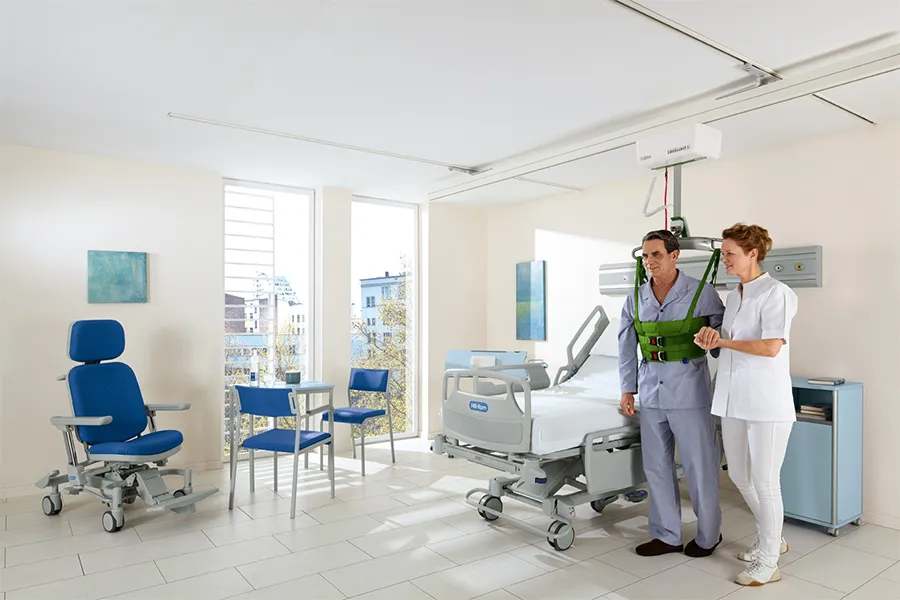
‘Include ceiling hoists in the design from the outset’
When a care facility is being built or refurbished, provisions such as ceiling hoists should be included in the design from the outset. That is the view of Ivo van der Ham, project manager at Lopital, a specialist in ceiling hoists for care settings.
“Discuss this with care staff at an early stage. They know best what they deal with in practice and what works for them,” says Van der Ham. Although recent research [1] shows that ceiling hoist systems add significant value for both clients and care staff, he notes that the care sector is not yet sufficiently aware of the options and benefits these systems offer. “Ceiling hoists can be used not only for patient transfers, but also during care procedures. For example, they can be used to hold a leg or foot up while a wound is being treated. They can also help turn clients from their back onto their stomach, or support them during walking exercises.”
Lopital develops, manufactures and implements solutions that help care staff prevent physical strain and reduce their workload. “We are currently working with a number of large hospitals to explore how our ceiling hoists can ease the burden on care staff. We prefer to sit down with the care organisation and contractor at an early stage of a building project. Once the building is already in place, all we can do is assess what is already in the ceilings and whether there is room for a hoist. That does not necessarily result in the best, or cheapest, solution.”
Growing demand
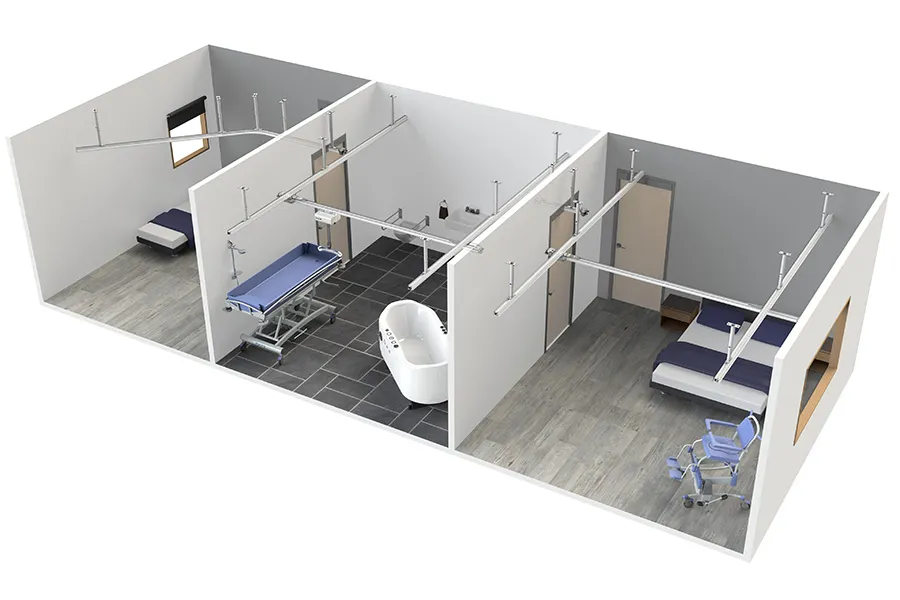
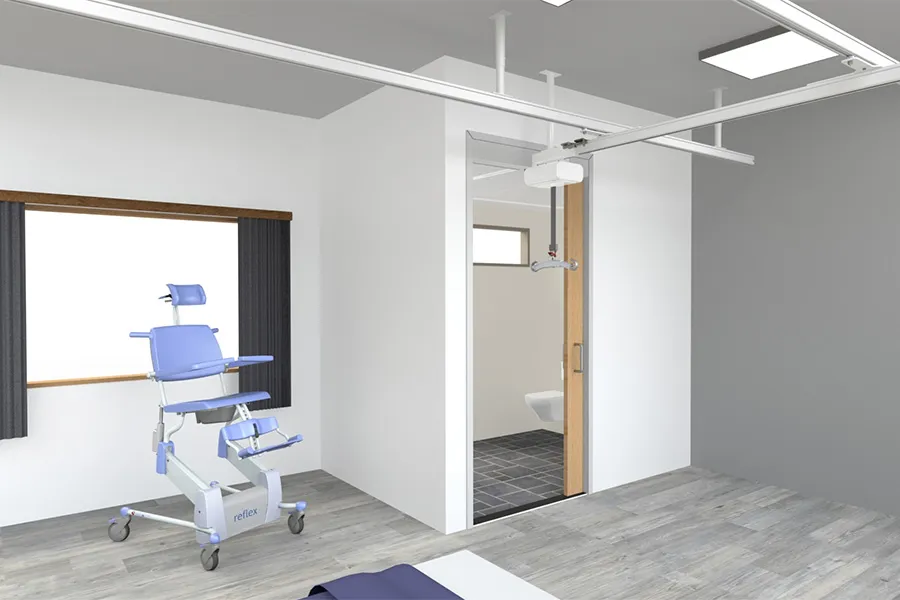
Ceiling hoists can be particularly useful in nursing homes. Clients are arriving at care facilities later and with more complex care needs. “We are seeing demand for ceiling hoists rise as a result. If the architect knows what we can offer, it can be incorporated straight into the design. The position of doors in relation to beds is also important. If a client needs to be transferred from their bed to the bathroom, it is much better if the door is directly opposite the bed.”
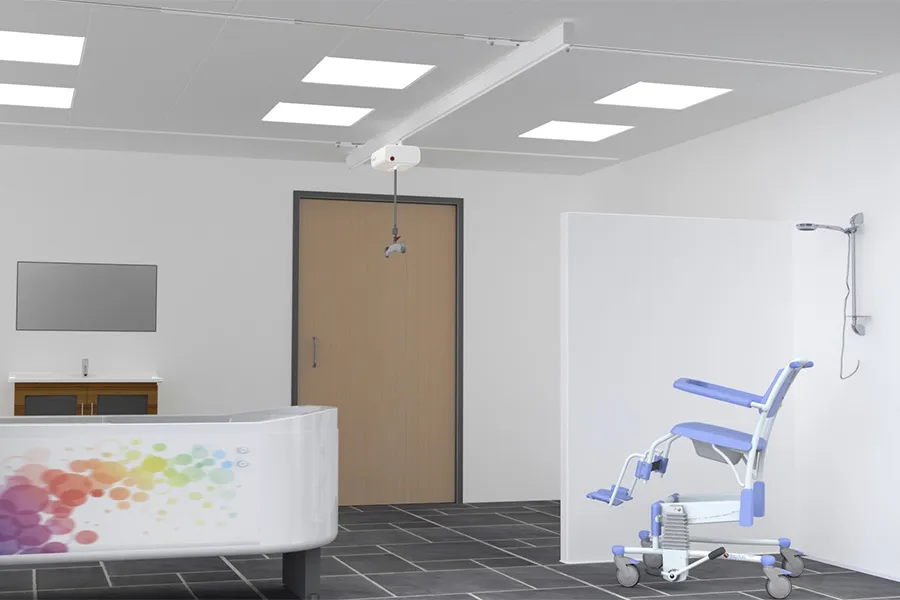
If the company becomes involved in a project at a later stage, the design often already includes specifications from another supplier. This regularly leads to problems. “The systems themselves are essentially identical: they all have a ceiling rail and must meet certain safety requirements. The difference lies in the finish and the comfort they provide for care staff and clients. And once a particular rail system has been selected for installation during construction, that choice determines which system can be used.”
Safe, quiet and comfortable
In the Netherlands and Belgium, Lopital is the sole supplier of hoists made by the Swedish brand Liko. They are equipped with the quietest lifting motors on the market. The motors also feature a unique fall protection system. If a mechanical fault occurs in the motor, the client will not be left suspended at the top of the lift. The strap then unwinds slowly, lowering the client back over the bed. The lifting slings are also shaped to minimise pressure on the client’s skin. “The weight is distributed evenly, preventing uncomfortable pressure points. Our ceiling hoists also come out on top in tests. We choose quality, safe and effective solutions.”
Lopital is ready to work closely with architects, contractors and care facilities. “All our systems are available as 3D models and can be imported into the architect’s design. Our technical draftspeople can also draw them into the plans. This makes it immediately clear how the system fits in with the lighting plan and other provisions.”
[1] Gezond & Zeker in collaboration with the Zeeland care organisation SVRZ
Question about this story? Ask your question
Keep following this
Get an email when a new story is published. No account needed.
- SubjectGeneral







