











Consortium IMM/Unity to build pioneering vaccine complex at UAntwerpen
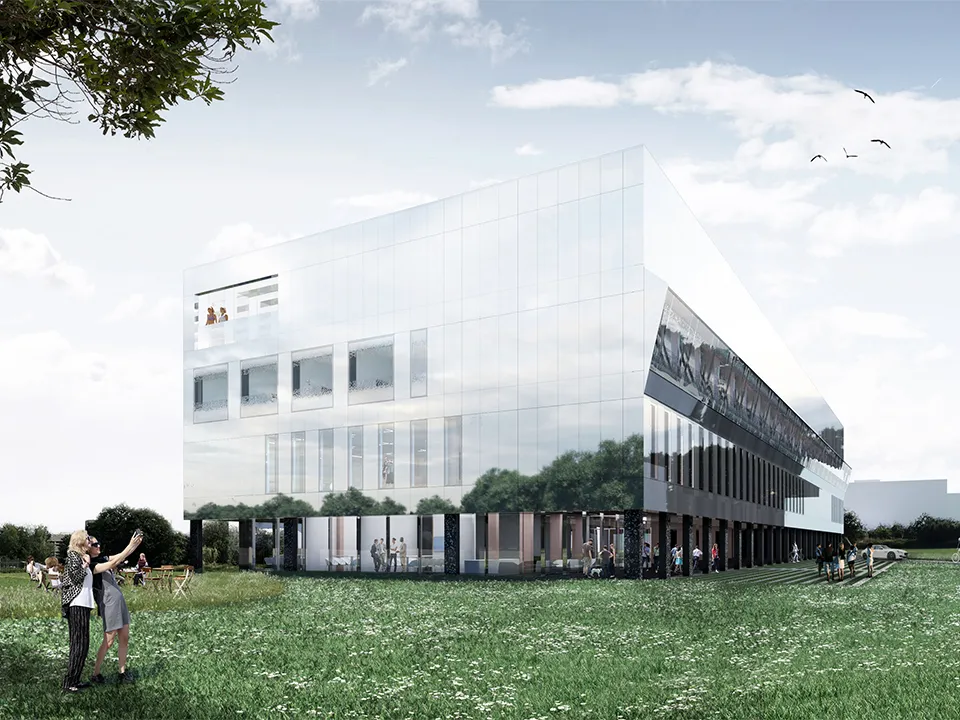
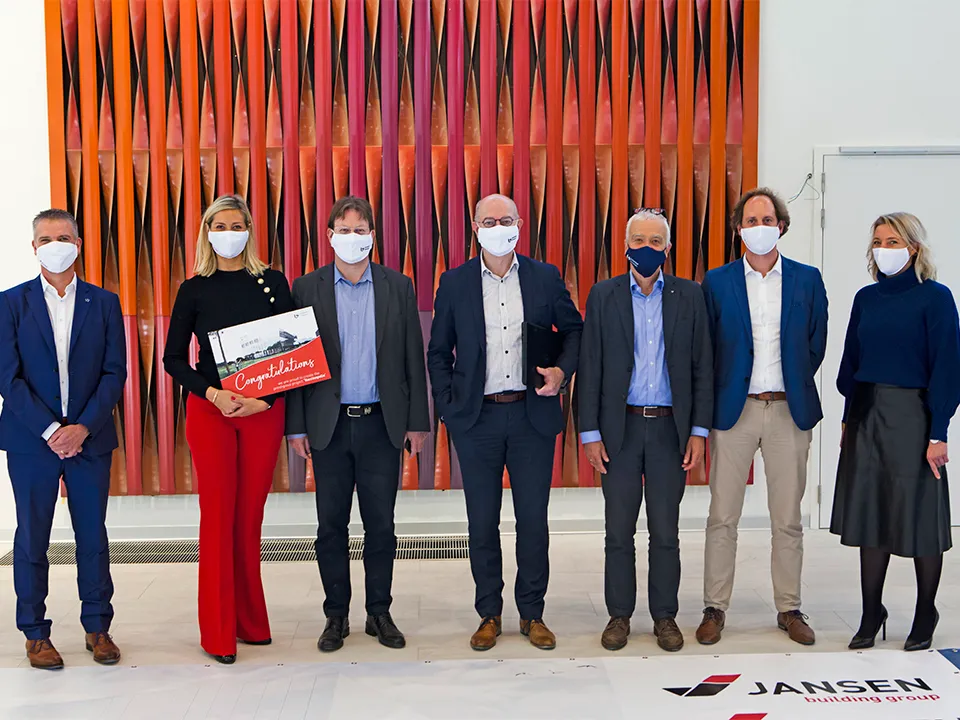
Queen Mathilde recently visited the University of Antwerp. Among other things, Her Majesty was briefed on Vaccinopolis, the pioneering complex that will make it possible to test new vaccines more quickly.
It was recently announced which construction partners will lead the prestigious project: the honour goes to the aptly named IMM/Unity consortium. In response to global demand for vaccines, the partners will deliver the innovation centre in just 18 months, rather than the usual 4 to 5 years, while meeting exceptionally high safety standards.
As the climate changes and people live closer together, grow older, travel more, and so on, viruses are emerging and spreading faster than ever. Developing vaccines is therefore one of today's most important global challenges. The Belgian federal government is investing 20 million euros in the creation of a European anti-infectious disease unit, with specialist facilities in Antwerp (UAntwerpen) and Brussels (Université Libre de Bruxelles). Private-sector partners are also contributing.
Under the leadership of Prof. Arnaud Marchant (ULB), a state-of-the-art immunology laboratory is being built in Brussels. From early 2021, the Vaccinopolis vaccine centre will take shape on the Antwerp university's Campus
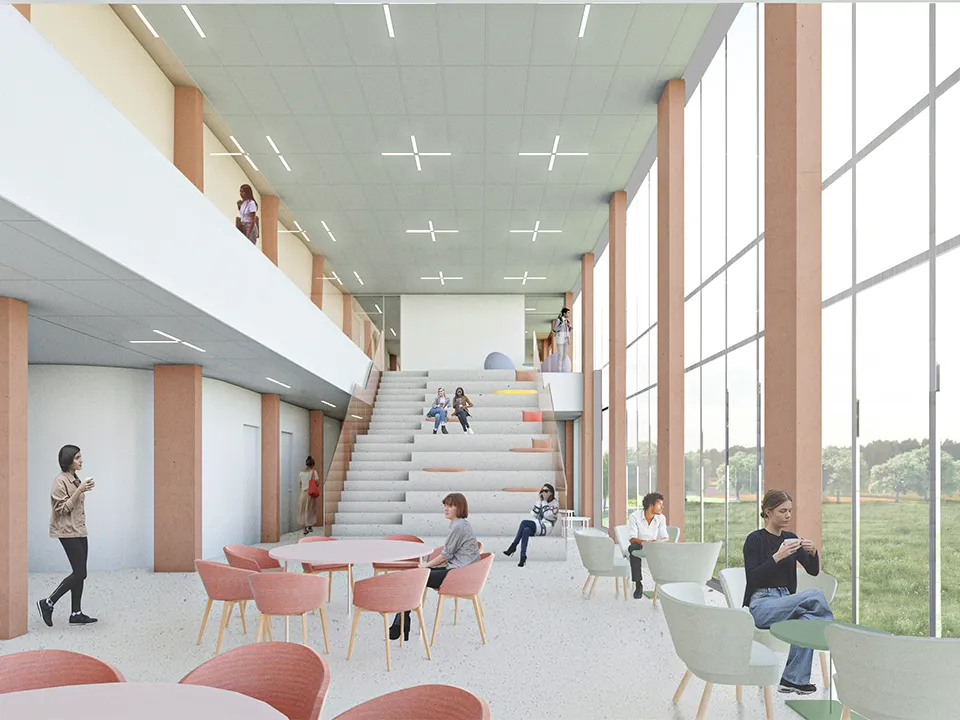
Drie Eiken, bringing together leading experts from a range of disciplines. “The complex will comprise a clinical testing area, laboratories, offices, consultation rooms, and accommodation and recreation facilities,” says Prof. Pierre Van Damme (UAntwerpen).
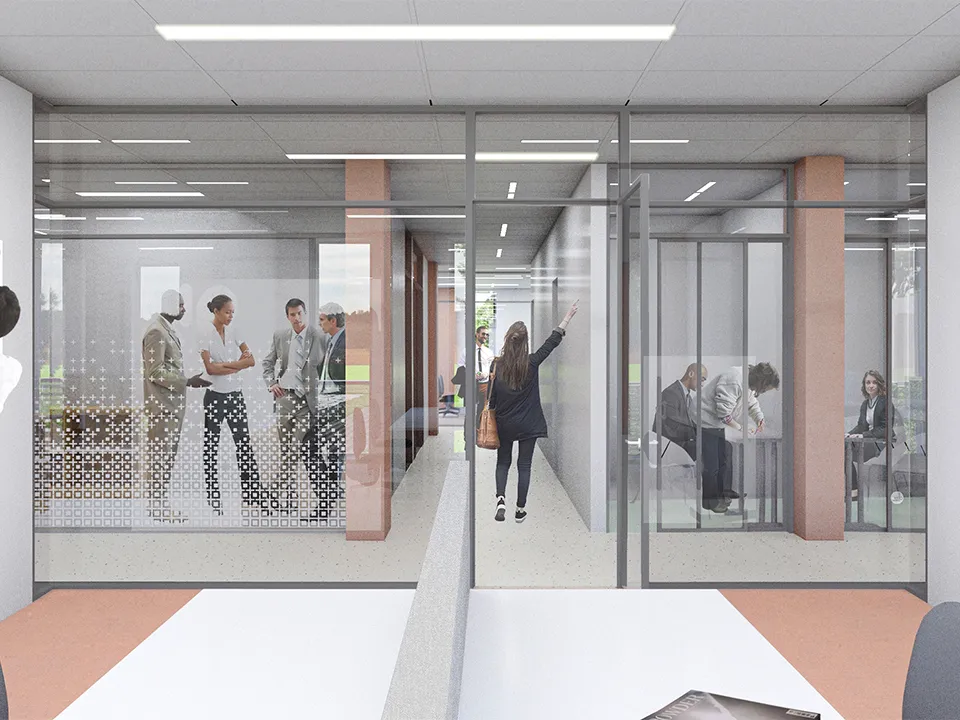
“This will allow us to test vaccines under quarantine conditions on up to 30 people at a time. We will do this using Controlled Human Infection Models (CHIM). In this ‘human challenge’ research, healthy vaccinated volunteers are effectively challenged by being exposed to a weakened or unweakened version of a specific pathogen. This makes it possible to develop and test vaccines quickly and cost-effectively.”
UAntwerpen selects experienced IMM/Unity consortium
UAntwerpen recently announced that the IMM/Unity consortium will lead the construction process. The main reasons for the decision? The partners’ experience and specialisation in similar projects.
“We are working under a so-called ‘design, build & maintain’ (DBM) arrangement,” says architect Roy Pype (Proof of the sum). “Proof of the sum, Exilab, Abstract Architecten, burO Groen and Establis are responsible for the integrated design. Jansen Building Group, Jansen Cleanrooms and Cordeel will handle construction. Imtech Belgium and Jansen Cleanrooms will be responsible for maintenance for 15 years.”
Racing ahead with Vaccinopolis
Exceptional circumstances call for exceptional measures. COVID-19 has shown that viruses can strike quickly and without warning. The project partners are therefore cutting the usual delivery period, normally 4 to 5 years, to 18 months: Vaccinopolis will open its doors on 1 March 2022.
Eric Vanhees (COO, Jansen Cleanrooms) is keen to get stuck into this prestigious project: “The challenge is to reconcile the extremely short delivery time with the required level of biotechnological safety. Given the global urgency, we are shortening every stage of the process, from design, completed in a record 5 weeks, and negotiations, which take 8 weeks, to the permit application and construction. Thanks to the CD20 prefabricated construction system, we will build a 4-storey building in just 9 months. We will also meet the standards for the exceptional biosafety level 3. This involves carefully planning the movement of people and materials through the building, designing critical rooms so they can be disinfected individually, and choosing smooth finish materials that are hygienic and easy to clean.”
Biosafety Level 3
Vaccinopolis has very stringent safety requirements. Certain zones must meet Biosafety Level (BSL) 3. Work in these areas involves pathogens that cause very serious diseases and could potentially spread through the population, but for which medicines or vaccines are available. Examples include polio and tuberculosis.
One of the major construction challenges is ensuring that the building is airtight to a very high standard. A box-in-box structure is therefore being built within the external envelope, effectively creating a building within a building. Its walls will be clad in High Pressure Laminate (HPL), with all joints sealed airtight. Airtightness will then be checked room by room using smoke tests carried out by an independent inspection body.
Eric Vanhees: “In the completed building, certain rooms will be kept under negative pressure. The air pressure in these BSL 3 environments will be 30 Pa lower than in the surrounding area. Air therefore flows inwards, preventing any viruses from escaping that way. Access is always through an airlock with two doors, which cannot both be open at the same time. The rooms will be served by a central ventilation unit, but in air-handling terms they will be 100% isolated from one another by filters on the incoming and outgoing airflows.”
Bag-in, bag-out filters will be installed at Vaccinopolis. These filters are housed in plastic casings that can be completely sealed. Materials and potentially contaminated waste may only be taken outside once they have been double-bagged and disinfected on the exterior. This protects maintenance technicians and the outside world from contamination.
A major advantage of High Pressure Laminate is that it can be thoroughly disinfected and withstands commonly used disinfectants such as hydrogen peroxide. Ordinary paint would be damaged by these products. The furniture in the rooms and bathrooms will therefore also be made from HPL.
Eric Vanhees: “All wastewater, including water from the toilets, will also be collected in kill tanks. It will be rendered virus-free there before entering the sewer system. A heat exchanger will be fitted to the ventilation system to reduce energy consumption. This is not straightforward, as the incoming and outgoing airflows must be kept completely separate.”
Experience
It is clear that Vaccinopolis is not a project for beginners. Cordeel has extensive experience with buildings for hospitals and medical research centres, and Jansen Cleanrooms is also no newcomer. The company built the cleanrooms for virologist Marc Van Ranst’s laboratory on KU Leuven’s Gasthuisberg campus. The safety level there was BSL 3+, even higher than at Vaccinopolis. Jansen Cleanrooms is also currently building 2000 m² of laboratories and cleanrooms for Univercells in Jumet, a company focused on biotechnological production.
Eric Vanhees: “Vaccinopolis is a Design, Build & Maintenance project. At Jansen Cleanrooms, we prefer Design & Build projects because they allow us to guarantee quality, including that of the building services, from the outset. This project is also being delivered entirely in BIM. That is now standard practice across all our projects. Over the past three years, we have grown from one to seven BIM technicians. BIM also offers major benefits to our clients: they can form a clear picture of a project at an early stage.”
Een zakelijke vraag aan Abstract Management en Advies B.V.? Get in touch
Who worked on it
Vaccinopolis in Antwerpen
- integrale ontwerpAbstract
- integrale ontwerpProof of the sum
- integrale ontwerpExilab
- integrale ontwerpburO Groen
- integrale ontwerpEstablis
- constructionJansen Building Group
- constructionJansen Cleanrooms
- constructionCordeel
- maintenanceImtech Belgium
Keep following this
Get an email when a new story is published. No account needed.
- ProjectVaccinopolis
- SubjectGeneral
- CompanyAbstract Management en Advies B.V.
- CompanyProof of the sum
- CompanyExilab
- CompanyburO Groen
- CompanyEstablis







