











Did you know?

15 remarkable healthcare facts
We’ve rounded up a selection of remarkable facts about hospitals, healthcare buildings and exceptional care environments. From a hospital that has stood on the same site for more than nine centuries to a car park that can be transformed into an emergency hospital within 72 hours. Each fact, or simply an interesting piece of trivia, reveals a little of the history, innovation and ingenuity of the healthcare sector.
1. The oldest hospital still on its original site is in London: St Bartholomew’s Hospital was founded in 1123. It is the oldest hospital in the United Kingdom still providing medical care on the site where it was established.
2. The world’s tallest hospital building is 148.5 metres high: The Li Shu Pui Block at Hong Kong Sanatorium & Hospital has 38 floors and more than 400 beds.
3. The world’s largest hospital has 3,294 beds: Chris Hani Baragwanath Hospital in Soweto, South Africa, is registered as the hospital with the largest bed capacity in the world.
4. A 2,000-bed hospital lies beneath Haifa: Rambam Health Care Campus has a car park for 1,500 vehicles beneath it. Within 72 hours, it can be converted into a fortified emergency hospital.
5. Hospitals have protected status during armed conflicts: Under international humanitarian law, hospitals must be protected.
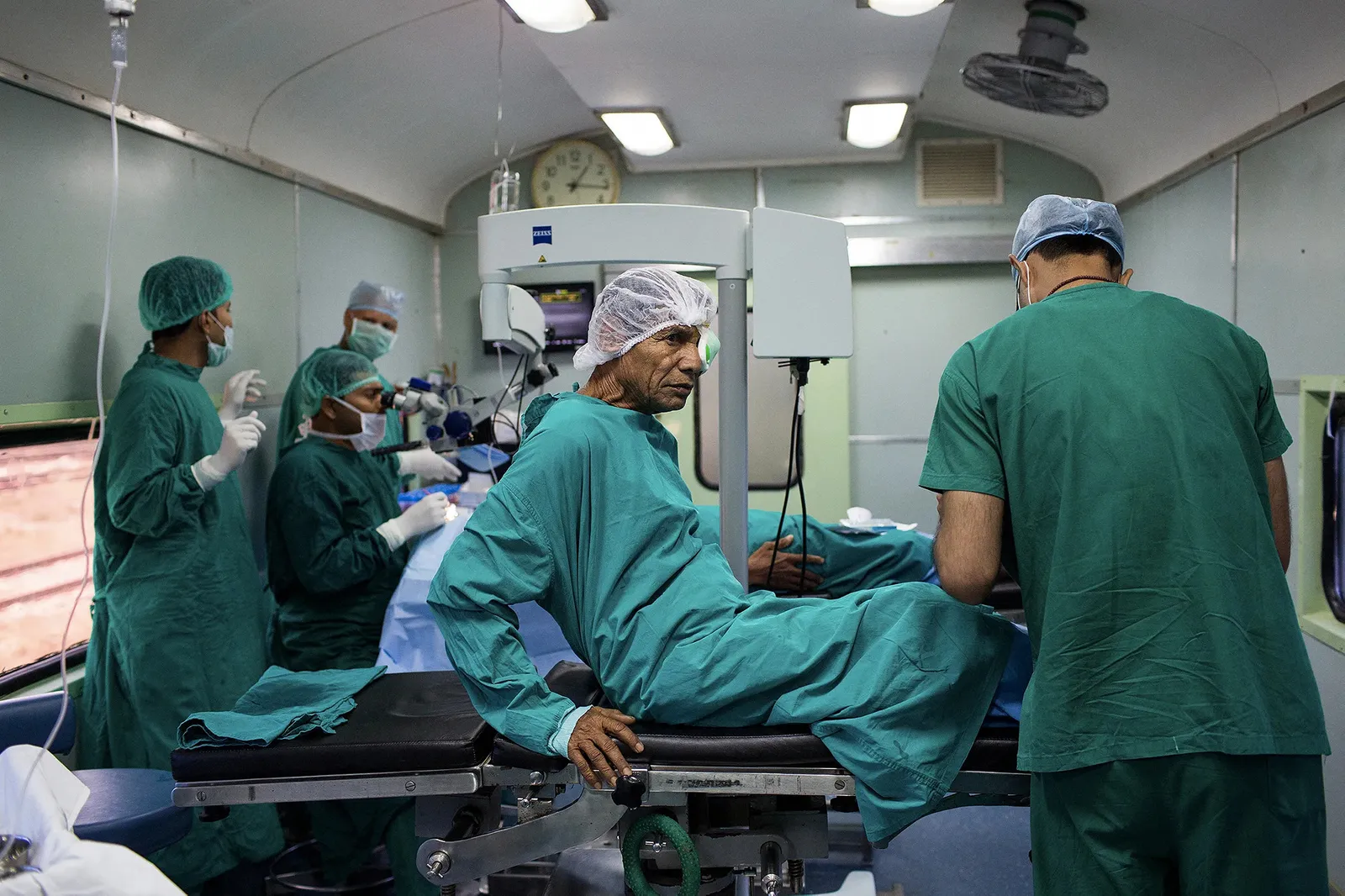
6. India has a hospital on rails: De Lifeline Express has been travelling to remote areas since 1991. The train has seven carriages, including examination rooms and operating facilities, providing free medical care.
7. Hospice, hospital and hotel are etymologically related: The words derive from the same Latin word family associated with guests, hospitality and shelter. A hospice was originally a place where travellers could stay.
8. The first stethoscope was made from rolled-up paper: In 1816, French doctor René Laennec rolled sheets of paper into a cylinder to listen to a patient’s chest. He later developed a wooden version.
9. The Netherlands already had an academic hospital in 1636: At Leiden’s Caeciliagasthuis, several beds were made available for medical teaching. According to LUMC, this marked the founding of the Netherlands’ first academic hospital.
10. A nursing home in Weesp is laid out like a village: De Hogeweyk was developed for people with severe dementia. Residents live in small-scale homes and can visit a café, restaurant, theatre and supermarket, among other places.

11. Hospital refurbishment can pose an infection risk: Demolition, drilling and excavation can spread dust and mould spores. Patients with severely weakened immune systems are particularly vulnerable, so construction areas must be carefully sealed off.
12. The first robot receptionist in a hospital worked in Belgium: In 2016, two humanoid robots, both called Pepper, started working at hospitals in Ostend and Liège. Pepper could recognise speech in 20 languages.
13. The world’s largest civilian hospital ship has six operating theatres: Global Mercy is 174 metres long and was purpose-built to provide medical care. It has six operating theatres and 199 patient beds on board.
14. A hospital in Singapore was designed as a green oasis: Khoo Teck Puat Hospital combines patient care with gardens, water features and natural ventilation. It received the first Stephen R. Kellert Biophilic Design Award for this approach.
15. Millions of cataract operations are carried out in the European Union: The procedure involves replacing the cloudy lens of the eye with an artificial one. An estimated 4.5 million cataract operations were carried out in the European Union in 2025.

Question about this story? Ask your question
Keep following this
Get an email when a new story is published. No account needed.
- SubjectGeneral







