











‘Flemish care regulations must become more flexible, funding more transparent’
Text Koen MortelmansImage Vlozo
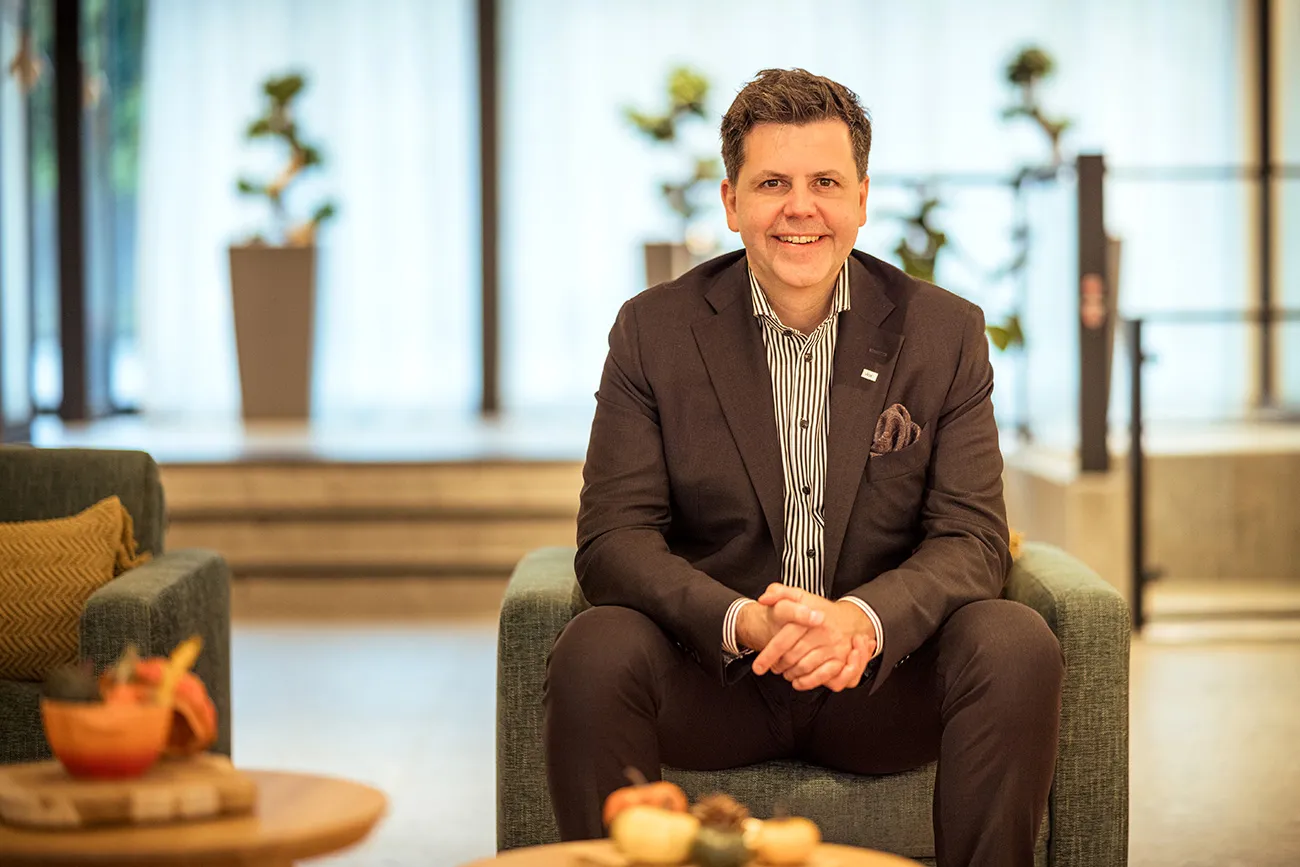
Johan Staes: Managing Director, Vlaams Onafhankelijk Zorgnetwerk (Vlozo)
Ahead of the regional and community elections on 9 June, Vlaams Onafhankelijk Zorgnetwerk (Vlozo) has set out a number of policy proposals in a memorandum on the organisation of elderly care in Flanders. Vlozo is the sector federation for private care providers in Flanders. Together, its members manage more than a third of all places in residential care centres in Flanders recognised and subsidised by the Flemish government, and employ more than 20,000 people.
More choice and care close to home
“Should older people stay at home for as long as possible? This is currently the official guiding principle of Flemish residential care policy. Vlozo believes this approach needs to be adjusted,” says managing director Johan Staes. Home care is undoubtedly very important, but it should not become a fetish. ‘Home’ means much more than the walls of one’s own house. It must also be a place where people feel physically and emotionally safe and comfortable. If this is no longer possible, for example because physical difficulties are compounded by unsuitable infrastructure or a lack of mobility outside the home, ‘home’ can gradually become a very uncomfortable form of ‘solitary confinement’.”
“Residential care for older people can be about so much more than caring for people with the most complex needs in the final stages of their lives. A care home as a specialist hospital exclusively for older people who need care? No, thank you. Care home residents deserve quality of life. That is why a care home where people can enjoy living needs a good mix of older people with different care needs. This encourages social interaction and creates a sense of belonging, which also improves residents’ mental wellbeing.”
“Residential care for older people in Flanders encompasses more than care homes. There are also assisted living facilities, short-stay centres, convalescent care centres and day care centres. There is also growing interest in innovative co-housing concepts and other small-scale housing initiatives, driven in particular by the changing expectations of a new generation of older people who want more choice and flexibility.”
“Unfortunately, Flemish regulations have not kept pace with this growing demand for more choice and flexibility. Yet innovative concepts in residential care give older people the opportunity to choose the type of housing that suits them best. That is why it is important for the Flemish government to encourage these new forms of residential care within a less restrictive regulatory framework.”
Prevention is better than cure
“The Flemish government, primary care zones and local authorities could do more than simply raise older people’s awareness of the challenges that come with increasing care needs. They could also encourage them to plan ahead by choosing housing suited to every stage of life, or to move sooner to a suitable living environment. And if they still need appropriate care, it should be provided in practical, small-scale and normalised living environments.”
Funding
“Funding for elderly care in Flanders must become simpler and more transparent, with no distinction between private and public care. At the very least, the Flemish Social Protection system could cover 100% of the costs of care functions, and Flanders could finally fund the roles it requires itself, such as that of care home director. The care budget to which older people with care needs are entitled does not currently keep pace with the rising cost of living. It should at least be indexed.” A new funding model that strengthens the link with social security is needed to secure the future of elderly care in Flanders. “Give older people with care needs a person-centred budget that allows them to choose the care they want. Care providers should receive sufficient core funding to ensure they can operate. Pensions must be high enough to cover other housing and living costs.”
Staff
“Older employees are leaving the labour market to enjoy their retirement, while fewer and fewer young people are choosing a career in care, and more are giving it up. The social partners and governments must work harder together to improve the image of elderly care and make the sector more attractive. Specifically, we are calling for far greater flexibility in staffing requirements and pay policy. Staffing requirements and the division of duties could be reviewed. Flemish training for nurses and care workers could be more tailored, encouraging more young people and career changers to choose elderly care.”
Question about this story? Ask your question
Keep following this
Get an email when a new story is published. No account needed.
- SubjectGeneral







