











Flemish minister Jo Vandeurzen: ‘Older people in Flanders who need care can rest easy’
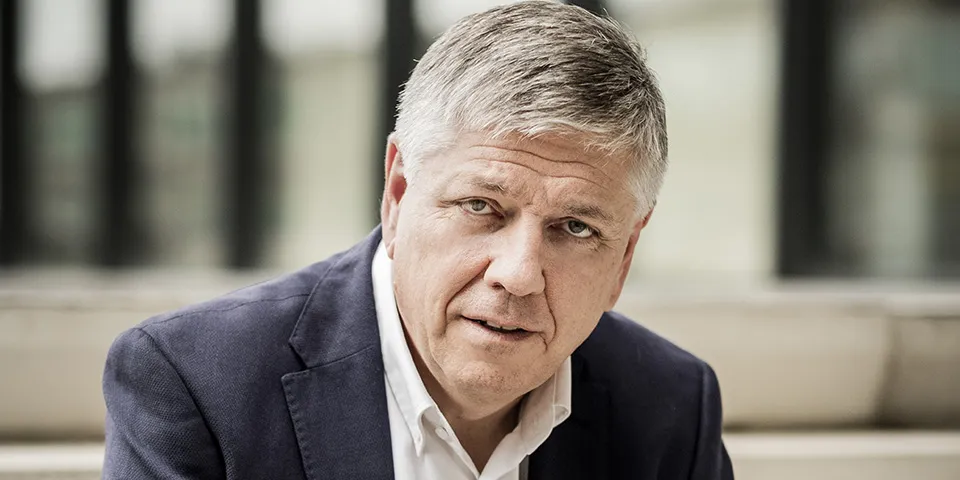
Flanders has enough places for people who need a stay in a residential care centre or a short-stay centre. That is according to Jo Vandeurzen (CD&V), Flemish Minister for Welfare, Public Health and Family. He has recently added a new tranche of places to residential care for older people, on top of the catch-up programme that created 10,000 additional places during the previous parliamentary term.
Vandeurzen also created additional capacity to expand home care services and improve funding for levels of care need. At the end of May, sector organisations were told who could create which places, and when. They can now draw up concrete plans. “This allocation represents an additional investment of 162 million euros for the period 2020-2025,” the minister says.
For the period 2020-2025, organisations in Flemish residential care for older people already held advance authorisations to add 7,307 places in residential care centres and short-stay centres. “We gave the organisations that held these authorisations the opportunity to choose: they could either use them to create additional capacity in a residential care centre or a short-stay centre, or convert them into better funding for care or a home care service. They were asked to discuss their choice with stakeholders active in the same primary care zone. They showed a strong willingness to agree arrangements with one another so that services could be better tailored to local needs.”
Residential care provision secured until 2025
Between 2014 and 2019, Flanders achieved and approved an unprecedented increase in the number of places in residential care centres. “This expansion by almost 10,000 places has virtually eliminated waiting lists for this type of residential care. With this latest investment, more than 5,000 additional places will be added to residential care centres and short-stay centres during the coming parliamentary term. As far as possible, these places have been and will be allocated in line with local care needs and demographic trends.”
If capacity in residential care centres and short-stay centres expands as planned, there will be a maximum of 91,914 places available in Flanders, Vandeurzen explains. “A research team at the Policy Research Centre for Welfare, Public Health and Family, led by Professor Erik Schokkaert (KU Leuven), is currently developing a forecasting model for care for older people in Flanders. Preliminary forecasts from this model suggest that, if 91,914 places in residential care centres and short-stay centres are available in Flanders in 2025, provision will be almost sufficient to meet the expected demand for this type of facility.”
Leaving politics
Vandeurzen, who was responsible for care as a minister for ten consecutive years, announced before the elections that he no longer had political ambitions. He did stand as a candidate, as the last candidate on the Limburg CD&V list, and was elected. But he will not take up his new parliamentary mandate. He does have some advice for his successor: “It is important to continue the multi-track policy we are pursuing and to keep investing in home care, including by increasing the allocation of hours for family care.”
Palliative day care centres
The option of converting advance authorisations into home care services gives residential care centres the opportunity to tailor their range of care more closely to local needs. For example, in addition to the five existing palliative day care centres in Flanders, three more are being established, in Knokke-Heist, Dentergem and Roeselare.
Awareness of advance care planning, palliative care and end-of-life care is growing both in society at large and in residential care centres. As part of their quality policies, residential care centres make ethical questions about palliative care and the end of life a subject for discussion, and respect residents’ choices. Vandeurzen set up a working group to develop a framework for this. “This framework should guide board members and managers in their approach to advance care planning, palliative care and end-of-life care, and in providing high-quality, effective care and support to residents of their residential care centres. It sets out the essential conditions for high-quality advance care planning, palliative care and end-of-life care, including particular attention to people with dementia and to residents’ informal carers and loved ones. This framework is an important step forward for the quality and further professionalisation of care for older people in Flanders. The Flemish Care Inspectorate will develop an inspection approach aligned with this framework,” the minister explains.
Question about this story? Ask your question
Keep following this
Get an email when a new story is published. No account needed.
- SubjectGeneral







