











Guus Schrijvers: ‘Chronic care does not benefit from ‘shopping’’
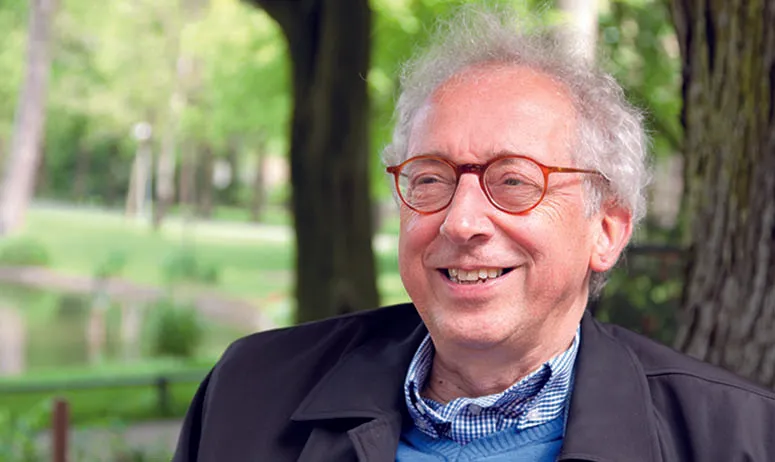
His recent book, ‘Healthcare innovation according to the cappuccino model’, which replaces fee-for-service payments with payments for care pathways, is resonating with healthcare professionals. Emeritus Professor of Public Health Guus Schrijvers also remains very active on the lecture circuit and in advising organisations on restructuring. Innovation is the mantra of this committed health economist, but Schrijvers never loses sight of the target group. “Entrepreneurship in healthcare? Yes, but only if you love the end product: the patient.”
According to Schrijvers, his book ‘Healthcare innovation according to the cappuccino model’, launched late last year, is a starting point for sustainable, affordable care based on integrated care chains. It comes at a time when the decentralisation of care is attracting considerable attention. The complex financial realities of the sector, with its many players and shifting relationships, have not stopped Schrijvers from presenting an integrated vision of the healthcare economy. “After all, I trained as an economist. In my view, organising care well starts with defining the target group. This applies, for example, to national insurers and their customers, but also to a restructuring such as that of De Sionsberg hospital in Dokkum, which I am closely involved in. We need to move towards better integrated care, with the patient group at its centre. A good entrepreneur looks not only at the money coming in, but also at whether the customer is actually being served.”
‘Still too many barriers’
The cappuccino model is therefore based on entrepreneurship ‘with a love for the customer’, says Schrijvers. “People with chronic conditions, for example, benefit from good integrated care and long-term relationships, which must be maintained. ‘Shopping’ around for the cheapest provider does not work in chronic care. That is why, in my view, we should pay healthcare providers for programmes and care pathways, by period rather than by procedure. We are talking about genuine collaboration focused on the end result, not just a funding model. For example, I come across many enthusiastic initiatives in health centres under the so-called ‘one-and-a-half-line care’ model, but sharing a building does not in itself amount to high-quality collaboration. There are still too many barriers between primary and secondary care.” Schrijvers argues, for example, for the introduction of a ‘social geriatrician’ between the nursing home physician and the clinical specialist. “The cappuccino model aims both to make care affordable and to improve its quality. The book is intended mainly for middle management in healthcare organisations, and is proving popular with that readership.”
Video link
The recently declared bankrupt regional hospital De Sionsberg is likely to operate as a multifunctional health centre after a restart, offering outpatient services and integrated elderly care, among other things, similar to the ‘one-and-a-half-line care’ model mentioned above. Is innovation through bankruptcy really the right approach? “Small hospitals are struggling, and innovation often begins in circumstances like these. Profitable organisations have too little incentive to innovate. But innovation is essential to keep care affordable. The proverbial ‘foam on the cappuccino’ in my model is an additional payment for innovation on top of the care tariff, for a reason. Shrinking regions offer a huge growth market because of an ageing population. I tell the parties involved to respond to that: define your target group and work together. At present, the GP too often acts as a psychologist who refers patients on, making care unnecessarily expensive. A patient in a shrinking region might go to a major city outside the region for heart surgery, but can have an ECG taken at the GP’s surgery. A cardiologist can then be brought in relatively easily via a video link.”
‘Social housing provider’
Schrijvers also advocates splitting hospital activities, such as emergency, elective and oncology care, into separate businesses. This could, for example, ensure the continuity of loss-making departments, says the former professor. “Cooperation between hospital organisations also plays an important role in keeping hospitals in shrinking regions afloat.” Drawing on his expertise, Schrijvers also has a perspective on the fundamentals of housing with care and accommodation for older people, from both the ‘bottom-up’ and ‘top-down’ angles. “I believe that older people want and need to continue doing meaningful things, while also being able to live safely. So, while you are still healthy, you need to think carefully as an individual about the housing choices involved. I also find that municipal policies do not yet sufficiently align care provision and housing: older people who need care, or people with chronic illnesses, are expected above all to live at home for longer, and municipalities treat the WMO as a kind of social assistance. I would like to see housing associations continue to play an important role in delivering housing for older people. To me, a housing association director is a committed, genuine ‘social housing provider’, with an eye for the groups they serve.”
Text: Jan-Kees Verschuure
Question about this story? Ask your question
Keep following this
Get an email when a new story is published. No account needed.
- SubjectGeneral







