











HFDV annual conference: The environment and technology at the service of the patient
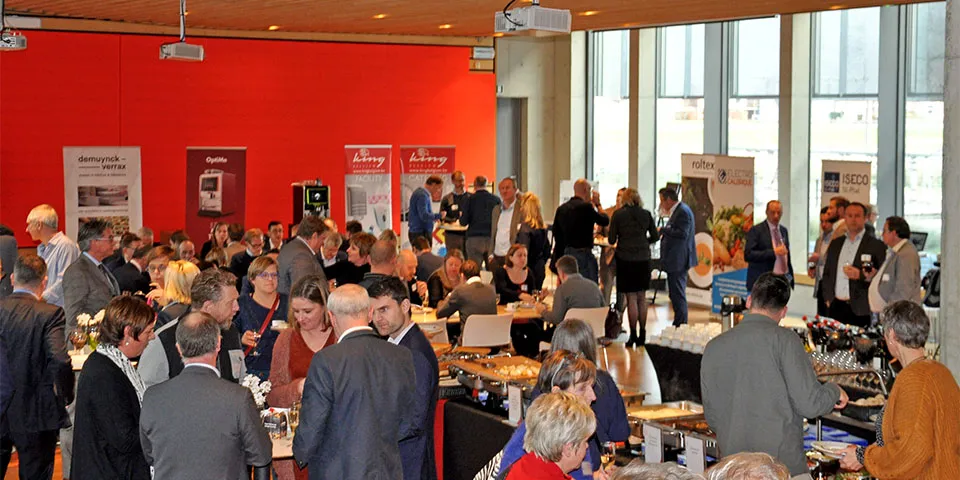
For its latest annual conference, HFDV (Heads of Facility Services in Care Institutions) chose the provincial government building in Flemish Brabant as its venue. Around 160 people travelled to Leuven to attend.
Chair Luc Vanhaverbeke opened the conference. The first invited speaker was Jan Van Hecke, coordinator of the Prof consortium, a European think tank and innovation platform in the care sector. The consortium brings together companies from a range of sectors (flooring, lighting, furniture, design, architecture, etc.) to work together on designing the patient room of the future. Alongside innovation, its focus is on comfort, ease of use and ergonomics. One premise is that the environment has a major impact on a person’s state of mind. Van Hecke discussed the development of the ‘patient room of the future’.
Mango moments
Kris Vanhaecht, professor at the Leuven Institute for Healthcare Policy, part of KU Leuven, discussed the significance of Mango Moments in a facilities context. The Mango Moment is a phenomenon that originated in a Belgian hospital but has since spread beyond the country’s borders. Some international organisations use it as a state-of-the-art example of person-centred care.
In her television programme Via Annemie, Annemie Struyf visited the intensive care unit at UZ Leuven. There she met patient Viviane, who had woken from a coma two months earlier. During their conversation, Viviane mentioned, among other things, that she had considered asking for euthanasia several times, but also spoke about the small things that could make her happy. Moved by her story, Struyf asked what she could do to make Viviane happy. “A mango,” came the reply.
When Vanhaecht saw the report, he immediately wondered how it was possible that nobody on the ward knew that receiving a mango would give Viviane so much pleasure. He came up with the idea of introducing and further exploring the concept of the Mango Moment. He persuaded Kom Op Tegen Kanker (KOTK) to fund the project. The concept quickly took root in various hospitals and other care institutions. It was also given a definition: ‘A care professional creates a moment of great value with a small gesture or an unexpected act of kindness.’ “It happens during routine care activities, is not specific to any illness, and requires little or no time, resources or energy,” says Vanhaecht.
Research
The Mango Moment model took shape during the preparatory research, which analysed a thousand Mango Moment stories from patients and care professionals. “This showed that Mango Moments do not simply happen: certain conditions need to be in place for patients and their family members, such as being receptive to them; for care professionals, such as providing safe care; and for management, such as offering sufficient support. The research also showed that Mango Moments have three general effects: greater satisfaction and a better care experience for patients and their families, a stronger bond of trust between care recipient and care provider, and greater
engagement among the professional team.”
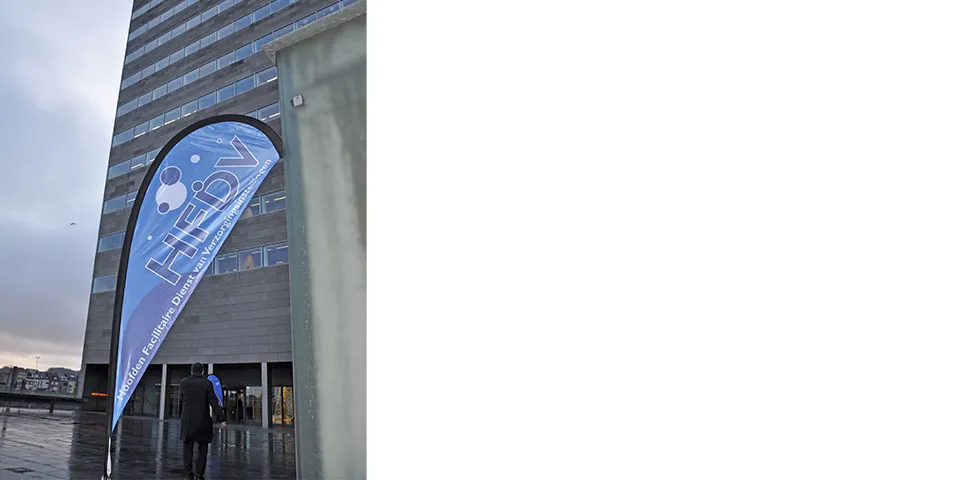
The HFDV conference was held at the provincial government building in Flemish Brabant. (image: HFDV)
KOTK is also funding the follow-up project. “This will enable the
concept to be rolled out across forty care organisations in Flanders: hospitals, residential care centres, primary care organisations and institutions for people with disabilities. The aim is to foster a Mango Moment culture. This three-year implementation project will establish a learning network offering workshops on person-centred care to multidisciplinary teams (including reception staff, care professionals, cleaners and management). Networking events will inspire participating organisations and give them the opportunity to learn from one another.”
Technology at the service of the customer experience
Wim Van Doorsselaere (AAA+ Partners in Zorg) specialises in overall capacity planning, patient logistics processes and the associated IT information flows and integrations. He sees every day that there is still considerable scope for improvement in hospitals. At the conference, he advocated a more customer-focused approach. “Hospitals call their customers patients. The word contains ‘patience’”, says Van Doorsselaere. “A hospital admission too often means passively enduring the experience, with the customer as the one suffering. An environment like that, think of most waiting rooms, sometimes just a row of chairs in a corridor, and the atmosphere can further increase the stress levels of someone who is already anxious.”
Technology can play an important role in improving techniques and procedures. Examples he cited included adapted lighting and crutches with a magnetic side arm. “Thanks to the magnets, you can use one crutch to pick up the other, or temporarily attach the crutches to each other, leaving one hand free to open a door, for example, while using the other to lean on both crutches.” For older people, including those in residential care centres, there is Memoride, cycling software based on Streetview. “Using an exercise bike and a large screen, users can take a virtual cycle ride through their old neighbourhood and recognise all the details, right down to the flowers on the windowsills.”
A wow experience
Jan De Boeck worked as a nurse in Antwerp, Germany, Rwanda and Congo, before moving into professional purchasing in the pharmaceutical industry. He realised early on that communication, customer-focused thinking and positivity are success factors in every sector. Enthusiasm and interaction are constants in his sessions as a hospital coach. “In today’s market, products and services are rarely unique,” he says. “A wow experience can still make all the difference
to the customer. 81% of organisations focused on customer experience achieve better results than their direct competitors,” he said, explaining his view. “68% say they buy from a particular supplier because of the way its employees treat them.” But first you need to find out who your customer is and what really matters to them. “A customer always has an experience, in which their needs may or may not be met. You need to make changes to your organisation accordingly. It doesn’t have to be a revolution. Don’t think too big: lots of small, achievable initiatives can make this difference. Unfortunately, we too often start from our own perspective rather than from what customers expect.”
Question about this story? Ask your question
Keep following this
Get an email when a new story is published. No account needed.
- SubjectGeneral







