











Interview with Tine van der Vloet
In Flanders, many people with a disability live very independently. They only need support occasionally, often to give informal carers, family members or friends some respite. This is why directly accessible support (RTH) was introduced. People who have submitted a support plan for a personal budget (PVB) and are still waiting for it to be approved also often rely on RTH. In practice, however, there are obstacles….
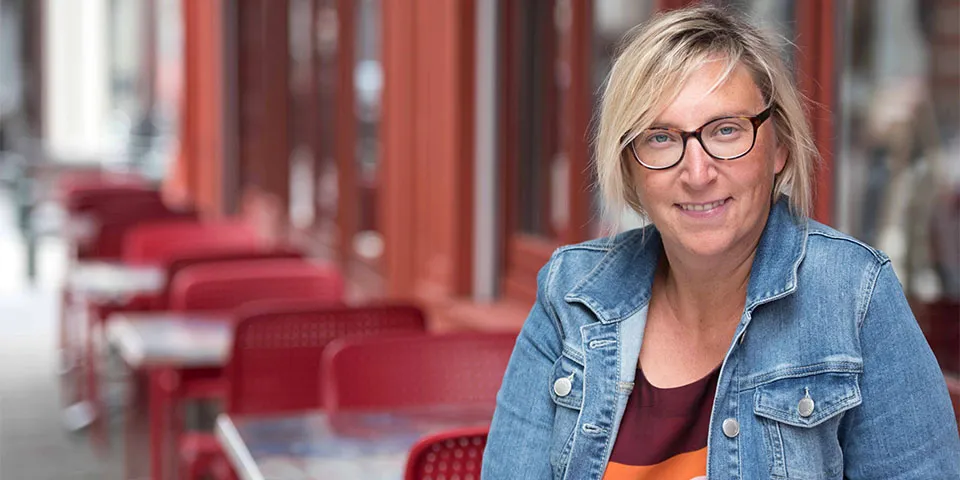
Flemish MP Tine van der Vloet: ‘From supply-led to demand-led care’
RTH provides access to limited, disability-specific support, such as help with budget management, paperwork and organising the household, as well as day care and even residential care when the person with a disability cannot be cared for at home for a while. Applicants do not need approval from the Flemish Agency for Persons with Disabilities (VAPH) to access RTH. They can contact a care service or provider recognised by the VAPH directly. “And that is where the problem lies,” says Flemish MP Tine van der Vloet (N-VA). “Since the service or provider has to receive RTH points from the VAPH, it is difficult for new initiatives to qualify. If they are not represented in the regional consultation where the RTH points are allocated, they are not awarded any RTH points and therefore receive no funding.” She is therefore calling for RTH to be demand-led.
Freedom of choice
“This would allow anyone entitled to RTH to choose where to spend it. People with a disability could also access licensed care providers without RTH points, as well as new initiatives. Unfortunately, these currently miss out. One example is ‘green care’ (care for vulnerable groups in a green setting, such as a care farm), which already qualifies for a PVB but not yet for RTH. If people can use RTH for the type of care they choose, everyone will receive more personalised care!”
Demand-led
“The person-centred, demand-led approach is a good thing,” says Van der Vloet. “Under the traditional approach, much of the funding went towards providers’ operating costs and management staff salaries. The large organisations call the shots. Smaller players struggle to stay afloat. Despite a wave of consolidation, their numbers are increasing slightly. Personal budgets make it easier for them to maintain their position in the market, but the sector is strongly resisting a complete transition to this system. The biggest players come from a medical model. They are used to receiving money directly from the government and, in future, will have to receive funding for the care they provide from care recipients. This means they will receive less for their organisation-related costs, and some intermediate levels may have to disappear.”
“As demand dictates, care institutions will have to make greater use of, for example, self-employed nurses and buy more medication from local pharmacists, instead of employing such specialists full-time and keeping them available regardless of demand. The higher the qualifications of a specialist member of staff, the more points it costs to support an organisation.”
Adaptable building
“The next generation of older people in Flanders think things through carefully. Just 4% intend to move into a residential care home. Many want to stay in their familiar home. But people who build at a young age still tend to give too little thought to adaptable design, with a view to living in their home for life. I am thinking, for example, of having a second bathroom on the ground floor and doors with a standard width of one metre.” Local authorities can also help. “By organising, or at least coordinating, neighbourhood support. Various municipalities in Flanders already have, for example, a snow-clearing phone line. People who are no longer able to clear the snow from their own doorstep can use it to ask neighbours or other volunteers for help. This could be expanded to cover other small tasks, such as putting out household rubbish for collection or raising the roller shutters.”
Van der Vloet also sees professional care provision changing. “People moving into assisted living accommodation or a residential care home will be able to choose not only from the services provided in-house, but also bring in or engage external care providers, such as their trusted home care workers or nurses. This is currently possible to a limited extent, for example with a GP or chiropodist.”
The future
Van der Vloet wants to focus further on this issue in the Flemish Parliament’s Welfare Committee. “The PVF (for adults) is relatively new, having only been in place since 2017. We need to remove the obstacles, uncertainties and unanswered questions that remain. In particular, we need to improve clear communication from the VAPH. It is too fragmented and, as I hear from my supporters, relies too heavily on legal jargon that many people cannot understand.” To receive PVF, you have to live in Flanders. “But you do not have to spend it there. For border municipalities such as Merksplas, care may sometimes be closer to home in the neighbouring Netherlands than in Flanders itself.”
The rollout of PVF for minors is planned during the current legislative term. “Practice has already taught us that this cannot simply be a copy of the system for adults. In both cases, it is important that care providers have room to operate as businesses. The framework must therefore have as few rules as possible. We also need to shorten the time between drawing up a support plan and finally receiving a budget.”
Tine van der Vloet (N-VA) (42 years old)
Graduate in orthopedagogy (Karel de Grote hogeschool, Antwerp)
Worked for 15 years as a support worker in the care sector, supporting people with disabilities
Member of Merksplas municipal council (2013 to ….)
Member of the Flemish Parliament (2014 to ….)
Question about this story? Ask your question
Keep following this
Get an email when a new story is published. No account needed.
- SubjectGeneral







