











Minister Van Rijn sets new model for allocating face masks
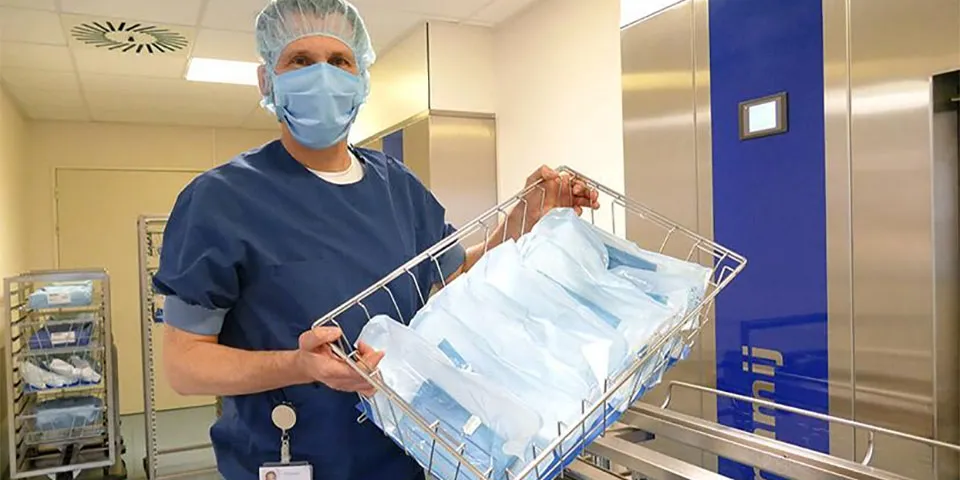
Minister Martin van Rijn (Medical Care) has agreed a new model for allocating face masks with healthcare organisations. Under the new model, masks are not allocated by healthcare sector, but according to the infection risks faced by healthcare workers. Any new masks procured or manufactured in the Netherlands will go to the places where they are most needed. This includes healthcare workers in hospitals, as well as those in nursing homes and other settings where patients with coronavirus are receiving intensive treatment.
Personal protective equipment
The Netherlands is still facing a severe shortage of personal protective equipment, including face masks. Efforts are under way to increase availability. The Landelijk Consortium Hulpmiddelen (LCH) plays a central role in this, both in procurement and in setting up domestic production.
Acute care settings
Until now, the allocation of supplies has been based largely on the assumption that patients are treated mainly in acute care settings. However, this approach meant that staff at nursing homes, home care providers and mental health services, among others, were unable to work with adequate protection. This approach no longer reflects the current situation, making a different allocation method necessary.
Healthcare workers
Under the new system, supplies are allocated not so much by sector as according to the infection risks involved in different treatment settings. The guiding principle is that all healthcare workers must be able to do their jobs safely, despite the shortage of protective equipment. In principle, the same level of protection should be available where risks are comparable.
Regional allocation
The new allocation model is intended to ensure that supplies are distributed as carefully as possible across sectors, regions and institutions. The new method focuses on need, based on the infection risks associated with particular treatment settings. For each of the 11 ROAZ regions in the Netherlands, the available stock of each item and the level of need are assessed daily. Need is matched against available stock for each region and for the Netherlands as a whole. This results in a regional allocation each day. The LCH is responsible for distributing supplies across the regions.
Experience on the ground
The new allocation model came into effect earlier this week, initially for face masks and later also for other personal protective equipment. The model will be further developed over the coming weeks, based on experience on the ground and advice from the RIVM, GGD and Landelijk Netwerk Acute Zorg.
Question about this story? Ask your question
Keep following this
Get an email when a new story is published. No account needed.
- SubjectGeneral







