











‘Money must not be the driver, the environment should’
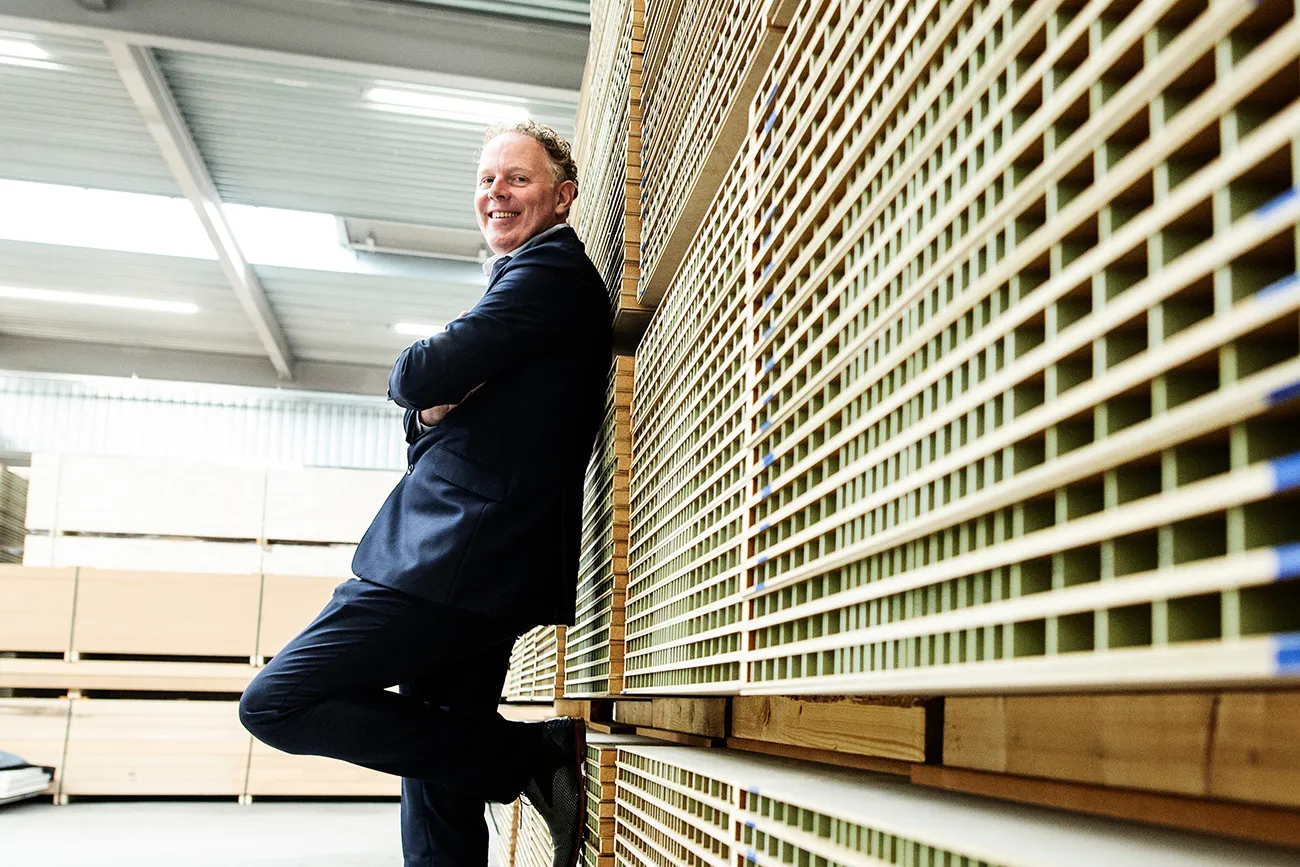
Director at Triboo in Zevenhuizen, where the aim is to make production processes that drive society towards a circular model.
Marc van der Heijden
May I get straight to the point?
In the Netherlands, we throw away 247 (!) million kilos of furniture every year.
In the European Union, the total is 11 (!) billion kilos.
Shocking, isn’t it?
That is why my question is justified: can’t we do things differently in the Netherlands? Or, to put it another way: what responsibility are you taking in the supply chain to drastically reduce these appallingly high volumes of waste? Surely it can’t be normal to waste so
much?
The solution is not all that complicated. Treat plastics and natural fibres recovered from waste streams as gold. And change your business model. That way, you turn waste costs into the value of raw materials. What I mean is that you should design and manufacture only products that will never end up as waste, but whose fibres can be processed into another product at the end of their useful life. Unfortunately, this is still happening on far too modest a scale in the Netherlands, but there are some striking examples. Old energy meters, for instance, turned into a tabletop. Or desk and table tops transformed into water and air filters. In short, when designing and manufacturing, you should take a closer look at the ingredients in your intended end products and ultimately choose only raw materials that retain their value after use and can be put to use elsewhere.
You could also choose to design or build only furniture with lightweight constructions. Replace solid particleboard with a lightweight furniture panel, for example, and a standard 1,600x800mm desktop weighs just 7 kilos instead of 25 kilos. That means 18 kilos less material, and a 60% reduction in CO2 emissions during production. As I said, it is not that difficult.
Yet, as it turns out, we collectively do find it difficult. That is because of the way we have organised our economy. Trade is driven by making money. Supplying a cheap product, one that can compete, is always the aim of companies, even though this is precisely what will bring about our downfall. We must get rid of the disease that everything has to revolve around money. Money must not be the driver, the environment should. After all, it is where we live. I am therefore calling for a radical change of approach.
That is why I am calling on end users: boycott companies that supply products whose waste has no value after use. Order lightweight materials only. And… stop taking part in the talk economy (‘Let’s do our best to ensure the survival of humanity and a more sustainable future for our planet!’) and join the action economy (‘We’re doing it!’). We should also give more support to smaller companies, which have precisely this capacity to act and are flexible. They have the potential to innovate. Start-ups must survive, because they can make a difference amid the sluggishness of large companies, so that cheap no longer means false economy. Ultimately, society stands to benefit.
Question about this story? Ask your question
Keep following this
Get an email when a new story is published. No account needed.
- SubjectGeneral







