











No clear conclusion from night-shift study
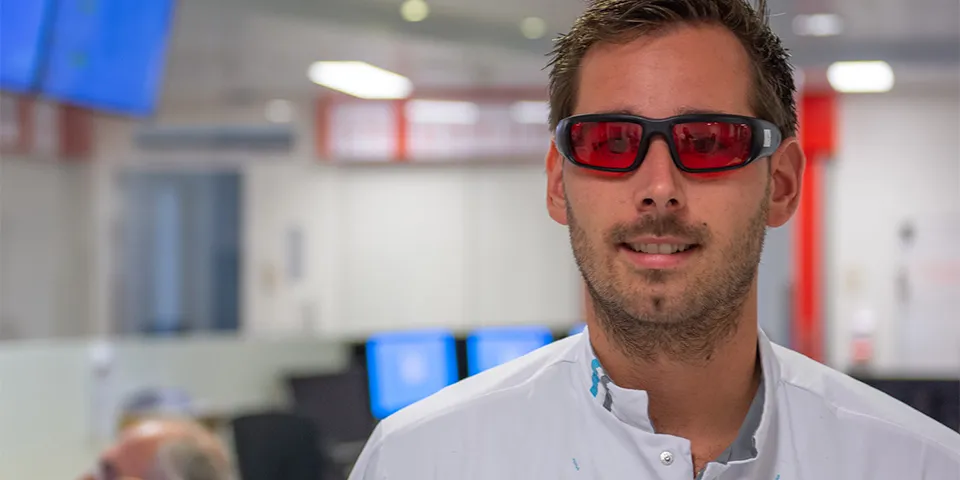
Last September, Catharina Ziekenhuis and Tilburg University studied ways to help nurses get through night shifts feeling fitter. Night shifts are demanding for staff, but unfortunately a necessary evil. The hospital therefore studied three ‘interventions’ designed to make night shifts more comfortable. During the trial, staff had access to special glasses to suppress or promote the production of the sleep hormone, a special bed for a power nap, and healthy food. The results are now in.
“And they are different from what we expected,” admits Marieke van Schijndel, Manager of the Emergency Department and Plaster Room (SEH), one of the initiators of the study. The three interventions individually were not found to have a measurable positive effect on staff wellbeing. However, offering all three interventions at the same time, as on the SEH, did produce positive results. This was probably because staff could choose what worked best for them. The overall conclusion is that there is no standard approach that works for everyone.
Healthy food
Even so, van Schijndel does not consider the study a failure. “At the Emergency Department, for example, we paid a lot of attention to food in particular, and people really took something away from that. People often feel worse during a night shift, and are more likely to think, ‘Bring on the treats’. But if you don’t do that, if you avoid sugar, eat little salt and no fat, and choose healthy food, you do start the night feeling fitter. People really noticed that. Just yesterday, someone said: ‘I take crackers, healthy food, lettuce and a little soup with me now. I didn’t do that before.’”
Special bed for a short power nap
Short power nap
A short power nap also had a positive effect for many people. “Nurses say: ‘If I lie down for 20 minutes, I fall asleep straight away and wake up feeling better.’ Many nurses have said: ‘I sleep better during the day too. I wake up less often, sleep for longer and still have the energy to exercise before starting my night shift.’ So there are lots of positive individual stories.”
Glasses
The big question, then, is what happens next. Marieke van Schijndel is clear about that. “The figures are not positive enough for us to roll this out across the whole hospital. But each department can make its own choices. The Children’s Department and the SEH have glasses that anyone can use. And here at the SEH, we have said: ‘If you want to take a 20-minute power nap, you can, as long as you coordinate it with your colleagues.’ We will look at what we can do about food across the whole hospital, for example offering soup at night and fresh fruit instead of Snickers. We are very keen for people to start their night shifts feeling satisfied and healthy.”
Question about this story? Ask your question
Keep following this
Get an email when a new story is published. No account needed.
- ThemeHospital construction and refurbishment
- SubjectGeneral







