











‘No one has to go it alone any more’
Text ActizImage Actiz, Istock
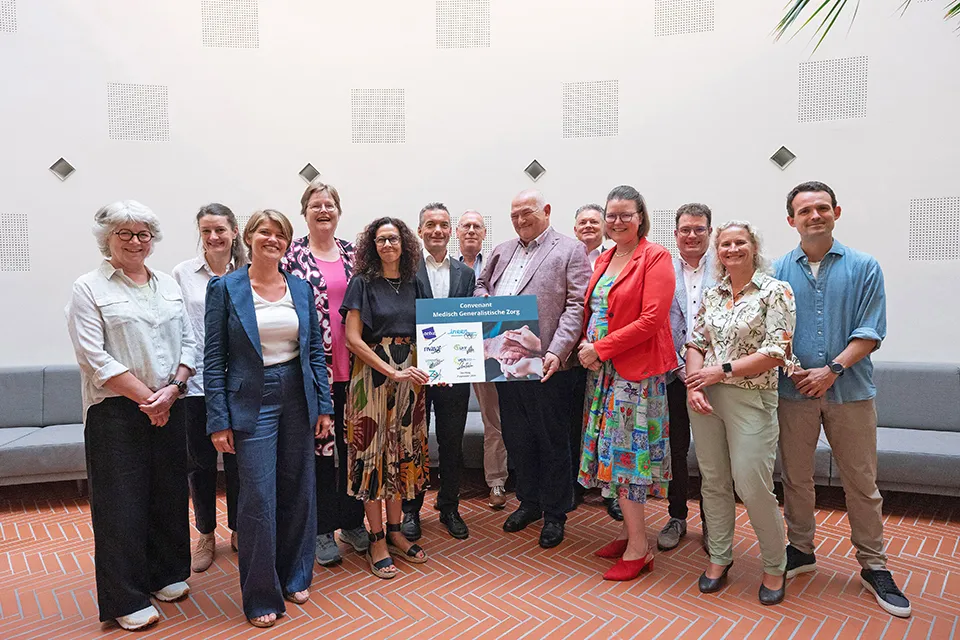
COVENANT: BETTER ACCESS TO MEDICAL GENERALIST CARE
On 2 September 2024, the Covenant on Medical Generalist Care (MGZ) was signed at the Ministry of Health, Welfare and Sport (VWS). Under the covenant, ActiZ, InEen, LHV, NVAVG, Verenso, VGN and ZN safeguard the availability and accessibility of MGZ for people eligible for long-term care (Wlz). The covenant was initiated against the backdrop of developments such as an ageing population, growing demand for care and a shortage of doctors and other professionals in the health and social care sector.

MGZ is ‘the full range of medical care that GPs, elderly care physicians and physicians for people with intellectual disabilities (arts VG) provide in collaboration, both during the day and for urgent care in the evenings, at night and at weekends (ANW hours). Increasing numbers of Wlz clients are continuing to live at home or opting for small-scale or clustered housing. ‘Treatment’ as part of Wlz entitlement has a special status in this regard, because in many situations treatment is partly reimbursed under the Wlz and partly under the Health Insurance Act (Zvw). In all these situations, collaboration between elderly care physicians, physicians working in disability care, GPs and other primary care providers is essential. In practice, agreements on this collaboration and the associated procurement of appropriate care do not always come about automatically.
This covenant provides a framework for parties working together at regional level to reach appropriate agreements. This will ensure that MGZ is accessible and available to all Wlz clients, and that doctors, professionals, care organisations, care offices and health insurers can make workable and financially viable agreements on collaboration.
Desired situation
In the covenant, care offices, health insurers, providers and doctors agree how to fulfil their shared responsibility. Care needs are central, and MGZ is accessible to everyone eligible for Wlz care, both during the day (routine care) and for urgent care during ANW hours. Care is also provided by the doctor best equipped to deliver it, who is supported to work as effectively and efficiently as possible.

The agreements in the covenant form the basis for specific agreements between care providers and professionals in the region. If they encounter difficulties in reaching appropriate agreements, they can turn to the regional consultation structure, convened under the responsibility of the care office and health insurer. Each region is free to develop or retain the solutions best suited to its circumstances. Guidance to accompany the covenant will be published shortly, with further information on the intended approach and how to put it into practice together.
Preconditions
The parties to the covenant can, of course, be held accountable for relevant national preconditions, such as appropriate funding, ICT and data exchange, and the specific circumstances of non-contracted care (including personal budgets (PGB)). Where necessary, they will also raise these issues with the parties responsible for the system. In addition, national parties are working to link regional consultation on MGZ with existing programmes and regional consultation and collaboration structures.
Question about this story? Ask your question
Keep following this
Get an email when a new story is published. No account needed.
- SubjectGeneral







