











Noorderhart secures continuous power supply
It is no longer news that E. VAN WINGEN NV (EVW) of Evergem (B) is responsible for ensuring continuity of power supply at the majority of hospitals in Flanders. What is news is that another new user has recently joined its list of satisfied customers: Noorderhart, the umbrella organisation for Limburg’s Mariaziekenhuis and Revalidatie & MS Centrum in Pelt. The 1,000 kVA emergency generator, which meets the highest quality standards, has now been delivered and will soon be commissioned. As usual, the supply is accompanied by a maintenance agreement, establishing a long-term partnership between the user and EVW to keep the emergency power supply ready for use and in good condition.
Emergency power supplies are sometimes associated with harmful emissions. EVW is also aware of this and is working hard on alternatives. Innovation is a top priority for the company. Since 1992, when its first combined heat and power (CHP) system was installed, it has followed a comprehensive roadmap: from reducing CO2 emissions through greater energy efficiency, through CO2-neutral solutions, to 0 grams of CO2.
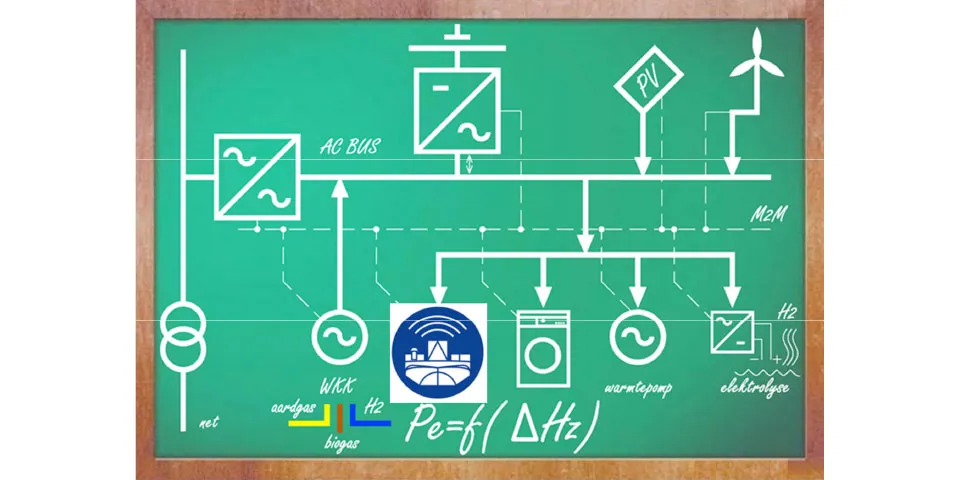
It started with decentralised generation systems using CHP, first fuelled by natural gas, then biogas and, more recently, hydrogen. The H2 CHP system, developed in collaboration with UGent, has now passed its endurance test and is ready to be rolled out on the market. EVW is once again at the forefront of the energy transition towards 100% renewable energy. It is worth noting that EVW’s CHP systems are designed, manufactured and serviced in Flanders, further highlighting the contribution this innovation makes to the local economy.
H2 emergency power solutions
Since using H2 in CHP systems may be more straightforward than in emergency power supplies, EVW is also developing H2 emergency power solutions. Meanwhile, project developers seeking sustainable energy solutions are getting in touch. Together with EVW, they are exploring the new energy landscape. This Flemish SME is confident that 0-gram CO2 solutions will soon become a reality.
Threat of a blackout
Developments in the electricity grid bring another important issue to the fore: as the share of renewable energy in electricity generation increases, fortunately, this could lead to grid congestion if all alternative generation is fed into the grid at once, for example on a sunny or stormy day. Generation installations must therefore meet strict requirements set by Synergrid in Belgium, as well as by similar bodies in other countries. Taking proactive steps in response to the threat of a blackout, Elia contracts aggregators to help maintain grid balance and security of supply. Flexibility service providers such as aggregators can already take part in calls for a number of reserve products offered by grid operator Elia, including R3 (manual Frequency Restoration Reserve), R1 (Frequency Containment Reserve) and SDR (Strategic Demand Reserve). Aggregators can also offer commercial services directly to grid users, suppliers or balance responsible parties. Owners of emergency power generation installations are contracted by aggregators to make their installations available as reserve units. In practice, this results in very few operating hours, but can still represent an attractive financial opportunity. There are, of course, technical requirements. Only generation units approved by Synergrid may be connected to the grid as reserve units. E. Van Wingen NV has this approval, with final homologation Synergrid C10/26.
Unmanned electric vessels with no CO2 emissions or noise
EVW is also making its mark at European level. As an SME in the Ghent Canal Zone, the company is a technical partner in AVATAR, a European Interreg project that recently got under way and will run until 2023. The project focuses on unmanned electric vessels that will help reduce traffic in modern city centres, without CO2 emissions or noise pollution. As part of one of AVATAR’s work packages, potential use cases are being developed by research institutions such as TU Delft, Universiteit Oldenburg, KU Leuven and OC Hout&Bouw, as well as other partners including Logistics Initiative Hamburg and E. VAN WINGEN NV, under the leadership of POM Oost-Vlaanderen. One use case involves storing green electricity generated locally from solar or wind power as hydrogen during the day. Combine this with electrically powered urban distribution vessels, and the result could be very promising.
At night, the hydrogen is converted into electricity by an H2 CHP system, which the electric vessels can use to charge their batteries. Charging takes place on the outskirts of the city centre, in neighbourhoods with residential areas or buildings, for example Dok Noord in Ghent, or port buildings. The vessels are charged at the ICE CHP system, which also generates heat. This heat is then put to good use to support the heating system of, for example, an SME. In practice, the heat could also be supplied to a district heating network. This means that virtually none of the energy generated from green hydrogen is lost. The benefits of the project include high efficiency, reduced heat losses, the avoidance of grid congestion and less road transport. As the solution is being developed in Flanders, the benefits for local employment are also clear.
If you are also working on a use case related to AVATAR’s objectives, please do not hesitate to contact one of the partners.
Een zakelijke vraag aan E. van Wingen? Get in touch
Companies in this story
Keep following this
Get an email when a new story is published. No account needed.
- ThemeDigital technology in healthcare
- SubjectGeneral
- CompanyE. van Wingen







