Sustainable gowns for Bravis: economically and environmentally beneficial
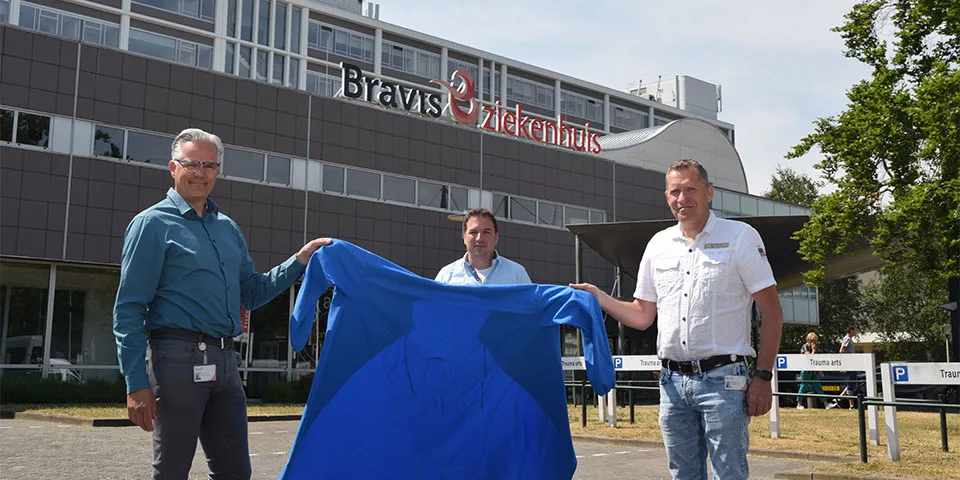
‘Shouldn’t we go back to the old reusable ward gowns? They’re not dependent on shortages.’ The thought crossed the mind of Mark Sijstermans, logistics team leader at Bravis hospital in Roosendaal and Bergen op Zoom, during the coronavirus crisis. The idea took a creative turn, resulting in gowns designed with sustainability in mind. An interesting solution from both an economic and an environmental perspective.
Sijstermans was not the only one driving the innovation. He naturally consulted Stefan Machielse (Bravis infection prevention specialist) and turned to Marco van Popering (VP Medicals) for a textile solution. “We were surviving from day to day with the disposable gowns. But we were also in daily contact with the Procurement department about other protective equipment, such as face masks and gloves,” Sijstermans recalls in early June. With staff safety the priority, a long-term solution was needed, particularly for the gowns. Sijstermans and Machielse had noticed that “the variety of products and uncertainty about the materials created a sense of insecurity among staff, which led to unrest”.
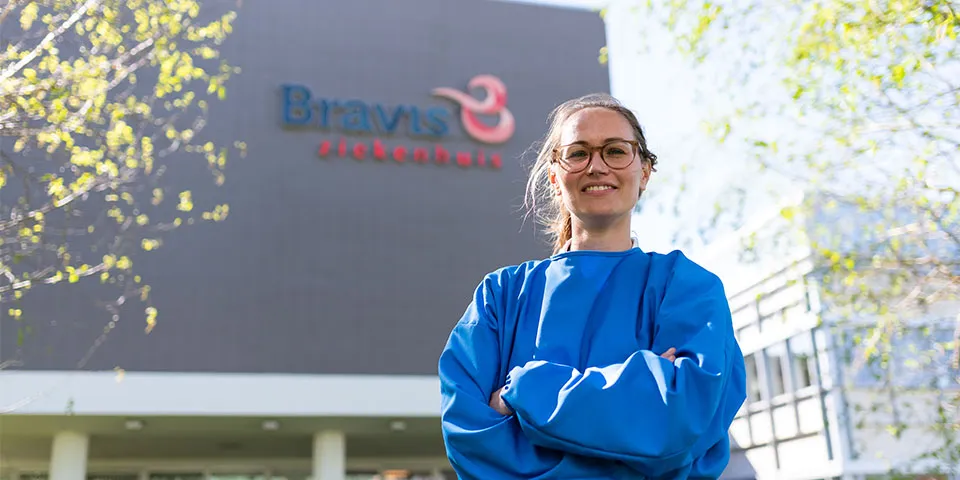
As the number of COVID-19 patients increased and capacity was expanded in the ICUs at Bravis hospital in Roosendaal and Bergen op Zoom, a brainstorming session was held, with everyone involved joining in at a safe distance. The gowns needed to be ‘splash-proof and waterproof, and of course comfortable’. The proposed solution, ‘shower-curtain fabric’, was rejected. “It wasn’t the right quality. You don’t want to find that the sleeves are left behind under a patient when you turn them over, leaving you unprotected. And the fabric can’t be washed above 30 degrees. You need to wash at a minimum of 65 degrees to kill the coronavirus,” Machielse explains. Another problem loomed alongside the search for gowns: Wiva containers for hospital waste. They were in short supply in the Netherlands because of the necessary high volume of disposable garments being used.
The search for the right fabric led to textile and fashion specialist Van Popering. “I had spare capacity and, at the start of the coronavirus crisis, turned my attention to making face masks. It didn’t take long in my conversation with Sijstermans for us to hit on fabric used for mattress covers. It’s similar to Gore-Tex, splash-proof and water-repellent. Normally, you can get hold of it, but the borders are closed.” It seemed like a setback, but Van Popering also proved to have plenty of creative flair and approached fabric supplier Ten Cate. “A product rated for a 6-metre water column, when a rating of 3 is already sufficient for use in ICUs,” Van Popering explains, speaking from a safety perspective.
Machielse took charge of the prototypes and tested them extensively. “We subjected them to water pressure for a long time, with surprisingly good results. The cotton/polyester blend was also comfortable because it regulates moisture.” Approval from the Hygiene & Infection Prevention department at Bravis hospital soon followed. Machielse refers to a WIP standard, which is based on the NEN standard. “We don’t have time to wait for a NEN standard. We’re in a ‘war’ situation, which means we have to act immediately. That doesn’t mean the gowns should be any less safe. They comfortably meet the minimum requirements set by LCI/RIVM.”

In the run-up to production, Van Popering also had to find an experienced cutting-room worker. He found a ‘cutter’ aged 77. “He still had a 9-metre table. The first thing he said was, ‘That piping isn’t marked out properly,’ which immediately demonstrated his craftsmanship.” After about four weeks, Van Popering delivered around four thousand gowns to Bravis hospital. Now that the number of COVID-19 patients in the ICUs has fallen, there is time to fine-tune the gowns, including by adding cuff fabric.
Sijstermans calculated that at peak times a thousand gowns a day were needed. “Before they can be treated (that is, handled, ed.), they have to rest for five days” (they are washed at 60 degrees), Machielse explains, referring to eliminating the virus. A solution was also found for this case, in the form of soluble laundry bags. They go into the washing machine with the laundry and dissolve after ten minutes. “A logistical gain,” says Sijstermans, drawing on his professional expertise. Van Popering adds a final point about the gowns’ sustainability: “They’re good for at least 75 washes. They’re all digitally chipped, so they can be monitored too.” Without going into the calculations, Sijstermans has a final comment on the economic and environmental aspects: “A disposable gown can easily cost around 4 to 5 euros. Add waste disposal and incineration costs, and it’s clear that we’ve made a responsible choice in every respect.”
Question about this story? Ask your question
Keep following this
Get an email when a new story is published. No account needed.
- ThemeHospital construction and refurbishment
- SubjectProduct information