











Public symposium explores lessons from the new Erasmus MC building
Text Vera van der Kooij en Liesbeth van HeelImage Erasmus MC
From an infection prevention perspective, the findings are clear: Dr Anja van der Schoor’s research shows that a hospital with single-patient rooms and private bathrooms is microbiologically safer than a setting where patients share rooms or have to be moved more often. But do patients and nurses see only benefits? And how can these issues be discussed effectively during the programming and design stages?
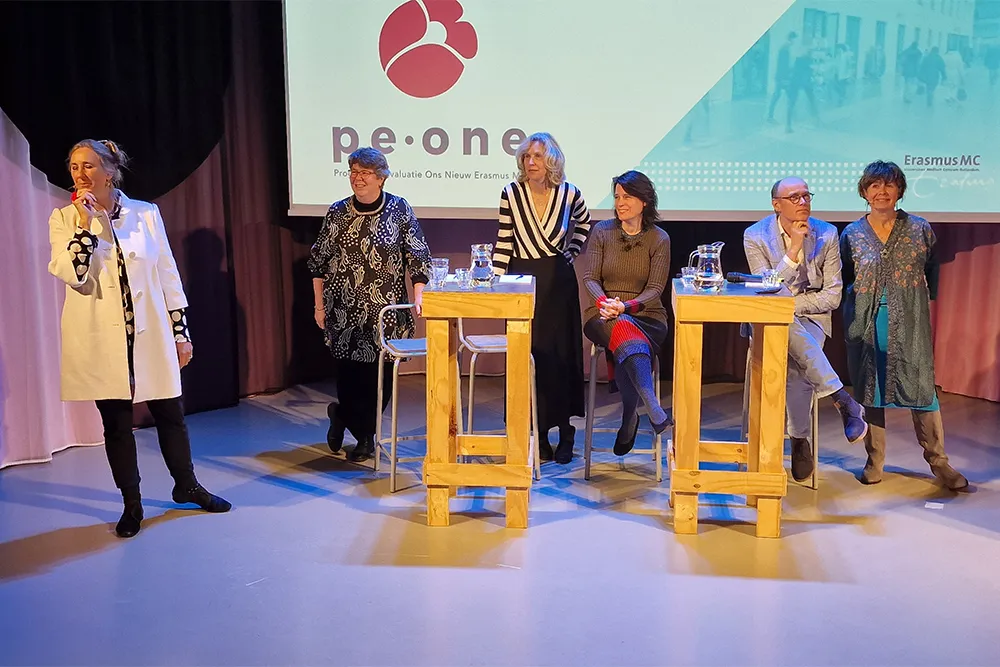
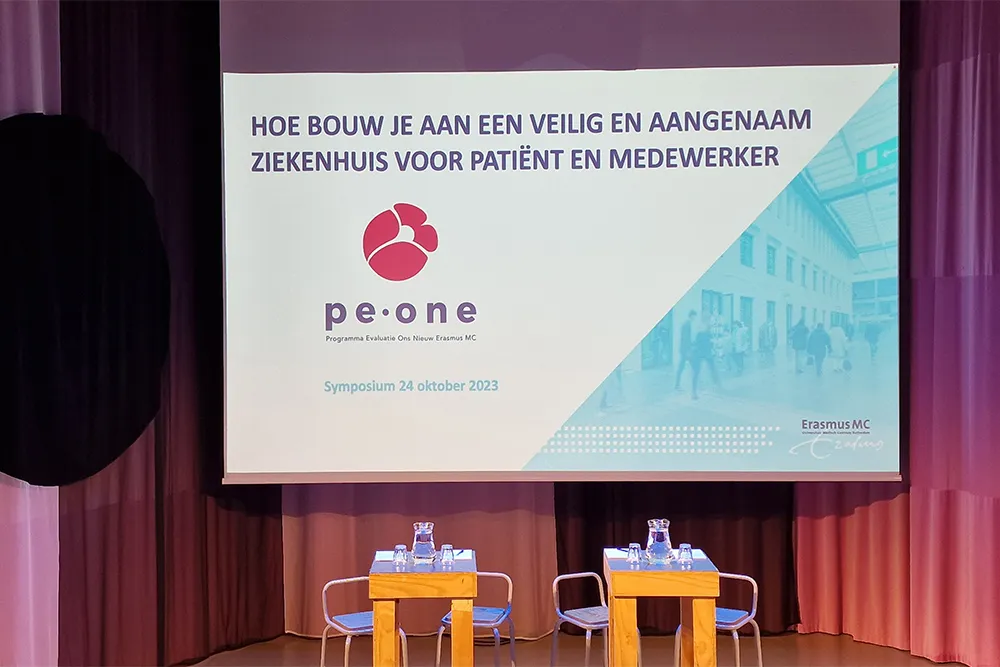
The organisers of the Programme Evaluation of Our New Erasmus MC (PE-ONE) held an interactive public symposium on 24 October. PE-ONE began in 2017, collecting data in the old hospital before the move in May 2018 so that these could be compared with data from the new environment. The focus is on how the new building functions, with a key role for the clinical areas, which have 100% single-patient rooms with private bathrooms. This policy choice, made in 1998, was one of the main innovations in the development of the new hospital. Led by journalist and author Rinke van den Brink, the symposium considered the various themes addressed by the scientific evaluation programme over recent years. Around 100 people attended, with backgrounds in infection prevention or involvement in hospital construction, and joined in the discussion. Short presentations, reflections from several panel members and a discussion with the audience made for a stimulating afternoon.
Bricks, bytes and behaviour
Liesbeth van Heel opened with her findings on the question: ‘How do you build a successful new hospital?’ Her CHANGE study focuses primarily on the added value of in-house project management when working with all relevant stakeholders. Van Heel explains: “The ‘jacket’ around care processes needs to fit from the outset, while allowing for growth and adaptation. In effect, the building acts as a catalyst for thinking about change and innovation, with technology becoming increasingly important.” Easier said than done. Clear decision-making is essential, and we need to manage different dynamics. She also highlighted the need to strike a balance between ‘bricks’ (the building), ‘bytes’ (IT support) and ‘behaviour’ (new working practices) to make a new building a successfully functioning hospital.
How infections arise
Prof Greet Vos then took the floor to share some findings from the MOVE study, which Anja van der Schoor would defend her PhD on later that afternoon. The central question was: ‘Is care microbiologically safer in a single-patient room?’ Vos gave a brief overview of how infections arise in hospitals. An infection originates either with the patient themselves (endogenous) or comes from someone else (exogenous). Exogenous infections can largely be prevented. The source could be another person, such as a room-mate, but also the environment in which the patient moves around. In short, 100% single-patient rooms are the solution from an infection prevention perspective. The new building itself was also found to be cleaner than the old one during the first 18 months. Fewer MDROs (multidrug-resistant organisms) were found, making the environment safer. “A hospital should provide good care, and this solution contributes to that,” Vos says unequivocally. But are other interests involved in providing good care?
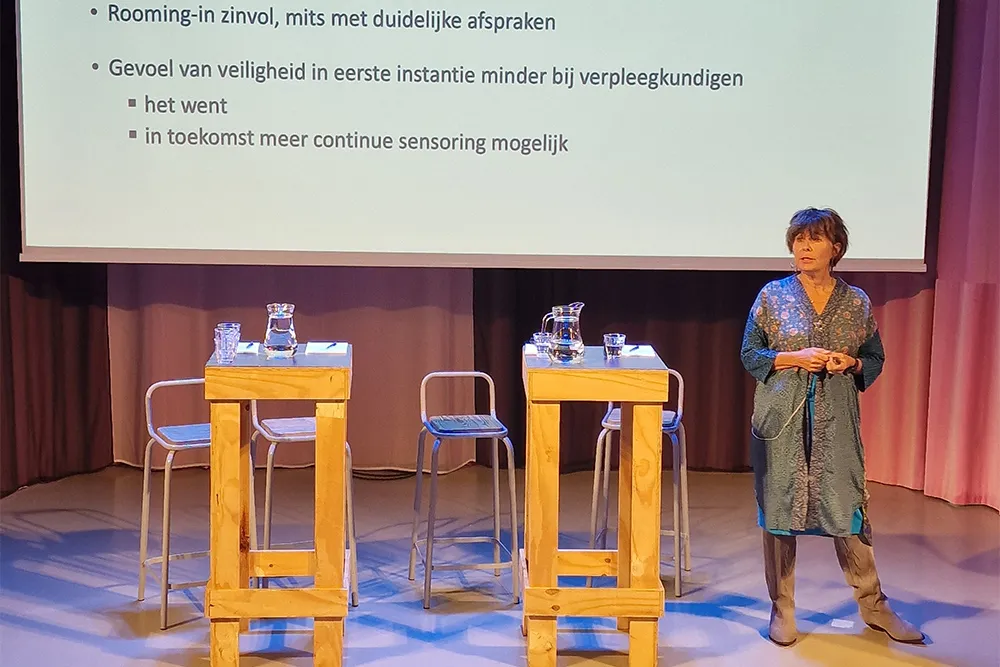
Prof Monique van Dijk addressed this third theme. Her WELCOME study examined whether patients and staff find single-patient rooms safe and pleasant. Various measurements taken between 2017 and 2020 showed that patients and staff value the increased privacy for patients, but that nurses also had to adjust to some changes. These issues were less significant at the second follow-up than during the first few months after the move. Sleep quality improved slightly, and people were positive about the option of rooming-in, although good arrangements between family members and nursing staff are needed. Panellist and architect Andrea Möhn shared her own experience as a family member. Someone in the audience gave an example of how patients are encouraged to leave their comfortable rooms and meet others over a shared lunch.
New ‘field standards’
Every hospital can make its own decisions about renovating and building hospital facilities, which seems strange in a world where so much medical practice is strictly governed by protocols. Perhaps it is time for new ‘field standards’, informed by scientific research such as that carried out as part of PE-ONE. A thought to mull over.
Question about this story? Ask your question
Keep following this
Get an email when a new story is published. No account needed.
- SubjectGeneral







