











Specialist hospital interiors made in Someren
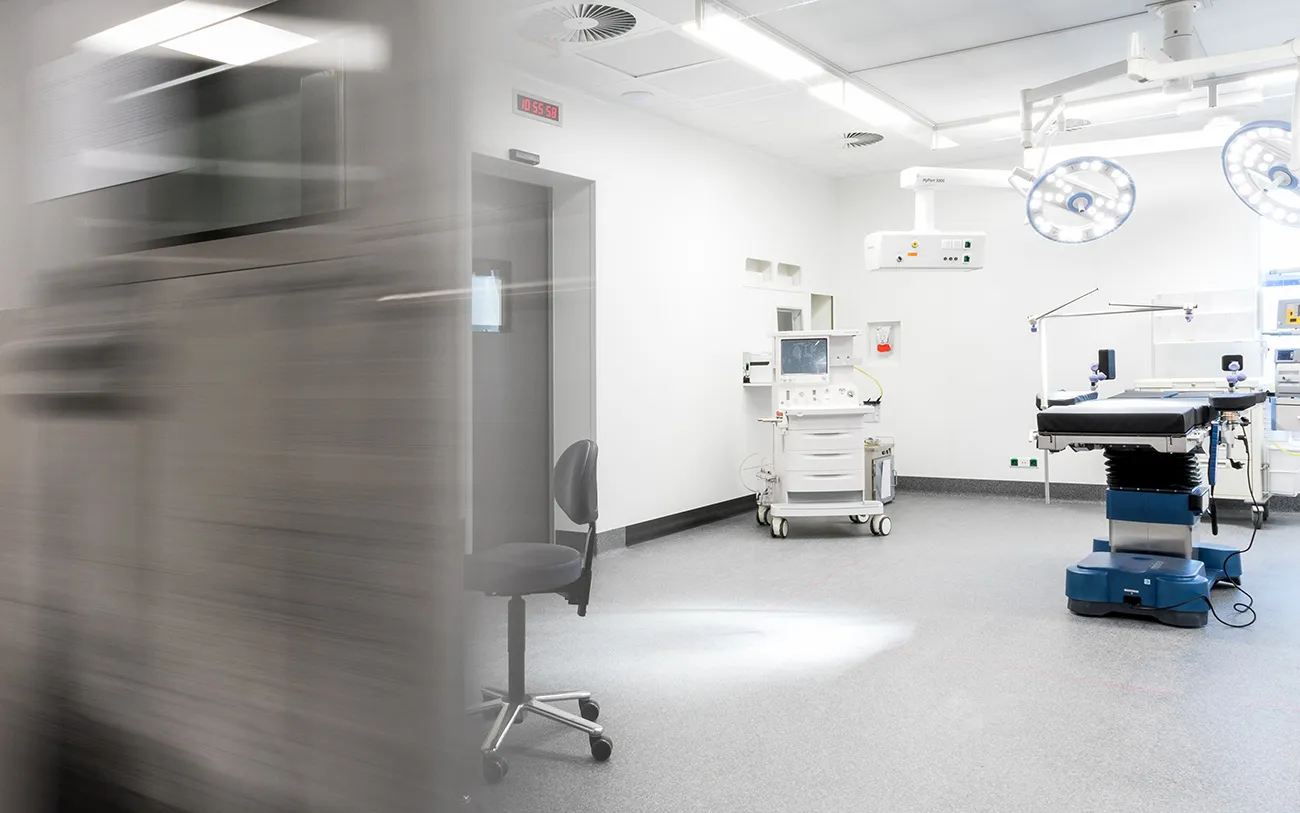
We want to keep radiation out
Ropasystems makes interior fit-outs and specialist doors. Wall panels and doors can weigh up to 350 kg each. Some have a 1-2 mm lead lining, but more often the lining is up to 8 mm thick or even heavier. All this is to enable medical staff to work safely, whether taking countless X-rays, operating a CT scanner or treating cancer patients.
But that is not all the Someren-based company does. For example, it makes bullet-resistant door panels with thick steel plates for a large door manufacturer in the same town. Managing director Paul Tinnemans explains: “These door panels are used in petrol stations, solicitors’ offices, banks and even entertainment venues. We also supply panels to private customers who want to secure their homes. I understand that several people have secured their bedrooms with one of these doors. It is fitted in a solid steel frame. When the alarm goes off, the automatic locking mechanism engages, creating a kind of safe room. No one can get in or out. This is a limited market, however.”
Doors for high-care environments
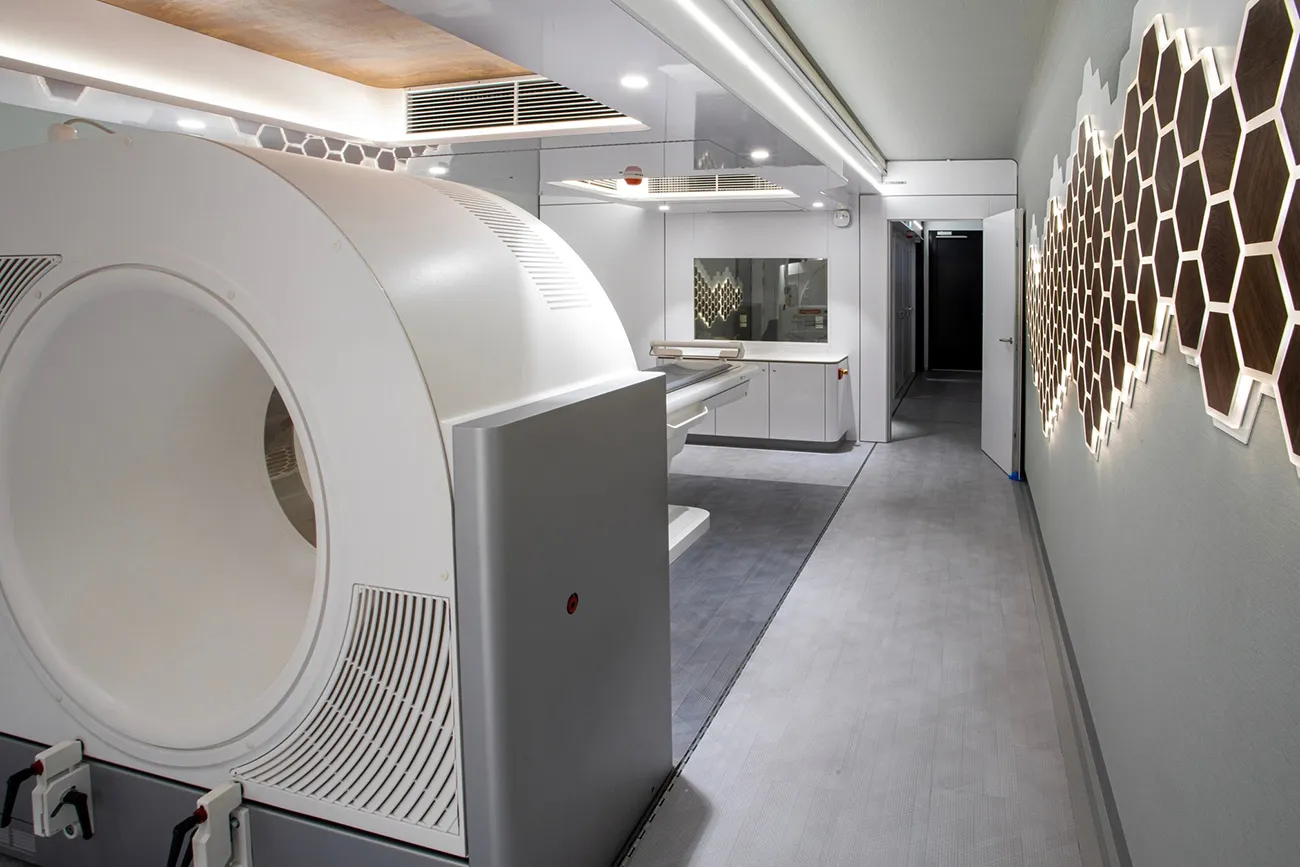
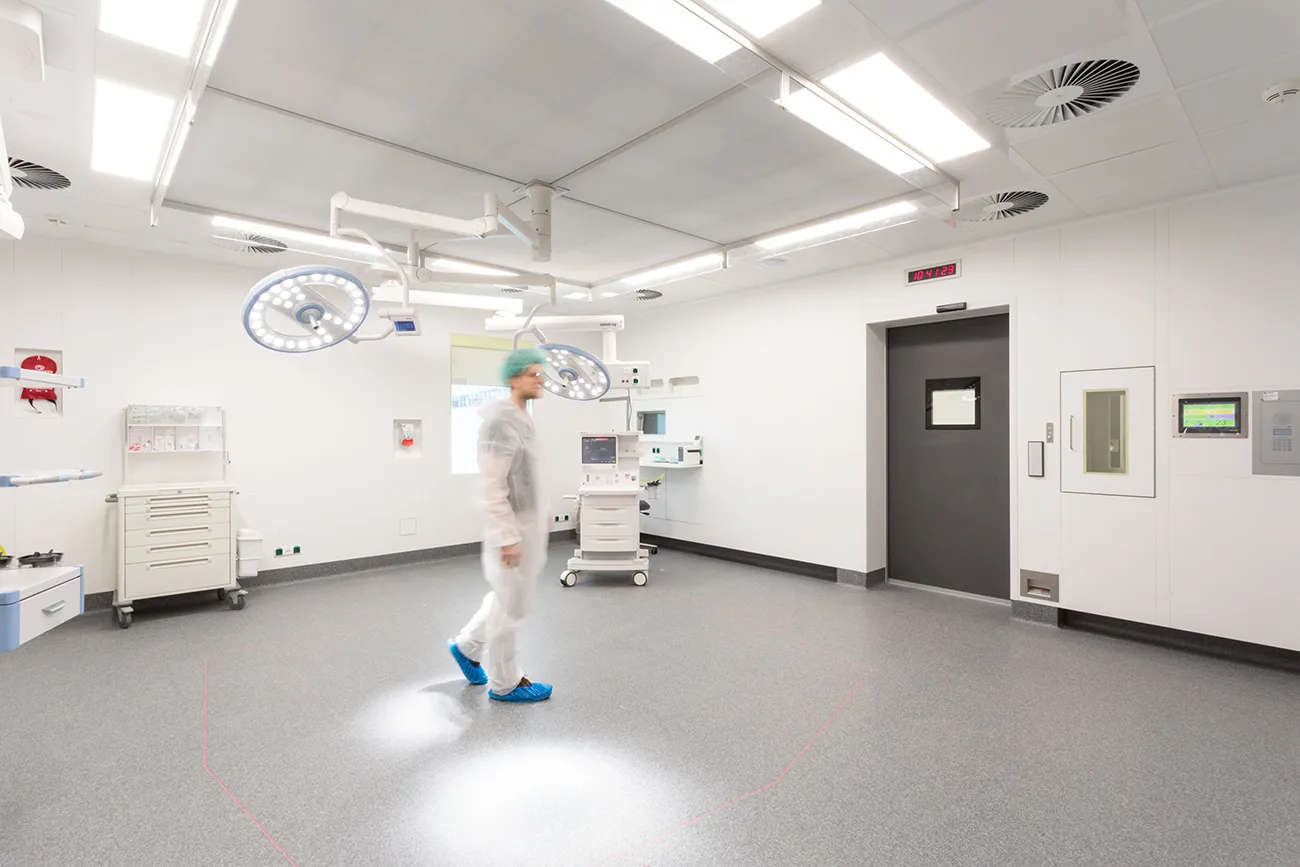
The high-care segment, comprising around 120 healthcare facilities, is much larger and represents the company’s biggest market. Special sliding doors are used here too, to keep clean air in the pressurised, controlled-environment rooms. Alongside these sliding doors, Ropasystems builds the complete structural envelope of operating theatres and adjoining rooms, for example. Naturally, the company is also the go-to provider for fitting walls and/or doors with the required lead lining, as it is a specialist in this field. Co-managing director Ron Krommenhoek says: “We sometimes supply a single lead-lined frame and hinged door combination or sliding door, but we can also take on complex projects. Take Amphia ziekenhuis in Breda, for example, where we delivered a complete operating theatre complex with several theatres. We have also fitted out a radiology department, including lead glass up to 7.5 cm thick in some cases and lead-lined control screens.”
A global reach
“I originally trained in interior fit-outs,” says Tinnemans. “The expertise I gained here has also enabled us to supply medical bedhead panels for hospital beds, complete with power and medical gas connections, as well as cabling for communications systems and radio and TV signals. We are also the go-to provider for fixed interior fit-outs. Our work reaches as far as New Zealand. We have built operating theatres and radiotherapy rooms for hospitals in Suriname and Aruba. We also fit out medical trailers used, for example, for X-ray examinations in remote areas of the United Kingdom and Germany. We have also supplied them to the Bahamas and Kuwait, including mobile CT scanners measuring 18 by 6 metres for endoscopic examinations. Transport costs have now risen so much that projects of this kind are less common.” Ropasystems also has a less prominent presence in the Eindhoven region. “Perhaps the reason is our close working relationship with Philips competitor Siemens.”
A patchwork of holes
Ropasystems now employs 21 people and has grown its turnover to around €5 million. The growing shortage of skilled workers is prompting the company to acquire a fully computer-controlled milling machine, which will reduce manual work and also create capacity to serve entirely new areas of hospitals. These could include, for example, large numbers of medical cabinet systems for hospital logistics departments.
Tinnemans has extensive expertise in radiation protection, while Krommenhoek is particularly familiar with construction-related aspects and the needs and requirements of healthcare facility users. “When we renovate older X-ray rooms, we often find serious shortcomings in radiation protection. For example, the lead-lined walls may be punctured every thirty centimetres, both vertically and horizontally, by steel screws. They are full of holes. Every screw lets radiation through. If you also want to make the frames radiation-proof, the lead layers must overlap at the corners. Every gap is a leak,” says Tinnemans. “What surprises us is that many millions are often spent on fire prevention, while little budget is available to prevent radiation leaks. Sometimes medical staff work behind X-ray glass, but the glazing beads holding it in place have no lead strips. Radiation passes straight through. In the long term, this can have serious consequences for the person working on the other side of the screen. We are keen to tackle this, so that people can work safely at all times.”
Question about this story? Ask your question
Companies in this story

Keep following this
Get an email when a new story is published. No account needed.
- ThemeInteriors for housing and care
- SubjectGeneral
- CompanySiemens







