











Strategic accommodation advice for Radboudumc: a continuously active role in the process
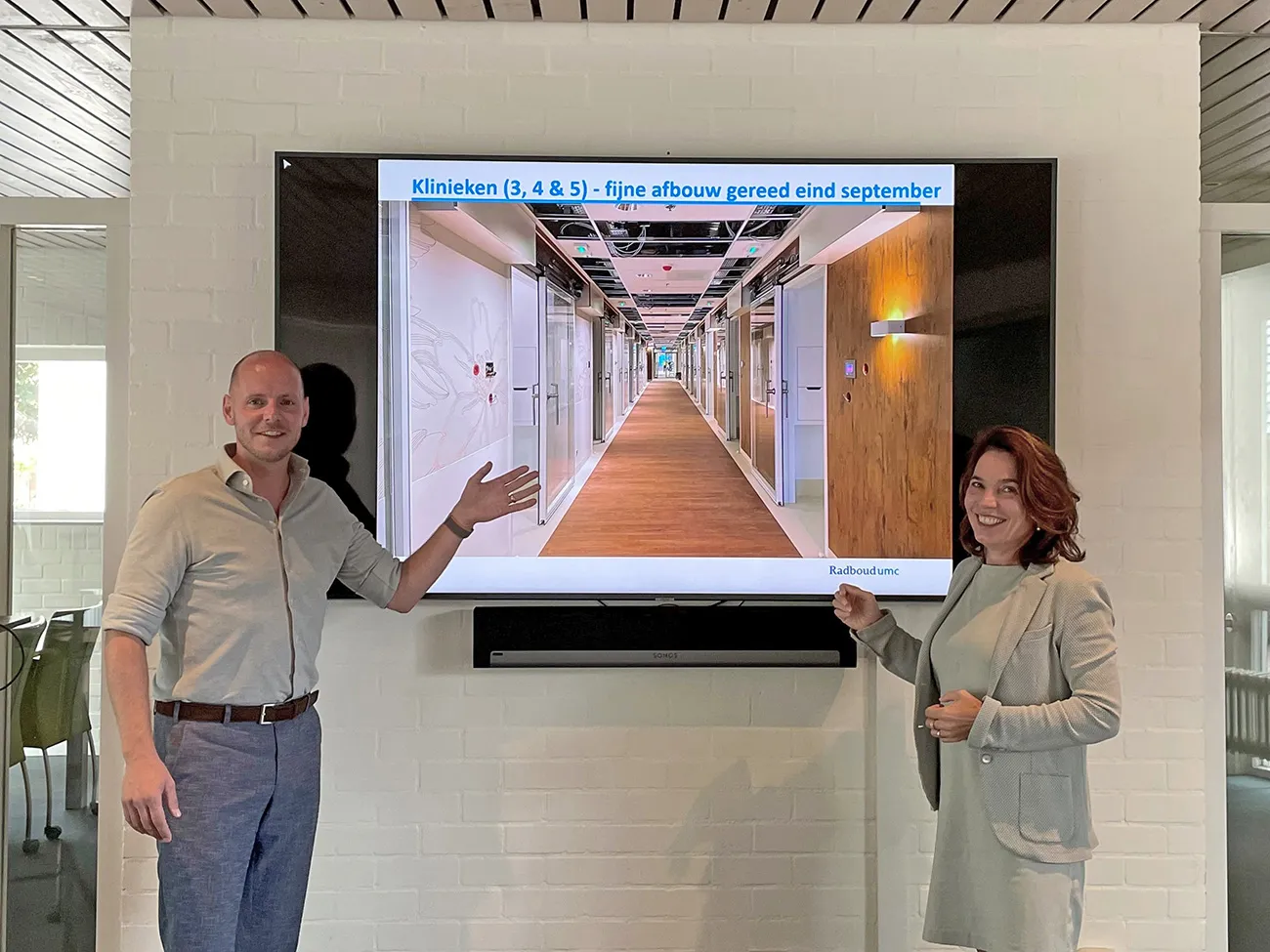
Radboudumc’s campus master plan set out a vision for the future: a more compact, smarter hospital that would also be highly sustainable, under the banner ‘Less Bricks, More Bytes, Different Behaviour’ (the BBB programme). The hospital’s board commissioned ptg advies, based in Amersfoort, to turn this plan into reality, from translating it into a design and constructing the building to developing the associated work processes.
Corina Schols, a partner at ptg advies, played an active role in the preparatory phase. “The master plan provides the framework within which we developed the programme together with Radboudumc. It sets out how you want to deliver care in the future, what new technologies you will need and how you can achieve this with fewer square metres. Together with the future users, doctors, nurses and patients, we developed the new work processes and the Schedule of Requirements, and incorporated them into the design of the new building. Above all, discussions with all the users were essential to establish how they could work more efficiently and more comfortably, and what they would need to do so.”
Clustering
Paul van Rooijen, also a partner at ptg advies, gives an example. “Previously, buildings were generally organised by specialism. In line with today’s care needs, specialisms are now grouped in multidisciplinary clusters, helping to make more efficient use of space in both the inpatient and outpatient departments. The outpatient clinics are now on the lower floors, with three inpatient floors above them, followed by the staff floors.”
Broad role
ptg advies was also involved in preparing the business case for funding, managed the tendering process and construction as process manager, and ensured that the BREEAM ‘Excellent’ certification was maintained throughout. In addition, ptg advies continues to oversee implementation of the BBB programme in day-to-day practice. “You could say that we have been a constant thread running through every phase of the entire process,” concludes Van Rooijen. “From the first outlines in 2016 through to the aftercare phase today.”
Question about this story? Ask your question
Keep following this
Get an email when a new story is published. No account needed.
- SubjectGeneral







