











The Interview | Bert Niclaes (Toontjeshuis)
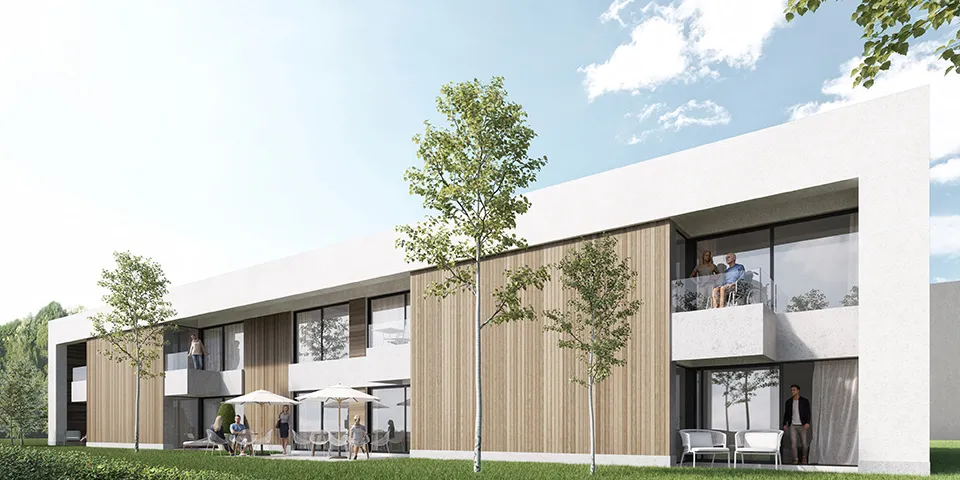
Tailored housing for adults with disabilities
In Flanders, more than 10,000 people with disabilities are waiting for appropriate care and support. More than 100 parent groups are looking for a suitable housing solution for their children. Thanks to the personal funding system introduced in 2017, they now have that opportunity too and are no longer dependent on the places made available by care institutions. The Toontjeshuis project is responding to this need.
“Waiting lists at today’s care centres are often long. This often means people stay at home for longer. But the time will come when people with disabilities have to manage without their parents,” says Bert Niclaes, a director of Toontjeshuis. He grew up in a family in which one of the children had significant care needs, so he understood all too well the concerns of his employer, Joost Callens of construction group Durabrik. Callens’ sixteen-year-old son Toon has a disability that means he will never be able to live completely independently. The extremely long waiting lists for a place in a suitable facility were not an option for Joost. He therefore set out to find another solution, to provide people like Toon with appropriate care when they were no longer able to manage on their own.
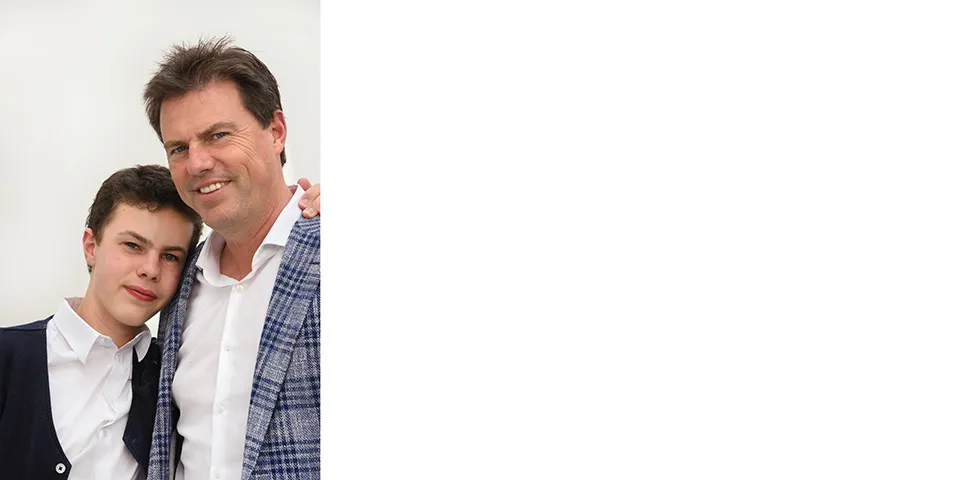
Joost Callens and his son Toon.
Social enterprise
That is how Toontjeshuis came about last year, a social enterprise that aims to build tailored homes where people with disabilities can live as independently as possible. “Toontjeshuis was created in response to the great need for tailored care for people with disabilities, combined with plenty of enthusiasm and entrepreneurial spirit. Toontjeshuis creates a home of their own where adults with disabilities can live together in small groups and as independently as possible. Alongside housing, the project also provides care and support in partnership with locally licensed providers,” explains Niclaes.
As well as offering a tailored and comfortable living environment, Toontjeshuis aims to be an affordable and sustainable solution. “At every location, we will use repetitive modules as much as possible. The architecture will also be reversible, because residents and their needs change over the years. Each home will comprise five to fifteen private studios of around 40 m², as well as a number of communal spaces. We do not want groups to be too large, but a certain minimum is needed to ensure financial viability. We will also give each resident an individual address and letterbox.”
“The size and nature of the communal spaces will depend on the specific needs of the residents’ group. The rent for a studio will be no more than €450 per month. And, unlike in traditional residential care homes, residents choose for themselves who they live with.”
Care partners
Alongside housing, Toontjeshuis also provides care and support in partnership with ten regional, accredited care providers. “We have engaged care providers known for their client-centred and inclusive approach. As well as supporting residents in their homes, they help with their daytime activities and leisure time. Each Toontjeshuis will have a host to support and facilitate the running of the home, acting as both host and coordinator. The host is responsible for the day-to-day operation of the home, organising and coordinating support, embedding it in the local community, aligning the various stakeholders and ensuring continuity across generations.”
“There is no doubt that there is a need for a project like this. We aim to build Toontjeshuis homes in various locations across Flanders. Before the official launch of our initiative, we ran pilots with three parent groups, in De Haan, Sint-Niklaas and Laakdal. The first Toontjeshuis will be built in De Haan from this year. The government is making land available there through a long lease. Elsewhere, land may be contributed in a different way. We also have advanced plans for Boom and Kuurne. Brugge, Sint Niklaas, Laakdal and Lubbeek are still at an early co-creation stage.”
At each location, the parent groups help find funding. This also gives them a say in how things are run. “But they are under no obligation to achieve a particular result, only to make an effort. This commitment is never linked to a right to live in the home.”
Finances
The Toontjeshuis Social Impact Fund was set up to finance construction. “A number of business families raised €4.5 million in this cooperative company with a social purpose, providing the financial cornerstone for the project’s launch. Through the support fund, which is recognised by the King Baudouin Foundation, we can also collect tax-deductible donations.” A second cooperative brings together the care providers and is intended to guarantee care provision over the long term.”
Many parents fear that their child with disabilities will not be able to live independently. “We are trying to overcome this anxiety. Installing a lift for one person is expensive, but the cost of such an investment is much less significant when shared by ten people. And living with other people with a similar profile not only makes independent living more affordable, but also offers social benefits.”
Bert Niclaes (50)
- Master’s degree in applied economics
- Graduate qualification in taxation
- Director at various companies in the Durabrik group
- Co-founder and director of Toontjeshuis
Question about this story? Ask your question
Keep following this
Get an email when a new story is published. No account needed.
- SubjectGeneral







