











The Interview | Prof. Dr Jan Klein, Anaesthetist and Professor of Patient Safety Engineering
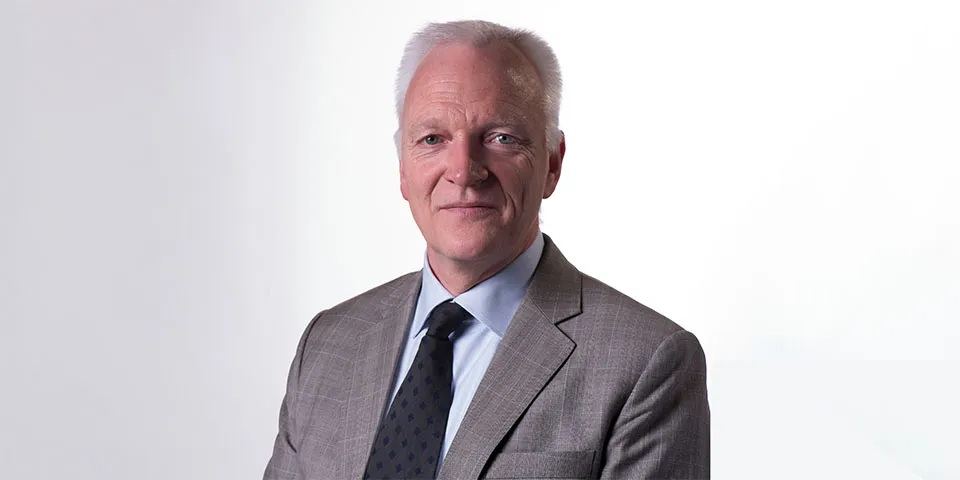
Prof. Dr Jan Klein worked as an anaesthetist at various university and other hospitals and universities, from Rotterdam to Cambridge. This summer, he is ending his career as Professor of Patient Safety Engineering at TU Delft.
Patient safety now and in the future: ‘Training on an equal footing is key’
How can we improve patient safety, particularly in the hot floors of hospitals? It has been Klein’s life’s work. “Technology is not the problem; it is readily available. The way people work together, especially nurses, doctors and technical experts, needs to be better embedded.”
Words | Jan-Kees Verschuure Image | TU Delft
In the 1980s, patients under general anaesthesia were sometimes not even connected to an ECG during surgery. A few decades later, anaesthetists, surgeons and intensivists have access to every kind of real-time data. “And yet far more goes wrong in operating theatres and ICUs than should,” says Klein, who says colleagues and peers often see him as critical. “Things go wrong systematically on various fronts, from soft factors such as professional hierarchies to hard factors such as the electrosurgical knife.” The medical world is not accustomed enough to sharing errors so that lessons can be learnt from them, he says. “Sometimes a hospital or the doctor responsible simply refuses to admit its or their mistakes. The hospital’s mandatory analysis of serious incidents and adverse events is also regularly inadequate, for example because people are unknowingly incompetent when it comes to technology and fail to recognise a design flaw in equipment. In aviation, every incident and serious event is shared down to the last detail, leading to dramatic improvements over the past few decades. In medicine, the number of incidents is not even properly recorded.”
Equality in training and practice
According to Klein, the key is to change the culture through training. As a professor, for example, he researched the gap between training and practice in the use of the (electrosurgical) knife. “Education and training are essential, for example in the use of the widely used surgical knife. It starts with the way people are trained. At Erasmus MC, where I worked for years as Head of Anaesthesiology, doctors in training and nurses in training receive joint education and training in patient safety and teamwork. They work together in day-to-day practice, after all, but this is something we are not used to from our training. The key must be equality, not the doctor with the magic wand whom everyone listens to. A hospital’s hot floor is so complex that even a doctor cannot have a complete overview. Hierarchical thinking has meant that nurses and staff in the sterilisation department are sometimes not listened to at all. It may sound harsh, but people are used to treating patients like a car mechanic replacing a battery, then moving on to the next job. Briefings and debriefings are not embedded in medical culture. Yet they would help, and should even be established as standard practice. A pilot can’t do it alone either. The technology to monitor patients properly is available, and there are many opportunities in this area, for example through the use of trend detection and artificial intelligence. Implementing safety procedures as part of teamwork is an area that needs attention.”
ICU capacity
Klein argues that care teams on hospital hot floors should include a technical expert. “Let there be no doubt: hospital sub-units such as the Thoraxcentrum at Erasmus MC deliver excellent results, precisely because technical experts have been part of the team from the outset. A technical expert makes a valuable contribution, not only to the procurement and maintenance of equipment, but above all to innovation, training, the analysis of incidents and serious events. And if this professional is registered under the BIG Act, like a Technical Physician, they can even carry out patient-related procedures. Intensive care is a top-level sport; it is the details that make the difference.”
As an anaesthetist, Klein is naturally also a prime target for questions about the response to the coronavirus crisis. What does he think should happen to permanent ICU capacity after the pandemic and/or as it continues to develop? “I don’t think it’s so much about the number of ICU beds as having enough specialist staff. Four ICU patients to one nurse is unsustainable. I think staff shortages are the biggest issue in dealing with this crisis and in the situation hospitals will face afterwards.” Klein believes that, in this context too, technical experts could offer a partial solution. “A technical expert can not only develop systems to monitor vital data from large numbers of patients remotely and intelligently; a Technical Physician can also monitor patients from a kind of air traffic control tower, helping to ease the burden on nurses. And perhaps dedicated coronavirus hospitals could help ensure that planned care and other emergency care are not put at risk.”
Question about this story? Ask your question
Keep following this
Get an email when a new story is published. No account needed.
- SubjectGeneral







