











The rotating toilet is revolutionising care
Text Marie-Louise VerplakImage Bano Benelux, Øystein Klakegg
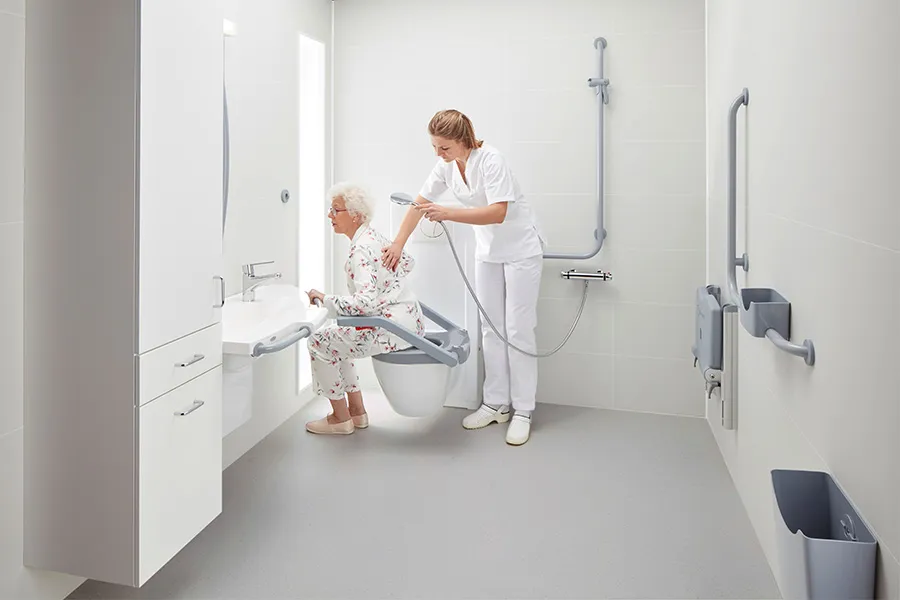
One of the main reasons older people and those requiring care have to move from home to a nursing home or care facility is the care situation. Small, unadapted or barely adapted bathrooms in private homes are a particular obstacle: people can no longer manage on their own in the bathroom, and providing dignified care in an ergonomically responsible way is difficult or impossible. Bano Benelux’s rotating toilet removes these obstacles and sets a new standard for bathroom accessibility. Rather than having to adapt to the bathroom, the user finds that the bathroom adapts to them. The rotating toilet significantly improves independence and safety.
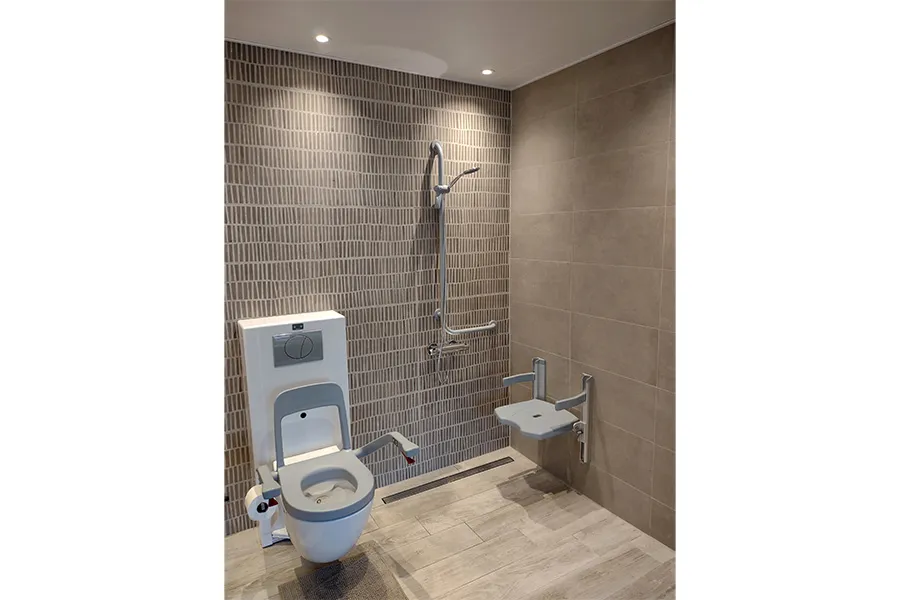
Bano Benelux has been active in the Benelux market since 2014. Bano Benelux focuses primarily on bathroom concepts and supports older people and people with disabilities. Kees Verhoef, director of Bano Benelux, says: “We make it possible for everyone to shower safely and comfortably in a stylish adapted bathroom. Our bathroom aids are ideal for use in private homes, nursing homes, hospitals, residential care complexes, care hotels, service flats and residences. We started doing this because many bathrooms in the Netherlands are unsafe and incur significant costs in the long term.” He continues: “In care homes and nursing homes, it is often difficult for residents to transfer to the toilet, with or without the help of a care worker. Care workers often have to lift people on and off the toilet in a very awkward position, resulting in many back problems. A revolutionary invention from Norway, the rotating toilet, puts an end to this in many cases, and we at Bano Benelux are very proud of it.”
“Our bathroom concept, designed specifically for care settings, maximises accessibility and independence, prevents accidents and can save a lot of money in the long term,” Verhoef explains. “The rotating toilet helps achieve this. It encourages users to make full use of their own abilities. If they cannot manage on their own, one care worker can often now provide assistance instead of two.”
Accessibility and freedom of movement
Verhoef lists the benefits of the rotating toilet for clients and care staff: “The rotating toilet adapts to the user, rather than the other way round. It also makes care staff’s work easier, enabling them to work more quickly and efficiently. A study in Norway looked at the time savings offered by the rotating toilet. It found that care staff save as much as 60 hours a week across 15 bathrooms equipped with a rotating toilet. The rotating toilet therefore pays for itself very quickly. The savings are certainly an advantage, but the most important thing is that it takes the burden off both the client and the care worker. The rotating toilet also maximises safety and independence. It improves accessibility while providing optimal freedom of movement. Finally, the rotating toilet is height-adjustable.”
All in all, Bano Benelux’s rotating toilet offers many benefits for both users and care staff. The rotating toilet can be seen at the Zorg Inspiratie Centrum in Papendrecht.
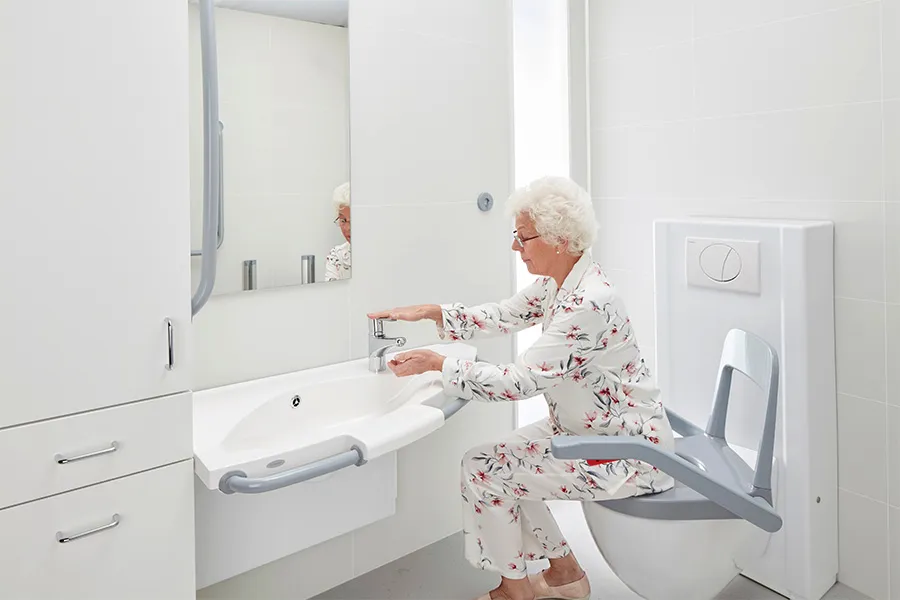
Vision for the future
Verhoef has a clear vision for the future of Bano Benelux. “Scandinavia is far ahead of the Netherlands when it comes to care. Here in the Netherlands, we have now started preparing for the future, both in people’s homes and at care organisations.” He sees Bano Benelux becoming one of the major players in the care sector. “Let’s be honest: the bathroom is one of the most important places in a person’s home. Providing appropriate care for our clients and reducing the burden on care workers as much as possible will remain Bano Benelux’s number 1 objective.”
Question about this story? Ask your question
Keep following this
Get an email when a new story is published. No account needed.
- ThemeInteriors for housing and care
- SubjectGeneral







