











‘We need to let go of traditional ways of thinking about care’
Text Jean van PolImage OIZ, Abbink Fotografie , Miriam Doerr & Martin Frommherz, Kittipong Jirasukhanont
OIZ chair calls for clear standards for information exchange between healthcare sectors
To keep healthcare affordable, accessible and manageable, the Netherlands faces major challenges. ICT solutions can play an important role in addressing them. Eddy van de Werken, chair of OIZ, which represents Dutch healthcare ICT suppliers, calls for clear standards for information exchange between healthcare sectors. “Greater efficiency means more people can provide care with the same amount of effort.”
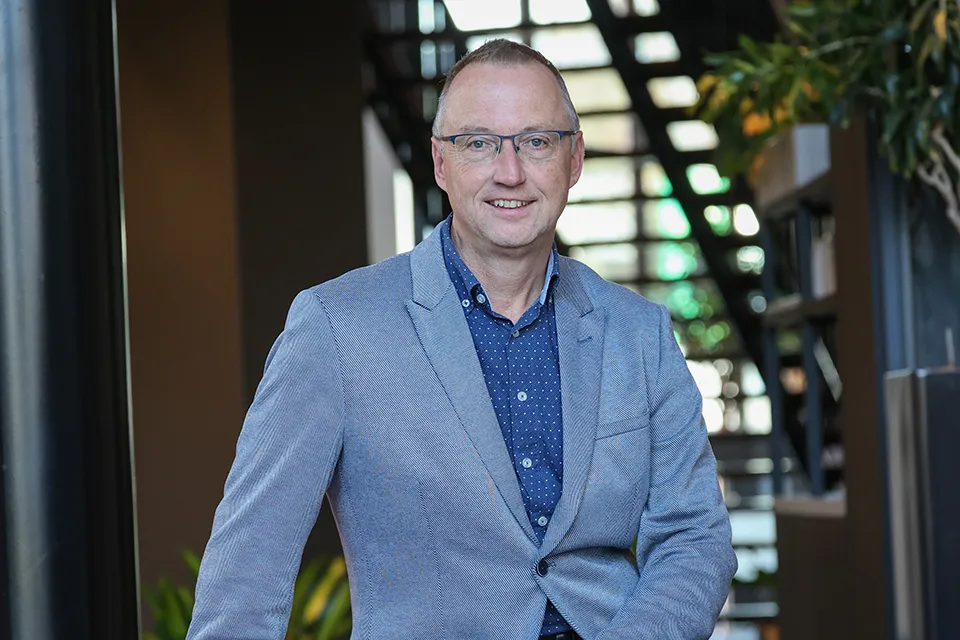
As chair of OIZ, the Dutch Association of Organisations for ICT in Healthcare, one of Van de Werken’s key missions is to reduce the workload of healthcare professionals. “ICT can help take work off healthcare professionals’ hands, enabling them to spend more time delivering direct patient care. Everything must be geared towards ensuring that every person in the Netherlands can receive the care they need, to some degree, to grow old in good health.”
Clear standards
One of the challenges, according to Van de Werken, is to establish clear standards for information exchange between different healthcare sectors, such as hospitals, GPs, dentists and home care organisations. “So far, each healthcare sector has had its own information system. At the same time, healthcare providers are being asked to work together more and more, and therefore to share information. That is why it is important to have a single, clear information system that allows information to be transferred from one healthcare organisation to another without errors or delays. That is still where things fall short.”

Semantics
Van de Werken stresses that, with the information system envisaged by the OIZ chair, it is essential for the information exchanged to be unambiguous. “For example, a hospital specialist may sometimes use different medical terms for a particular condition than a GP. This means that a clear information standard is not just a matter of ICT technology, but above all of semantics, in other words, a shared understanding of terms that leaves no room for disagreement. And we have not even touched on safeguarding the privacy of patient information. That too makes data exchange more complex.” In short, there is still a great deal of work to be done. However, Van de Werken is convinced that the healthcare sector will reap the benefits once ICT suppliers across the Netherlands succeed in building this kind of collaboration between systems. “At present, for example, it is still often the case that you have to have a blood test carried out by several healthcare providers. But with an effective system for information exchange between healthcare providers, such duplication can be avoided in future. That improves efficiency, allowing more people to provide care with the same amount of effort.”
Artificial Intelligence
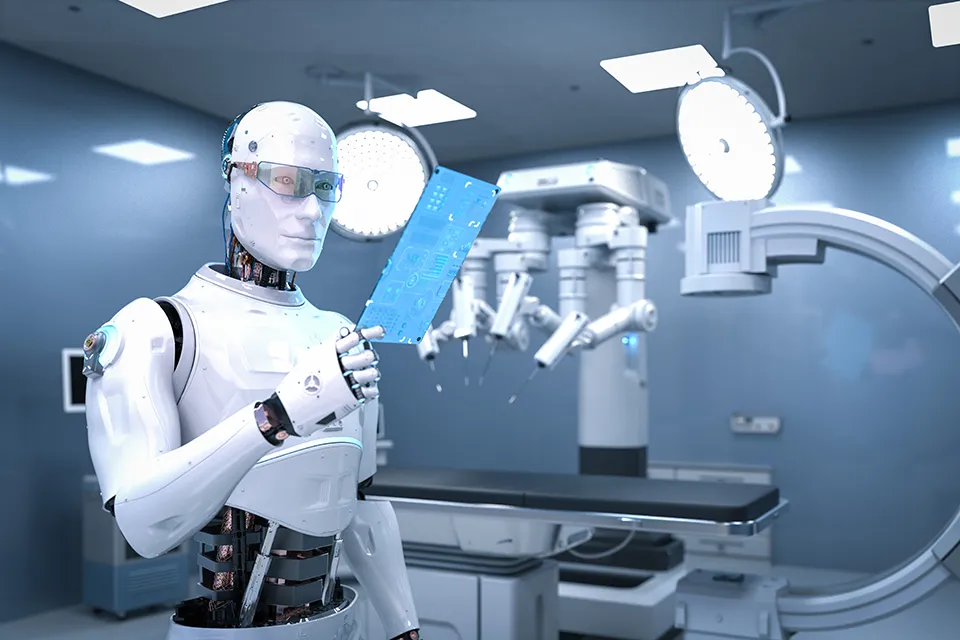
When it comes to important developments in healthcare ICT, the conversation soon turns to Artificial Intelligence. Van de Werken says: “These developments are moving very fast. It is already possible, for example, to assess a prostate tumour using AI analysis, and do so much better than a urologist ever could. And this trend will continue. We will therefore have to learn to accept that we will not always receive care from a human being. Who knows, in the not-too-distant future a care robot rather than a home care worker may come to your home to administer medication. As technology advances, care traditionally provided by a doctor or nurse will increasingly be taken over by an AI tool or another device. In any case, we will all have to let go of our traditional ways of thinking about care. That is the only way we can keep care affordable and maintain current levels of care in the future.”
Question about this story? Ask your question
Keep following this
Get an email when a new story is published. No account needed.
- SubjectGeneral







