











World’s strongest MRI scanner to be built in the Netherlands
€19 million NWO grant for project led by Donders Institute
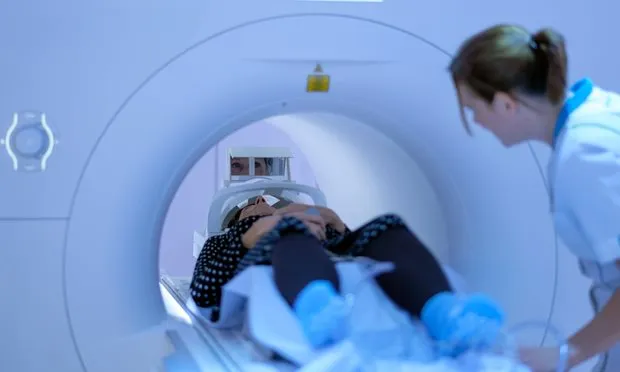
A consortium of seven partners, led by Radboud University’s Donders Institute for Brain, Cognition and Behaviour, has received a €19 million Roadmap grant from NWO. The funding will be used to build the world’s first MRI scanner with a magnetic field strength of 14 tesla, suitable for research involving people, in Nijmegen.
Every two years, the Ministry of Education, Culture and Science (OCW) makes funding available to NWO for the National Roadmap for Large-Scale Scientific Infrastructure. This enables the construction or renewal of essential research infrastructure in the Netherlands.
As part of the DYNAMIC project, researchers will build the world’s first MRI scanner with a magnetic field strength of 14 tesla. The scanner’s high sensitivity will enable scientists, for example, to produce more detailed images of the brain, while also providing new insights into diseases throughout the body.
‘The new MRI scanner will be located on the Radboudumc campus in Nijmegen, but will be available to all scientists in the Netherlands. We will also work with international partners,’ says David Norris, project leader and professor of MRI techniques at Radboud University’s Donders Institute. ‘With this new, highly sensitive scanner, we aim to open up new areas of research for the entire scientific community.’
Importance for brain disorders, medicine and neuroscience
The new scanner will be highly significant for research into brain disorders, says Anja van der Kolk, neuroradiologist and physician-researcher at Radboudumc. ‘Many people have brain disorders, and their numbers will only increase over the coming decades. There are no effective treatments for many conditions because we do not know exactly how they develop. The 14T MRI scanner will let us examine in great detail, without surgery, what happens to the brain as it becomes diseased, even at an early stage. We hope this will help us find new treatment options, and perhaps even ways to prevent these conditions.’
On the importance of the new scanner for medicine, Dennis Klomp, professor of high-precision structural and metabolic imaging at UMC Utrecht, says: ‘With the world’s most powerful MRI scanner, we can investigate the metabolism of diseases in humans and how it can be influenced by medication, without surgery or biopsy. We will use the 14T MRI’s high spectral and spatial resolution to study new treatments for heterogeneous tissues such as tumours.’
In neuroscience, ‘we expect the new 14-tesla MRI scanner to revolutionise non-invasive neuroscience by making it possible to map neural circuits in humans at unprecedented spatial resolution. These highly detailed data are essential for developing and refining new, more realistic models,’ says Elia Formisano, professor of neural signal analysis at Maastricht University.
Consortium
The Dutch National 14Tesla MRI Initiative in Medical Science (DYNAMIC) is a project involving seven partners: Radboud University (lead applicant), Amsterdam UMC, Leiden University Medical Center (LUMC), Maastricht University, Radboudumc (Tom Scheenen, Anja van der Kolk and Rick Helmich), Spinoza Centre for Neuroimaging, KNAW and University Medical Center Utrecht (UMCU).
Other funded projects
Radboudumc is also involved in another project receiving funding from the National Roadmap, called NL-BioImaging. A consortium led by Amsterdam UMC will receive €15 million to develop new advanced microscopy techniques. Researchers will use microscopy to gain a better understanding of diseases such as cancer, metabolic and cardiovascular diseases, and brain disorders, and to develop new strategies for prevention, therapy and cure. Peter Friedl is leading the Nijmegen part of the project.
National Roadmap
A total of nine projects will receive €140 million from NWO to establish or improve large-scale scientific infrastructure. ‘Investment in large-scale infrastructure strengthens the Netherlands’ international standing as a knowledge-based economy. Science and research cannot do without the right scientific infrastructure,’ says Robbert Dijkgraaf, Minister of Education, Culture and Science (OCW).
More information about all funded projects is available on the NWO website.
Question about this story? Ask your question
Keep following this
Get an email when a new story is published. No account needed.
- ThemeHospital construction and refurbishment
- SubjectGeneral







