











Zorg.Tech conference in Genk: the energy transition is also a matter of care in healthcare
Text Koen MortelmansImage Dagny Serruys / ZORG.tech
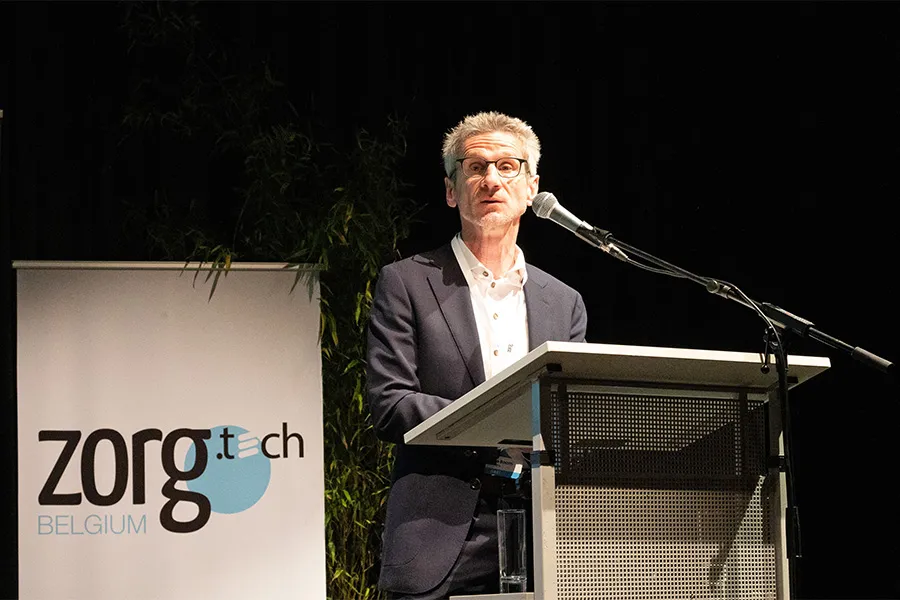
On 2 June, the annual conference of ZORG.tech, the Flemish support organisation for professionals in the technical management of buildings and installations at general healthcare institutions, took place at the Limburghal in Genk.
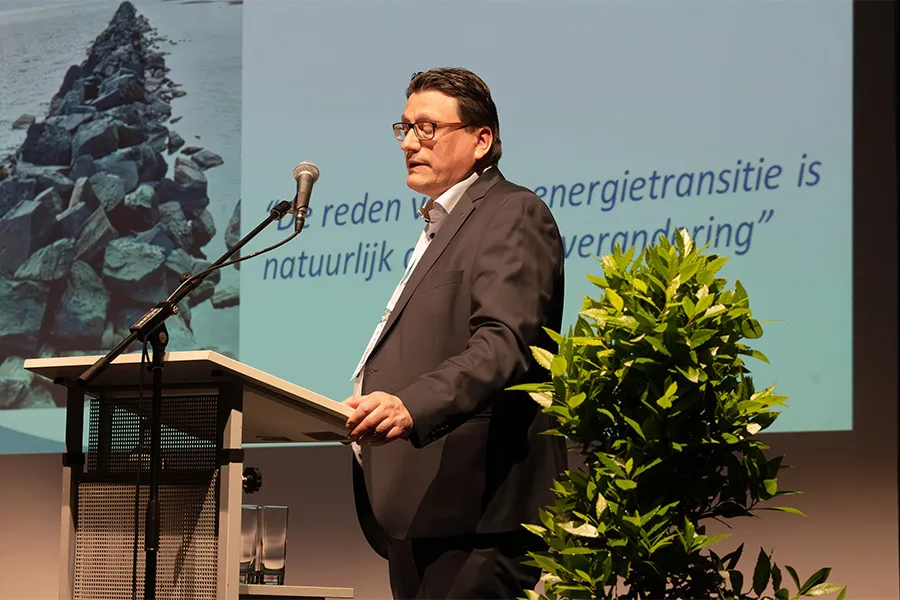
There were 929 attendees in person. The 930th, Flemish Minister for Welfare Hilde Crevits (CD&V), attended virtually only. “Across Flanders there is a great deal of healthcare infrastructure, with a large ecological footprint,” she told the conference delegates. “The climate crisis and high energy prices require action. The healthcare sector is an important partner in the necessary energy transition. That is why we launched the Green Deal Duurzame Zorg, which has already secured commitments from more than 150 organisations. Whether it involves energy-saving infrastructure, better waste management or making smarter use of food surpluses, … every effort can make a difference.”
“The Flemish government wants to provide a supportive framework,” said Crevits. “Through Vipa and the Vlaams Energiebedrijf, we are supporting the healthcare sector in the energy transition. The Flemish government is making more than 30 million euros available for this purpose from the climate fund and European funds. We are also supporting energy audits and ventilation audits, because clean air is an important consideration too.”
Climate change
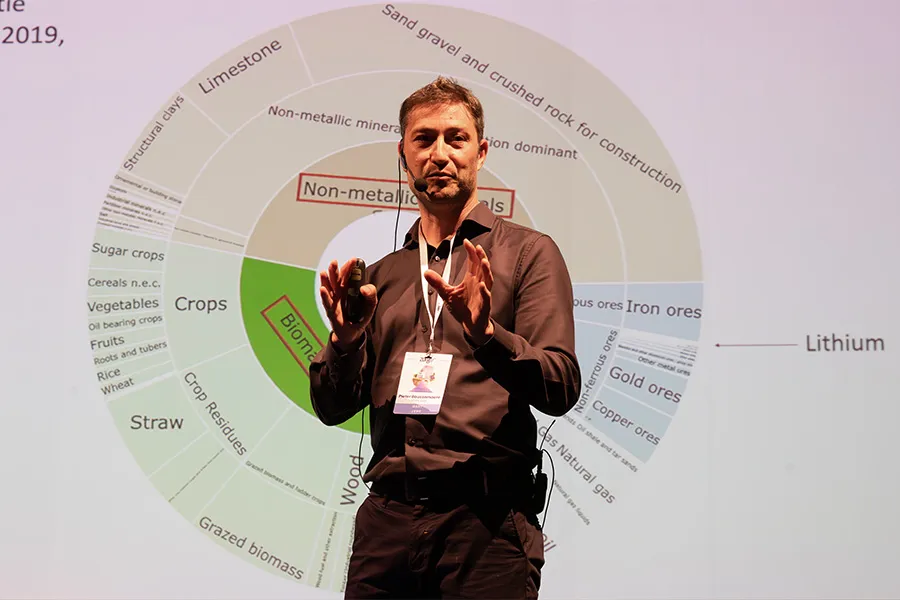
Pieter Boussemaere, a lecturer in climate and world history at Vives Hogeschool in Bruges and Kortrijk, gave an overview of climate change over the past 20,000 years and outlined measures that could be taken to avert a climate disaster. He did not present any genuinely new insights, but he did provide a useful framework. Above all, we need to move away from using fossil fuels. This can be achieved by fully committing to electricity generation from renewable sources (wind, water and solar), further expanding the electricity grid to accommodate these sources, and building sufficient storage capacity to cope with the intermittent nature of renewable generation.
Resilience under pressure
Ivan De Boom, head of the Vipa department at the Flemish government Department of Welfare, Public Health and Family, agreed. “Climate change has been at the top of the global list of health challenges for some time. It increases the vulnerability of population groups such as older people, people who are ill and people on low incomes,” he explained. “This also puts pressure on the resilience of the entire health system. At the same time, climate change brings direct and indirect health risks through various exposures, including heat, air quality and extreme weather. In Belgium, heat is the biggest climate-related health challenge. During the heatwave days of the coronavirus pandemic, we recorded more excess deaths from heat each day than from coronavirus. Being unable to provide night-time cooling in time can contribute to organ failure. Heat also affects everyone’s productivity and wellbeing, of course, by disrupting sleep. That is why Vipa considers it important to ensure good summer comfort in our healthcare buildings.”
“Depending on the path we choose, various co-benefits may come our way. Short-chain supply systems, for example, would have made the problems with face masks less severe. This approach also generates fewer transport emissions. Belgium’s healthcare sector accounts for 5.5% of the country’s total greenhouse gas emissions.”
Subsidies available
“In Flanders, hospitals account for the largest share of emissions from the healthcare sector. This is no surprise, of course. In 2021, they did manage to reduce their emissions by 5.18% compared with 2018, but the provisional figures for 2022 are much less favourable. Flanders has set aside 54 million euros in subsidies for energy-saving measures at healthcare institutions. Until recently, 1,265, or 15.3%, of these 8,273 institutions had requested an energy scan/audit, covering 2,123 unique buildings. But only 6.9% have applied for climate subsidies so far.”
“Applications have been submitted for more than 9 million euros,” Crevits added. “But we are counting on more. I urge everyone to sign up for energy scans and the resulting investments. Through Vipa, we have also made 100 million euros available in interest-free loans for this purpose.”
Hydrogen from sun and ice
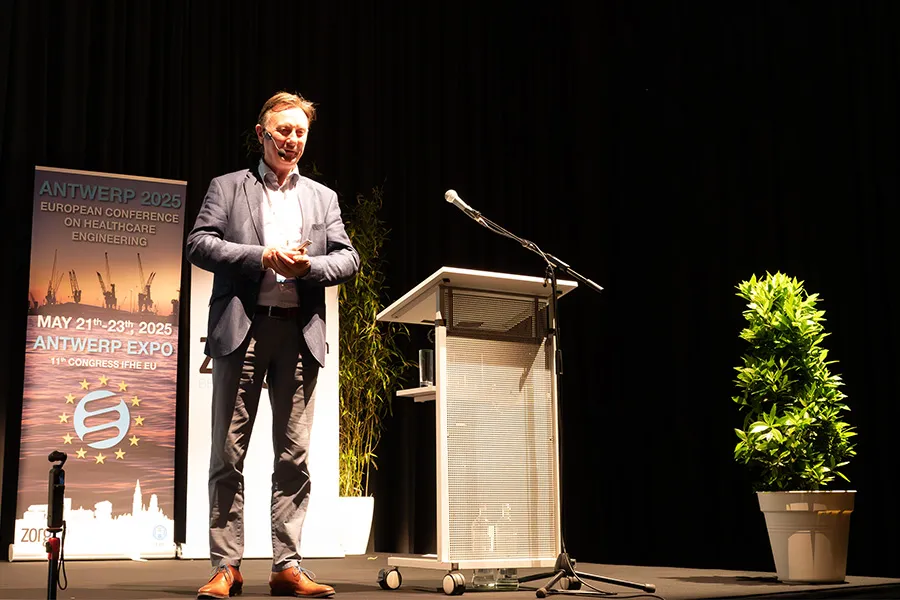
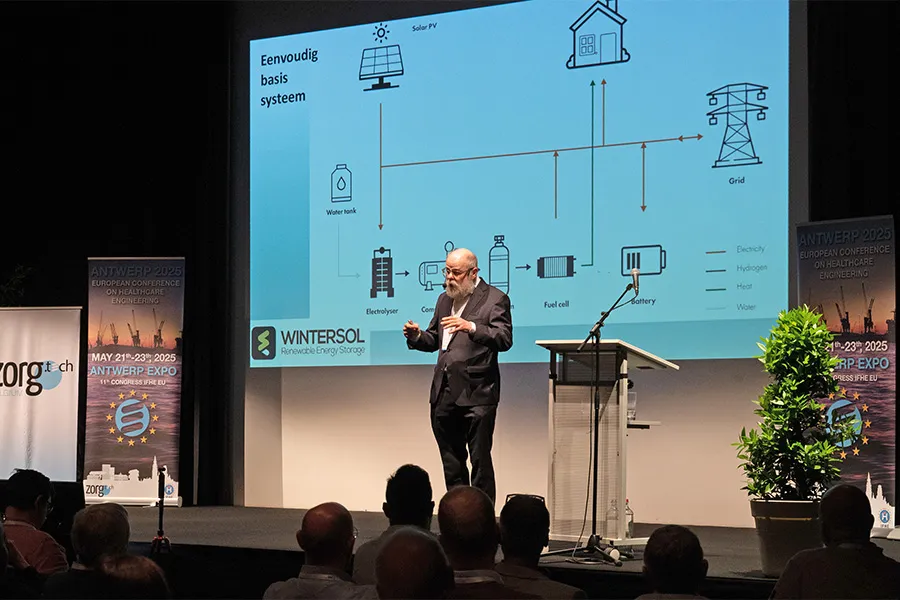
Johan Martens, professor at KU Leuven, explored the potential of hydrogen as a sustainable alternative to natural gas. With his team, he developed new technologies for producing and storing hydrogen. “The European Union aims to meet 20% of its energy consumption with hydrogen by 2050,” Martens said. “But to achieve this, production and supply must be able to keep pace with demand.” His Solhyd hydrogen panel could help make this possible. The panel uses solar energy to split water vapour from the atmosphere into oxygen and hydrogen. The hydrogen molecules (H2) are then stored under high pressure in ice as minicapsules. Twelve such panels would be enough to produce 100 kg of H2 in summer, which could generate 2,400 kWh of electricity the following winter. This could cover the (current) winter energy consumption of an average Flemish household. In healthcare buildings, a special reactor can make hydrogen react with CO2. The end products of this reaction are methane (CH4), the main component of natural gas, and water (H2O). The natural gas produced is then burned in a boiler, which captures the CO2 generated during combustion for use in the reactor.
Local networks
John Schmitz, professor at Delft University of Technology (TUD), has more than thirty years’ experience in the semiconductor industry, working for companies such as Philips, Genus, Sematech and NXP. He also chaired the board of The Green Village (TGV) and helped pave the way for TUD’s 24/7 Autonomous Energy Site. Schmitz pointed out that, as electrification continues, electricity consumption will continue to rise sharply in the future, even with greater energy efficiency. This also calls for further expansion of the electricity grids. In the Netherlands, existing grids are already at capacity in Friesland, Gelderland, Flevoland, the north of Zeeland and the ‘head’ of North Holland. Schmitz advocated developing almost self-sufficient neighbourhood networks to compensate for the shortage of transmission lines. The 24/7 Energy Lab at TGV is a prototype of such a network. It is intended to contribute to TUD’s ambition to operate fully sustainably from 2030 onwards.
“There is no one-size-fits-all solution,” said Minister Crevits. “Every sector and every building faces different challenges. It is good that you have come together here today to continue discussing this. Suggestions, recommendations and advice are absolutely welcome. We will be pleased to take them into account as we shape our policy.”
Social Project
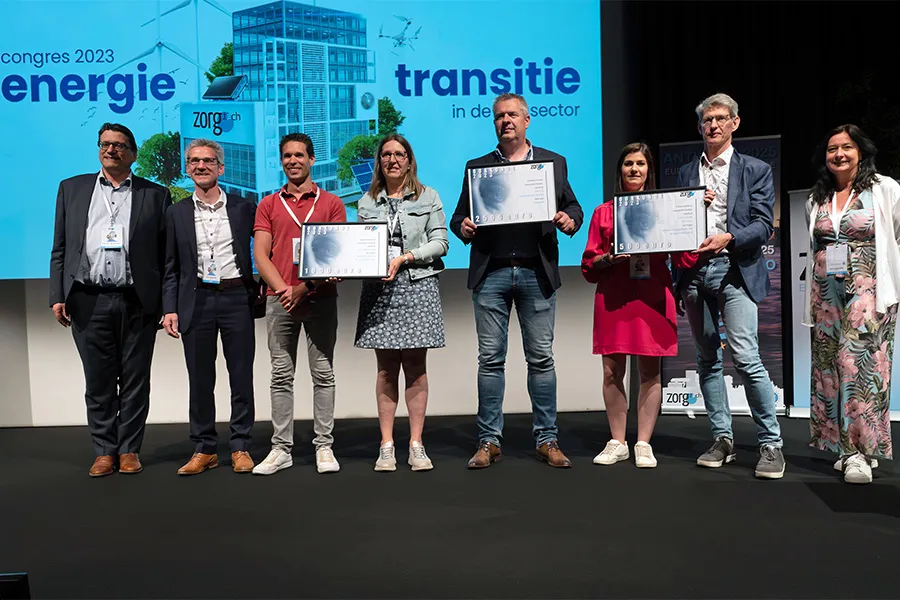
This year, the main prize for a ‘Social Project’ went to the non-profit organisation Stijn, for creating its animal park at the ’t Weyerke service centre in Heusden-Zolder, where it supports 150 permanent residents and 45 day residents. VitaS was runner-up for creating an experience-focused, multifunctional garden at the De Zwaen assisted living residences in Peer. Third prize went to the De Zeilen department of psychiatric care provider Asster in Sint-Truiden, for its low-stimulus room and comfort bathroom design. ZORG.tech awards a total of 4,000 euros in prize money each year.
Question about this story? Ask your question
Keep following this
Get an email when a new story is published. No account needed.
- ThemeDigital technology in healthcare
- SubjectGeneral







