Beyond comfort: towards a healthy hospital
Text and images Ecophon
‘Unnecessary noise is the most cruel absence of care’, Florence Nightingale said back in 1858. Put freely, she believed unnecessary noise to be the cruellest absence of care. In other words, unnecessary noise not only undermines our peace and recovery, it also shows that there is no genuine concern for wellbeing. It is a symbol of care that is technically present but falls short on the human side. Noise therefore touches on the very essence of what care should do: restore and protect. Today, we know that acoustics are not merely a matter of comfort, but part of Indoor Environmental Quality (IEQ), which affects wellbeing, recovery and work performance.
This represents a shift from comfort to wellbeing. Traditional standards often focus solely on dose-related indicators (dB(A), ventilation rates), whereas recent analyses emphasise that multiple IEQ factors reinforce one another and that user profiles determine their effects. Professor Philomena Bluyssen and her colleagues advocate an integrated approach: noise should be assessed alongside light, air and thermal comfort, with due regard for behaviour and building characteristics. Only in this way can practical measures be identified that improve health and recovery.


Indoor environmental quality
This shift in focus has practical implications for hospitals. Studies in Dutch healthcare settings show that staff in certain departments report physical complaints such as dry eyes and headaches associated with building characteristics, including the lack of windows, the type of ventilation system and the layout of workspaces. This means that indoor environmental quality affects not only patients, but also has a direct impact on the wellbeing and performance of healthcare professionals.
Clustering staff
Indoor environmental quality is therefore very much a staff issue too. In addition to dose-related indicators, user-related indicators (such as complaints and preferences) and building-related indicators (such as ventilation systems, windows and acoustic materials) are also needed to build a complete picture. Bluyssen and her colleagues also stress the importance of user profiling: grouping staff according to their perceived comfort and needs makes it possible to identify the main risks and areas for improvement.
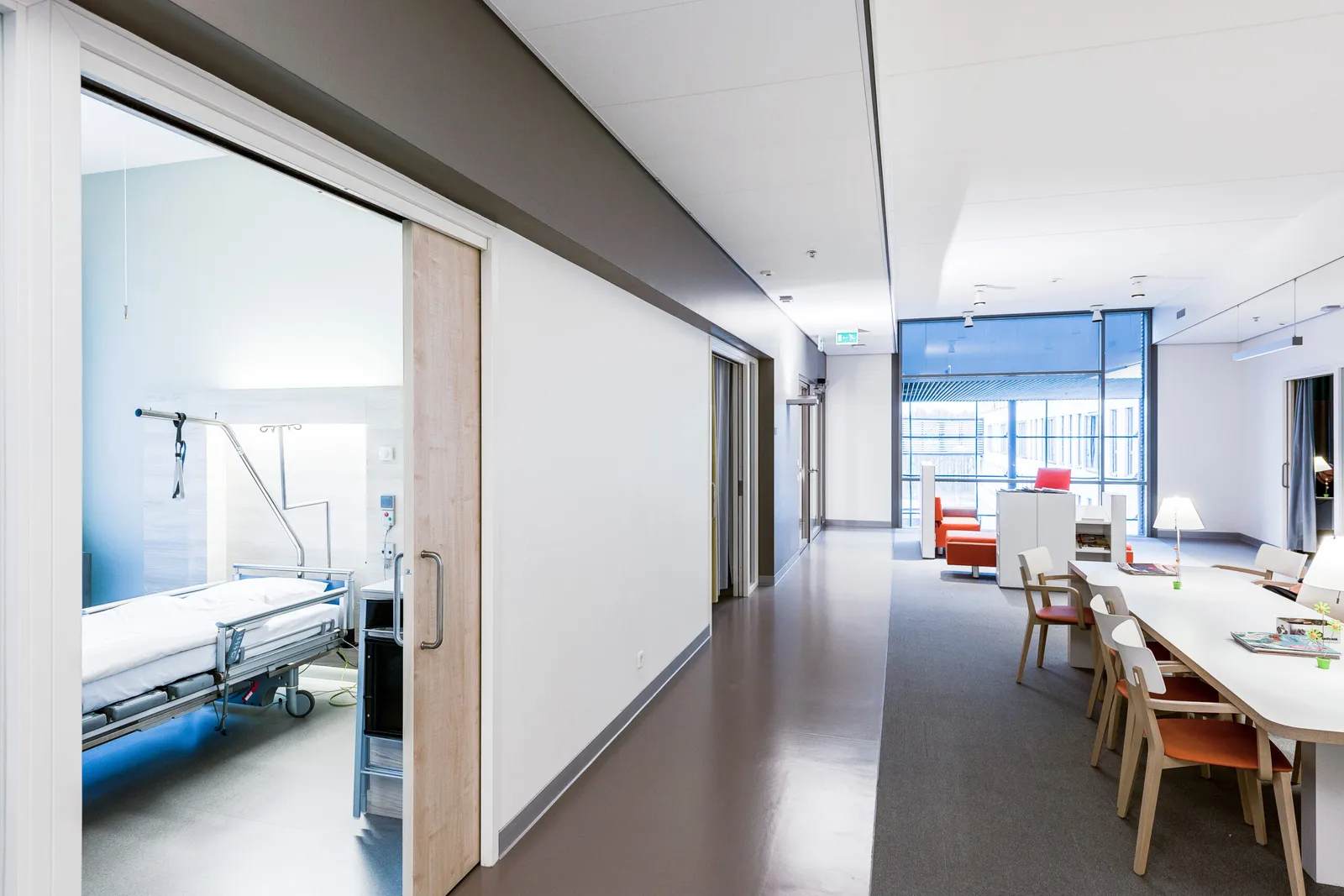
Design with priorities
It is also important to design with priorities in mind. Alongside dose-related indicators, building-related choices are key to health and comfort. Examples include sound-absorbing materials in ceilings and walls, the finishes used on floors, walls and ceilings, and the location and maintenance of ventilation systems and windows. These building interventions affect acoustic comfort and privacy, as well as the risk of complaints such as headaches or dry eyes. Sound absorption and the right choice of materials can therefore measurably improve the indoor environment.
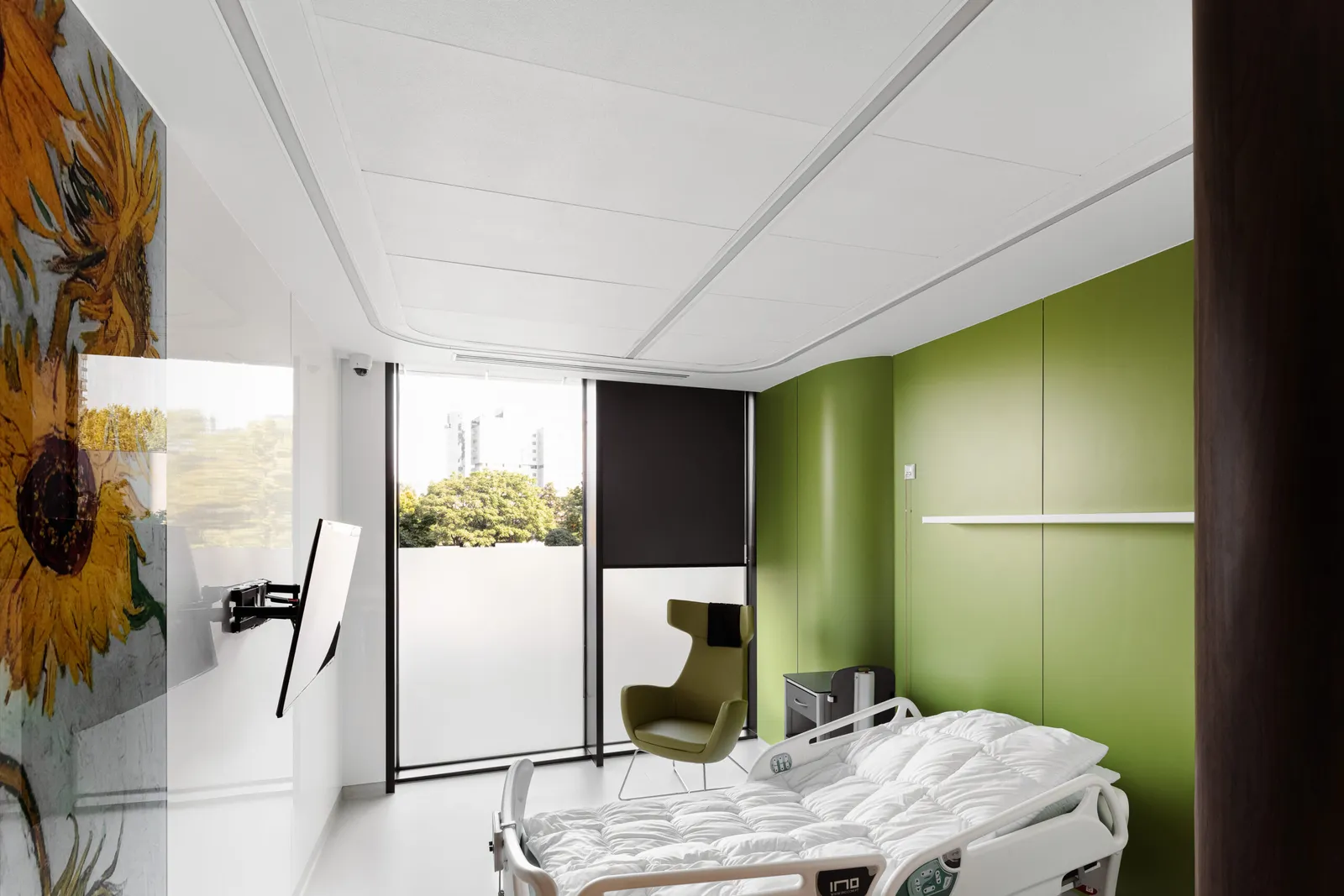
Technology and behaviour
Thirdly, combine technology with behaviour. Measures are only effective when users’ preferences, needs and actions are also taken into account. People differ, and measures that work for one person may cause problems for another. It is therefore essential to link technical solutions to user profiles and behaviour patterns. Finally, it is important to monitor, gather feedback and continually adjust strategies: what gets measured gets managed.
As Nightingale observed, noise is a healthcare issue. Embed user and building indicators in the project brief, invest in effective acoustic materials and measure systematically. Use that data to refine design and management iteratively, so that healthcare buildings do more than function technically: they genuinely support recovery, privacy and job satisfaction.
Question about this story? Ask your question
Keep following this
Get an email when a new story is published. No account needed.
- SubjectInteriors