Breda, Amphia Hospital | Reliable technical facilities are crucial
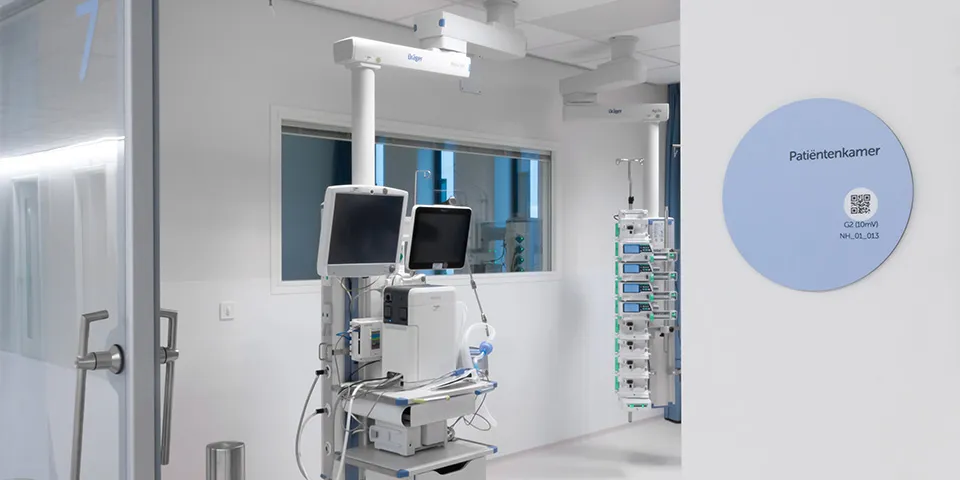
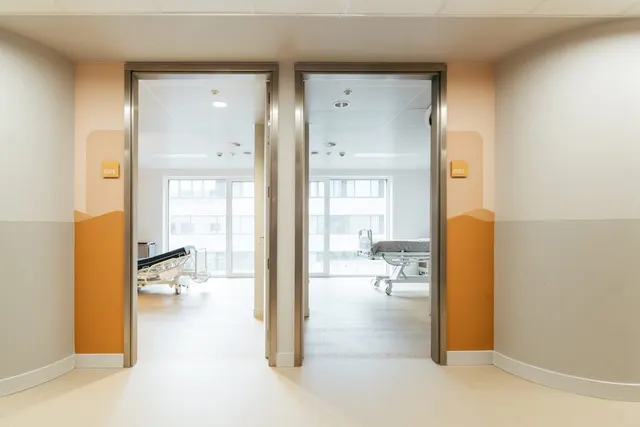
Amphia needed a large number of technical installations and items of equipment, including for the intervention building, which houses the 16 operating theatres and 30 intensive care rooms. A complete medical gas distribution system was needed to supply medical gases such as oxygen, nitrogen, compressed air and CO2, from the source, the compressed air compressors in the technical rooms, to the point of use, the outlets in the bedhead units in the patient rooms.
“We also needed various types of pendants, including the support structures used to suspend them from the concrete ceiling, as well as operating theatre and examination lights. You then look for a reliable partner that supplies high-quality products at competitive prices,” says Amphia’s new-build project manager, Gerard Jacobs. “After all, we are dealing with public money. We also wanted to place all the orders with one supplier to minimise the risk of defects. If you buy from different manufacturers and the products are not compatible, you as the client have a real problem.”
A direct award was sufficient for the purchase of the pendants, operating theatre lights and examination lights, but a tender had to be issued for the gas distribution system. After approaching several suppliers of pendants, operating theatre lights and examination lights, the choice fell on Dräger “because of its high-quality products at competitive prices”. These were ordered directly from the company as early as 2016. That same year, the FourCare construction consortium issued a tender for the medical gas distribution system and all its components. Dräger won the tender, again thanks to its competitive price-quality ratio. Jacobs says: “And then, of course, you hope the collaboration goes well. After all, you are embarking on a 3 to 4-year process together.”
A positive collaboration
The collaboration has been excellent from the outset, both with Amphia and with FourCare. Dräger became involved in the project, including the design, at a very early stage. “It is helpful for a company like this to be able to get involved during the shell construction and design stages, and to keep everything under one roof,” says Jacobs. “This meant their products became part of the design process, which also made implementation much easier.”

Starting early in the process prevented additional costs arising from errors for both parties. Another advantage was the ongoing contact with Dräger. Jacobs says: “They worked with us, focused on finding solutions and provided plenty of reference material. This gave us a clear picture of how they had done things at other hospitals. That was a huge help to us as the end user.”
Dräger also acted quickly, says Jacobs. “We were impressed that they were able to provide 3D BIM models very quickly, showing the positioning of the pendants in the operating theatres and the complete gas distribution system. These showed us, for example, how the pendants rotate and how they relate to the X-ray equipment. They also showed how the medical gas pipes run through the buildings. In the end, the high-quality products and medical gas system were tested, validated and delivered. We are very pleased with the result.”
Looking ahead
Once the hospital had been fully equipped, attention turned to education and training. Staff, including doctors, nurses and operating theatre personnel, were trained in how to use the new building and, among other things, the new Dräger equipment. “But first, we are setting up mock-ups for the operating theatres. We are looking at the ideal layout for users, because everything was designed around 5 years ago. Since then, new users, insights and equipment have emerged.” For this reason, before final handover, Dräger always checks whether any additional items are needed, such as an extra rail, an IV stand or a tray. All of this is happening during this period.
Dräger’s partnership with Amphia will continue. The operating theatre centre and outpatient clinics in the existing buildings still need to be refurbished. “Dräger will be involved in that too, as well as in maintaining the equipment. And looking further ahead, in a few decades’ time, things will need to be replaced and renovated again. If a company continues to do a good job, because the relationship does not end at handover, it can work with a hospital for a very long time. A medical centre is then likely to turn to that company again in 20 years. If Dräger continues to do what it has done for Amphia in recent years and everything remains in good order, I would be very happy to recommend the company to other hospitals,” Jacobs concludes.
DRÄGER NEDERLAND BV
Gasmanagement Systems
Postbus 874, 2700 AW Zoetermeer
T +31 79 344 46 08
F +31 79 344 48 88
E gms@draeger.com
I www.draeger.com/gasmanagement
A business enquiry for Dräger? Get in touch
Companies in this story
Keep following this
Get an email when a new story is published. No account needed.
- ThemeHospital construction and refurbishment
- SubjectInteriors
- CompanyDräger