A future-focused approach to healthcare facilities
Text and images Sweco Belgium bv/srl
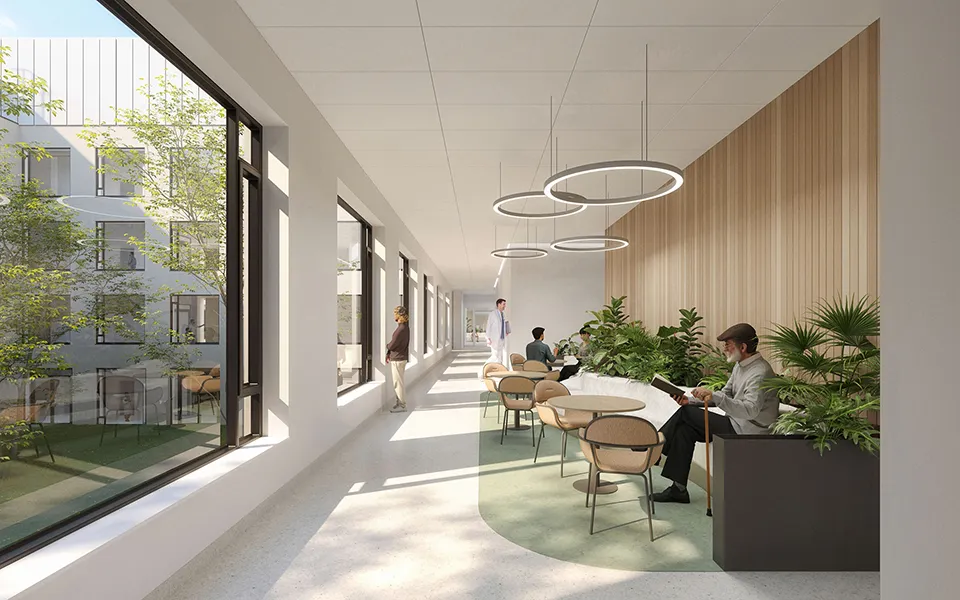
In a rapidly changing world, it is crucial for healthcare institutions to build for the future. Technology is advancing ever faster and is helping the healthcare sector to operate more efficiently, improve the quality of care and personalise treatments. It is important to remember that innovation and technology are not ends in themselves. The comfort of patients and staff remains at the heart of healthcare: an optimal working environment and a positive patient experience are the foundations of high-quality care.
Modular design for optimum flexibility
This rapid evolution poses challenges for the design and construction process. Erik Vereecken, project director at Sweco: “The design phase for the new hospital in Charleroi, CH Les Viviers, began in 2013. You don’t have a crystal ball to show how the medical sector and the care model will have evolved by the time it opens.” The design team made the hospital’s 116,000 m² as flexible as possible, combining the shell method with the hospital’s care model.
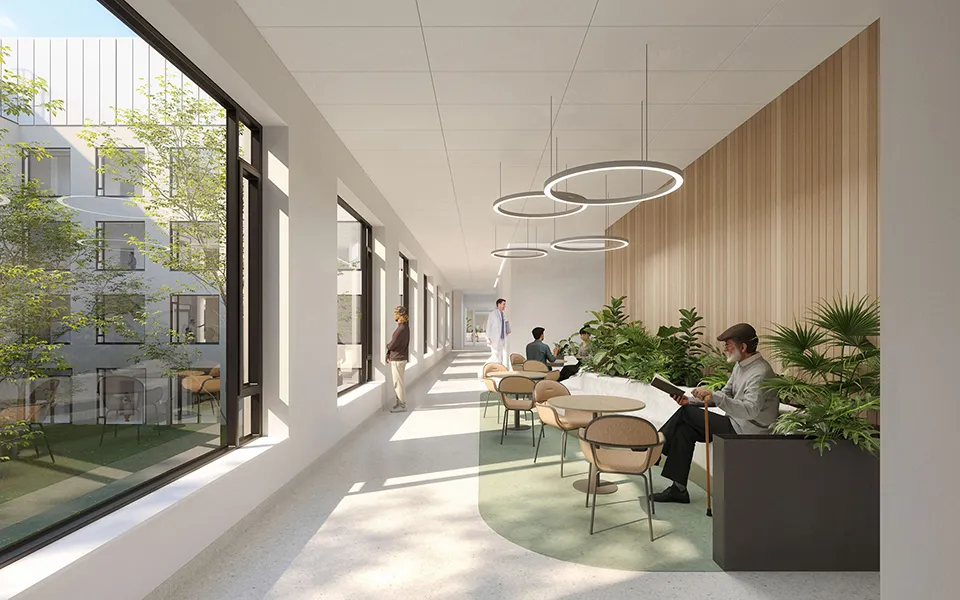
The structure of AZ Jan Portaels is modular too. Kenneth Groosman, healthcare expert at Sweco: “Together with our design partner Wiegerinck, we have taken future medical developments fully into account. We are building the entire facility to the same dimensional grid. This makes it easy to give spaces a different function and to expand or reduce departments.” AZ Jan Portaels also takes changing patient needs into account. Day hospital admissions in the healthcare region are expected to increase by 50%: more treatment and fewer beds. With 300 beds, the new building will be significantly smaller.
UZ Brussel shows how reactive construction can hinder a campus in the short term. In 2010, growing space shortages, fragmented services and circulation and parking problems prompted action. A spatial plan reshaped the campus for a more efficient future. “This living document provides for the expansion and reorganisation of most services, optimises how they work together and separates circulation flows,” says Wim De Vos, senior architect at Sweco. By 2029, UZ Brussel will thus have created a logical, accessible hospital with 67,000 m² of redeveloped healthcare facilities.
Creating an impactful experience
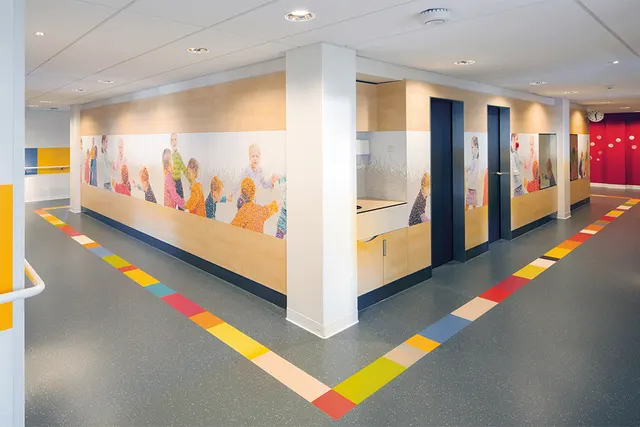
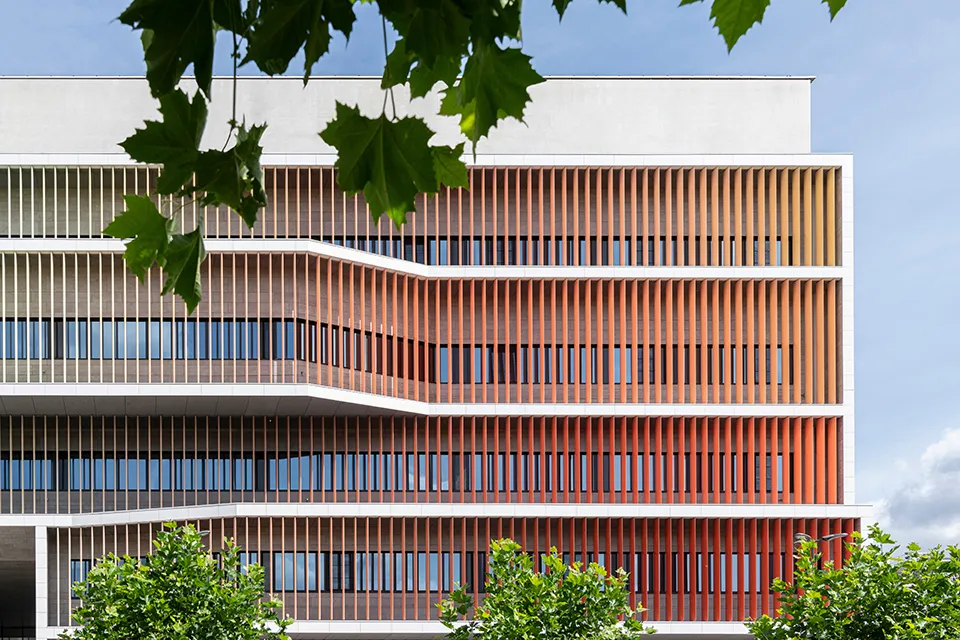
A systematic approach may seem at odds with creating a positive experience, but nothing could be further from the truth. The design of a healing environment draws on scientific insights into user experience and its impact on wellbeing: materials, colours, daylight and nature are also carefully and systematically integrated. For CH des Viviers, the design team took a highly methodical approach to optimising the experience, an essential task on a scale of 1,000 beds. Vereecken: “Several layers come together in the design of a space. Alongside the mental and emotional experience, there are practical considerations such as orientation and functionality. A design system with clear principles promotes coherence and legibility throughout the hospital.” In the future, the hospital can apply these principles itself during renovations or extensions, helping to ensure consistency. “We have also made the most of the exceptional setting on top of the terril. The windows let in daylight, help with wayfinding and offer views of the green landscape.”
A healthy environment
According to the World Health Organization, 24% of global deaths are attributable to modifiable environmental risks. Emissions, climate and other environmental factors affect our wellbeing. Technology can help here too, in creating a more sustainable world. This is less straightforward in a healthcare setting, given the vulnerability of patients, but architects and engineers are nevertheless seeking creative solutions. For example, the new AZ Jan Portaels hospital will be all-electric, a first for Belgian healthcare. It will also make maximum use of renewable sources.
Systematically tailored
A methodical approach to the needs, wishes and requirements of healthcare professionals leads to unique solutions, from new builds to extensions and upgrades, and from local hospitals to university hospitals. The combined expertise of designers and healthcare professionals creates a care environment where comfort and efficiency come together in a healthy setting, ready for the future.
Question about this story? Ask your question
Keep following this
Get an email when a new story is published. No account needed.
- ThemeInteriors for housing and care
- SubjectAnniversary