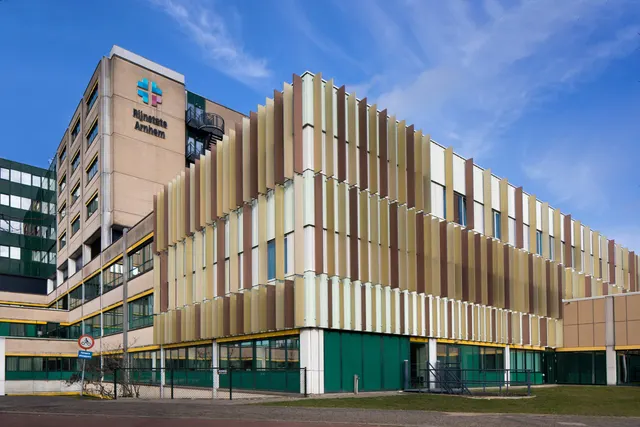
Adiabatic humidification in hospitals
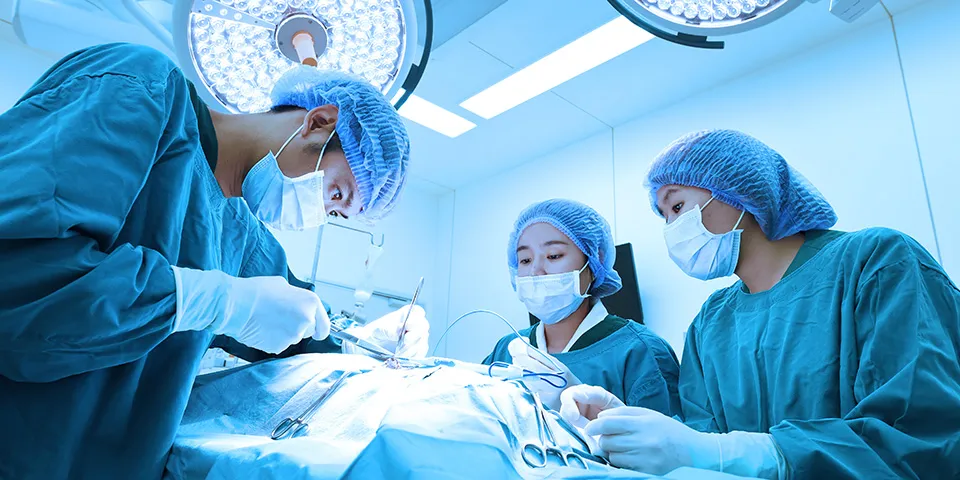
The Condair DL is ideally suited to humidifying the air in hospitals and operating theatres. This adiabatic humidifier offers a 100% hygiene guarantee and the lowest operating costs. Adiabatic humidification is suitable for use throughout a hospital, including in operating theatres.
Why humidify air in hospitals and operating theatres?
The effects of a dry indoor climate include headaches, sore eyes, sore throats, a blocked nose, skin complaints and the transmission of viruses through the air. Dry air draws moisture from all available sources in a room, including the mucous membranes in the nose and throat that protect us against infections. This can be disastrous in a hospital full of sick people. Moisture is also drawn from body tissues exposed during surgery. Dry air can therefore contribute to premature drying and the formation of scabs caused by clotted blood.
Perhaps even more important in operating theatres is the risk of static electric shocks, which becomes real when relative humidity falls below 40%. The unexpected shocks caused by a sudden electrostatic discharge can have potentially damaging and dangerous consequences during surgery. In this context, the prevention of electrostatic sparks must also be considered when using the flammable gases required for anaesthesia.
Humidity in maternity and obstetric wards must always be maintained at the right level, as babies are particularly sensitive to dry air. Low relative humidity significantly worsens the condition of patients with respiratory problems.
What is adiabatic humidification?
There are essentially two different humidification methods: isothermal and adiabatic. Isothermal humidification involves boiling water and converting it into steam, which requires energy. When steam is introduced into the air, it causes virtually no change in temperature. With adiabatic humidification, no energy is added to the water beforehand; cold water is atomised in the duct or air-handling unit. To evaporate, the cold water draws energy (heat) from the air. The air temperature falls after the water is introduced. This method of humidification is energy-efficient and sustainable.
Is every adiabatic humidifier suitable, then?
Absolutely not, given the stringent hygiene requirements. High-pressure humidification, wetted-media humidification, ultrasonic humidification and other adiabatic principles do not guarantee hygiene, and can allow pathogens and bacteria such as Legionella to grow. Thanks to its technical design, endurance testing and hygiene certificate, only the Condair DL is suitable for use.
100% hygienic
Independent institutes have ruled out any risk of infection from the Condair DL. This makes the Condair DL the only adiabatic humidifier that can be safely used in nursing homes and hospitals. Because the Condair DL uses a low-pressure pump and a patented post-evaporation section, it has the lowest energy and water consumption of all (adiabatic) humidifiers. Its operating costs are also very low. Silver ionisation disinfects the water.
Its hygienic design has also enabled it to become the only adiabatic humidifier to receive a hygiene certificate. Issued by the renowned SGS Fresenius institute, this certificate guarantees 100% hygiene, including in the healthcare sector.
Condair BV
Gyroscoopweg 21
1042 AC Amsterdam
T: 020 705 8200
E: info@condair.nl
W: www.condair.nl
Question about this story? Ask your question
Keep following this
Get an email when a new story is published. No account needed.
- ThemeSafe and reliable healthcare buildings
- SubjectHospitals