Brasschaat | Hybrid operating theatre at AZ Klina
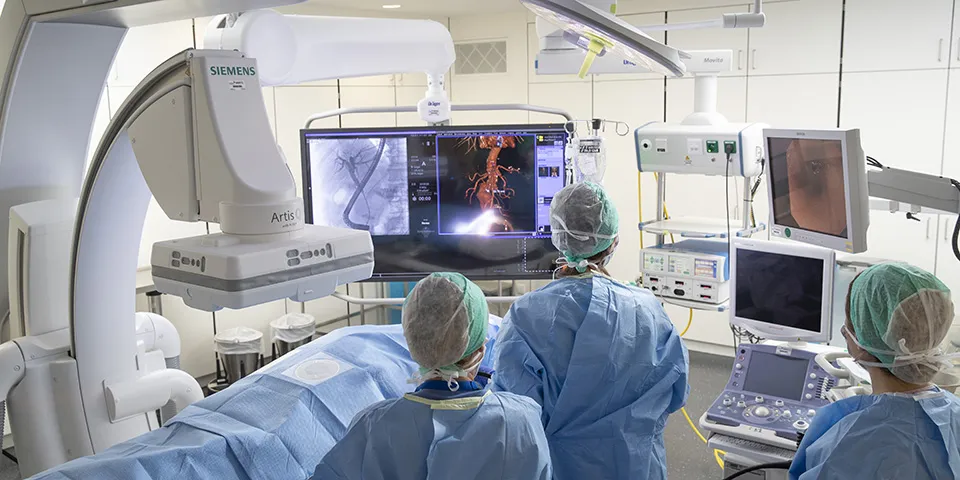
Hybrid operating theatre for AZ Klina
General hospital Klina (Brasschaat) has recently opened a new operating theatre. It is also the first Flemish ‘hybrid’ operating theatre north of Antwerp.
Its hybrid nature lies in combining surgery and medical imaging in the same room. It can produce fast-moving digital images. This enables doctors to make a diagnosis and adjust their approach more quickly, allowing them to carry out procedures with even greater precision.
Previously, patients arriving at the emergency department with complex injuries, such as internal bleeding, had to be taken to a hospital south of Antwerp for treatment in a hybrid theatre. This meant an unpredictable emergency journey, as the roads around Antwerp are the most congested in Flanders. But until recently, the only hybrid operating theatres in the Antwerp area were at Universitair Ziekenhuis in Edegem and, just a month before AZ Klina, at Sint-Augustinus in Wilrijk, leaving no other viable alternative.
Klina has almost 600 beds and its emergency department serves an area with around 200,000 residents. More than 35,000 people attend the department each year. “Several departments at AZ Klina use the hybrid theatre,” explains Jeroen Hendrickx, the hospital’s facilities director. These include medical imaging, vascular surgery and internal medicine. “Being able to perform surgery and medical imaging at the same time can save lives.”
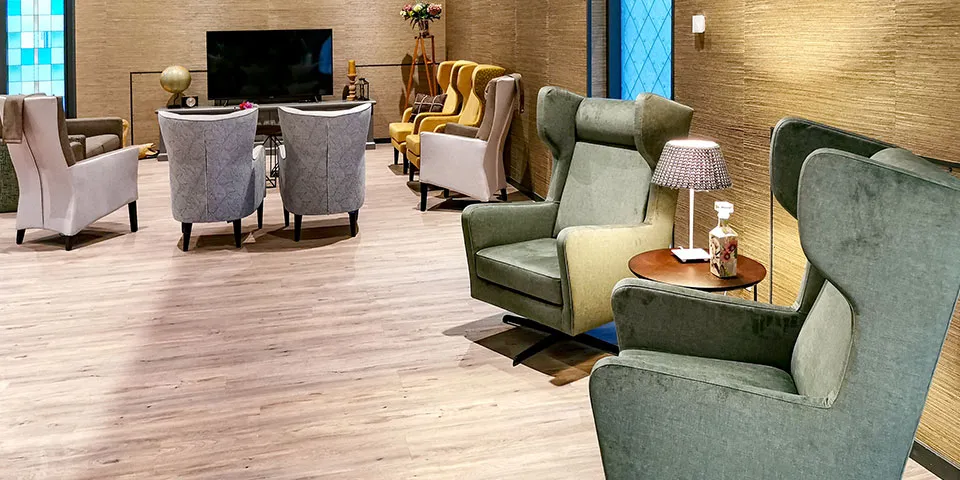
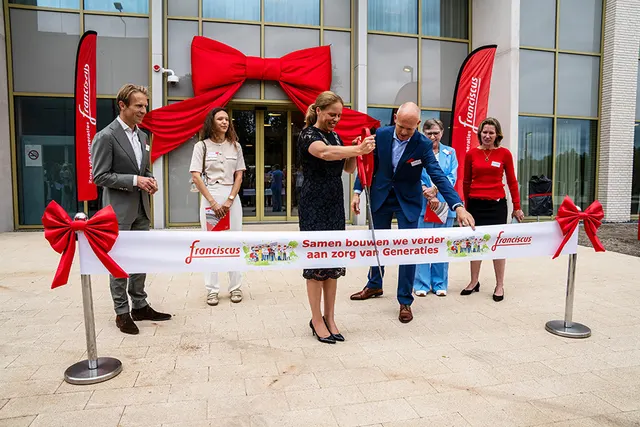
Official opening of the hybrid operating theatre, with Rik Jochems second from the right and Jeroen Hendrickx third from the right.
Latest technology
The operating theatre is equipped with a new 3D imaging ceiling-mounted C-arm for medical imaging. A patient on the operating table can be examined using X-rays, giving doctors an immediate view of their internal condition. “We can now produce images of vascular problems down to the smallest blood vessels.”
The improved real-time availability and greater detail of the imaging also mean that surgeons can make much smaller incisions on average, enabling patients to recover much more quickly from their procedure. Treatments are not only faster, but also less invasive. “We also now have the Da Vinci robot. The urologists make extensive use of it, particularly for prostate surgery. The robot replicates the surgeon’s movements on a smaller scale, enabling procedures to be performed with greater precision.”
Interventional radiology
The hybrid nature of the new operating theatre makes it ideally suited to interventional radiology. “Interventional radiologists treat patients using one or more imaging techniques,” Hendrickx explains. “Examples include abscess drainages and CT-guided punctures. The hybrid theatre uses X-ray fluoroscopy and allows real-time procedures to be performed on accessible blood vessels and bile ducts. To do this, our doctors make a small incision in the skin and use guidewires, catheters and other instruments to reach the area being treated. Many such procedures are performed under local anaesthetic. Procedures that involve puncturing the bile ducts through the liver are the main exception. For the patient’s comfort, these procedures are performed under general anaesthesia, but in most cases the patient can return home the same day or the following day.”
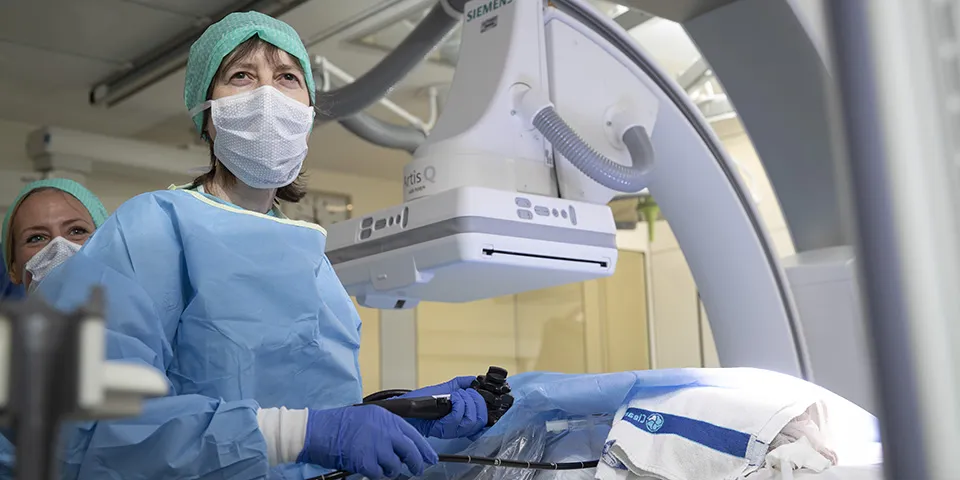
AZ Klina invested 1.3 million euros in the new operating theatre. (Image: Stefaan Hul)
Training
The theatre practitioners, surgeons and medical imaging department staff received extensive training in using the new hybrid equipment. “This took place on site, led by specialists working for the manufacturers.”
Construction
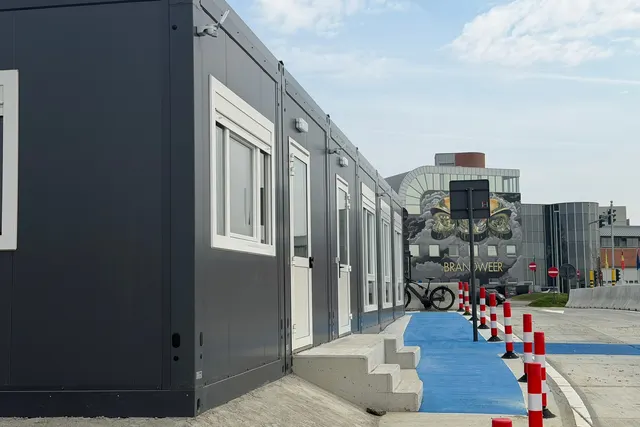
Although the work took place in an existing part of the hospital, next to two existing operating theatres, it went smoothly. “Everything had been planned well in advance,” explains Rik Jochems, buildings staff member at AZ Klina. “The decision to install a hybrid operating theatre had been taking shape for years. We moved the medical imaging department ten metres sideways and relocated the radioisotopes to a separate prefabricated building. This freed up enough space. The three operating theatres now have a combined floor area of 420 m².”
“The work was carried out in phases, and the installation companies used a separate route for their logistical movements. To facilitate this, we fitted a temporary site door in the corridor, with an airlock equipped with air purifiers. That may sound disruptive, but the only demolition work required was removing part of a Gyproc partition wall. A few years ago, bringing in a new MRI scanner was much more disruptive. Because of the size of the equipment, we had to demolish part of the façade and rebuild it afterwards.”
Question about this story? Ask your question
Keep following this
Get an email when a new story is published. No account needed.
- ThemeSafe and reliable healthcare buildings
- SubjectHospitals