Working to a day-by-day LEAN schedule
Shifting things around in Nuclear Medicine.
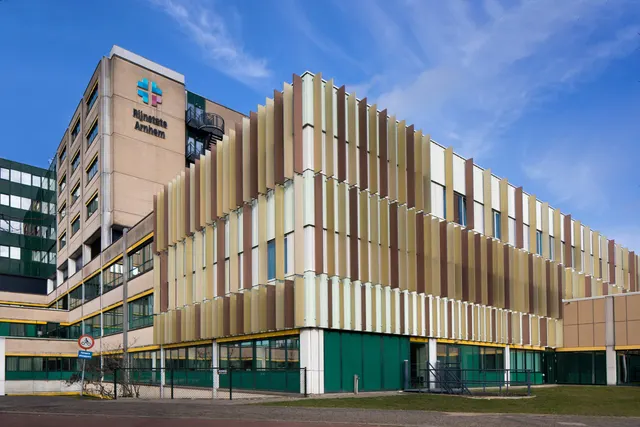
How do you convert relatively small rooms with different functions into new spaces while medical activities continue as normal? The Nuclear Medicine department at Rijnstate hospital in Arnhem knows all about it. There, the rooms in question were completely transformed over six months, from demolition to commissioning, following a carefully devised plan for shifting activities and spaces.
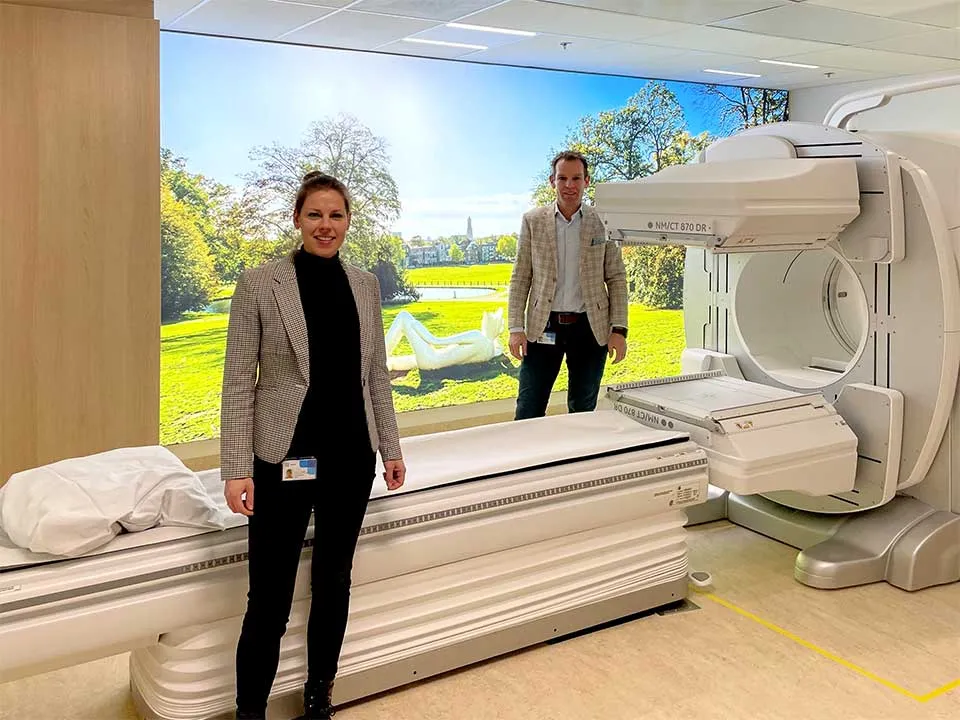
At the time of the interview (26 January, ed.), project manager Martine Oudenbroek and programme director Willem Jan Hanegraaf were still very much involved in the work. “But everything is going according to plan. We scheduled the work tightly. Because we thought carefully about the overall process in advance, we are still on schedule. We began the first demolition work at the end of October, and the entire project will be handed over at the end of March, including testing, validation and staff training,” says Hanegraaf.
Shifting things around
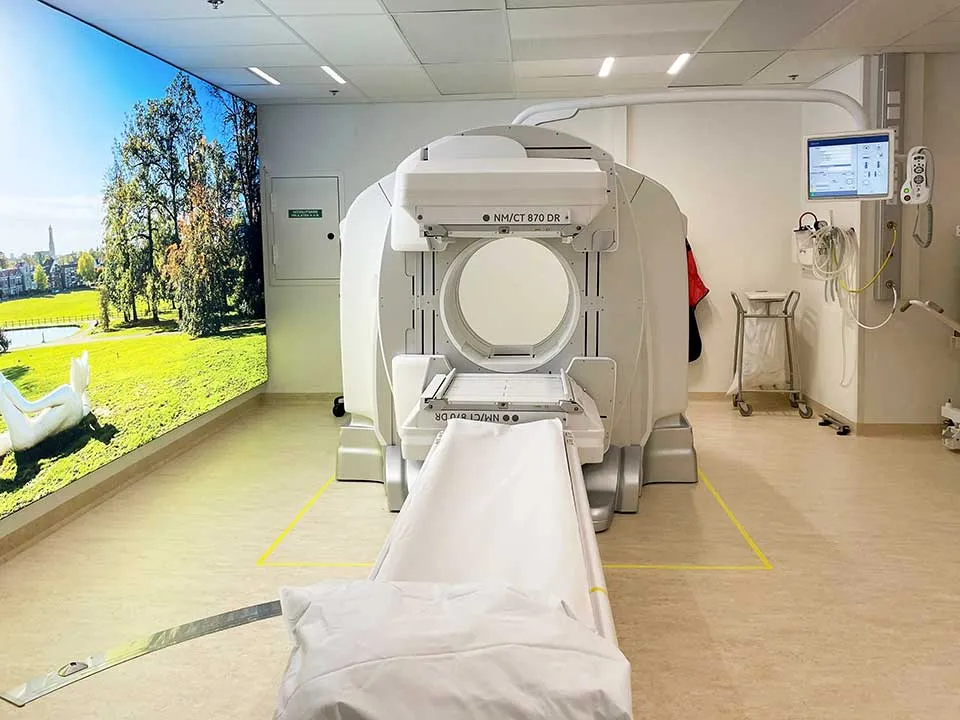
The refurbishment was prompted by the purchase of a new, more advanced SPECT-CT from GE. “Before the refurbishment, Nuclear Medicine had two gamma cameras and one D-SPECT. Six months later, at the end of the project, there will still be room for the same D-SPECT, although it will be located elsewhere in the department (ed.), as well as the new SPECT-CT from GE. We have also created space for four workstations and are refurbishing the waiting area. We did not have enough workstations, and we have been able to incorporate them neatly into the new plan,” says Oudenbroek. “The new SPECT-CT requires different technical provisions, so the rooms had to be modified in any case. It is almost impossible to move or install equipment of this size in an existing setting without major alterations to the room. And as the Nuclear Medicine rooms are more than 15 years old, they were due for some changes.”
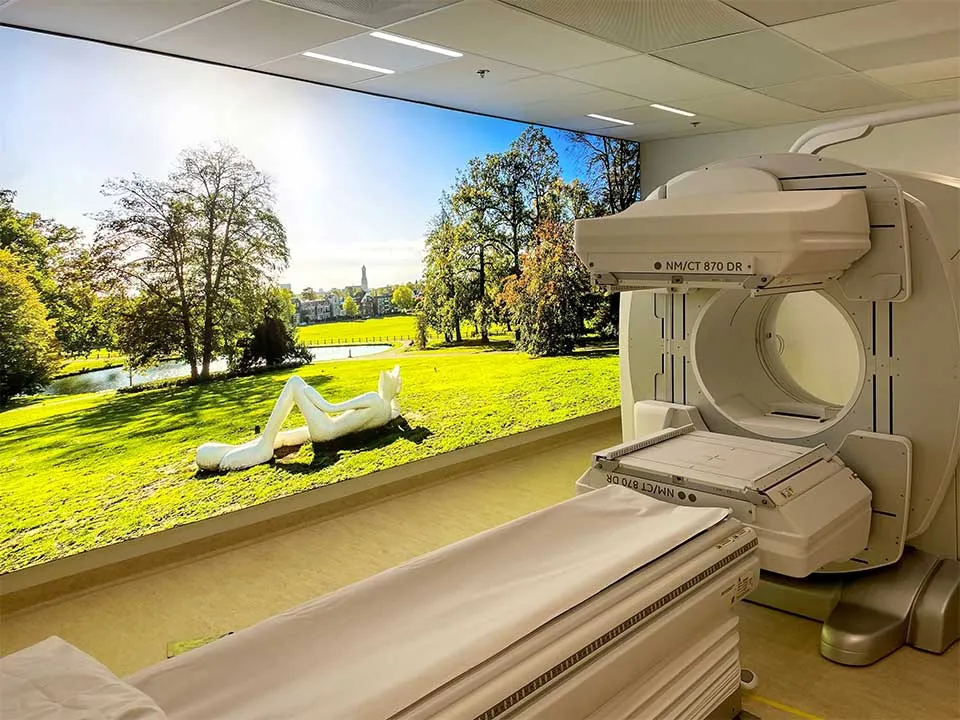
According to Oudenbroek, the total floor area of Nuclear Medicine, around 500 square metres, has not changed. “Only the layout of the rooms has changed. Because we are dealing with X-rays here, some of the walls had to be lined with lead. This work was tested by Applus+, an independent external firm from Rotterdam.”
COVID-19
The complicating factor was that the department had to remain operational while extensive construction work was under way. The main contractor for the project was GB-Construct from Bergeijk, while Hoppenbrouwers Techniek was contracted for the electrical and mechanical services. Rijnstate works with both companies regularly. “The fact that the companies know each other well has many advantages. Even with everything carefully planned and thought through in advance, you cannot avoid having to make changes along the way,” says Oudenbroek. “We worked to a so-called day-by-day LEAN schedule. That means regular meetings and the ability to make quick corrections and adjustments. At times, construction fell a little behind. Normally, the main contractor or installer would bring in a few extra workers, but that was not possible because of the restrictions imposed by COVID-19. The rooms are relatively small, and working in larger numbers would have meant people getting too close to one another. The only alternative was occasionally to carry on over the weekend. The first patients had already been scheduled, so delays or postponing handover were not an option.”
Management Equipment Service (MES)
The purchase of the equipment for Nuclear Medicine is part of the so-called Management Equipment Service
(MES) contract. Hanegraaf explains: “MES is a ten-year agreement with Philips under which Philips is responsible for supplying and maintaining all imaging equipment. The contract provides the hospital with freedom of supplier for a certain part of the agreement, based on the specifications required, which relate to functionality. That is why this department has a SPECT-CT from GE. Rijnstate commissioned Philips to purchase and maintain this SPECT-CT. Thanks to good cooperation between Rijnstate, GE and Philips, the SPECT-CT is now ready for use.”
‘If a bed is coming through, you have to move aside’
One of the contractors working on the Nuclear Medicine department is GB Construct. The company, based in Bergeijk in Brabant, is involved in all three phases of the refurbishment and new-build work.
Project manager Freek Janssen is pleased with the work completed so far in phases 1 and 2, and with work on phase 3, which began in early February. “So far, we have been working in Nuclear Medicine, including in the radiology and CT scan rooms. These radiation-shielded rooms naturally require specific expertise, but we have that in-house. We have previously completed several similar rooms at Rijnstate, including in the Radiology department.”
GB Construct is experienced in building in healthcare settings and specialises in healthcare-related environments. “In a healthcare setting, patient care always comes first. As a contractor, you have to be flexible. It is important that your people understand that. Everything you do is discussed with the care team. If a bed is coming through, you have to move aside,” says Janssen with a laugh. He identifies COVID-19 as the project’s biggest challenge. “You have to maintain a distance of 1.5 metres on site, but the rooms are small. If we fell behind, we could not simply schedule one or two extra people. That meant we occasionally had to work at different times to finish on schedule. But we managed that too. We completed everything within the agreed timeframes.”
Question about this story? Ask your question
Keep following this
Get an email when a new story is published. No account needed.
- SubjectHospitals