











10 reasons to build your new operating theatres using a modular approach
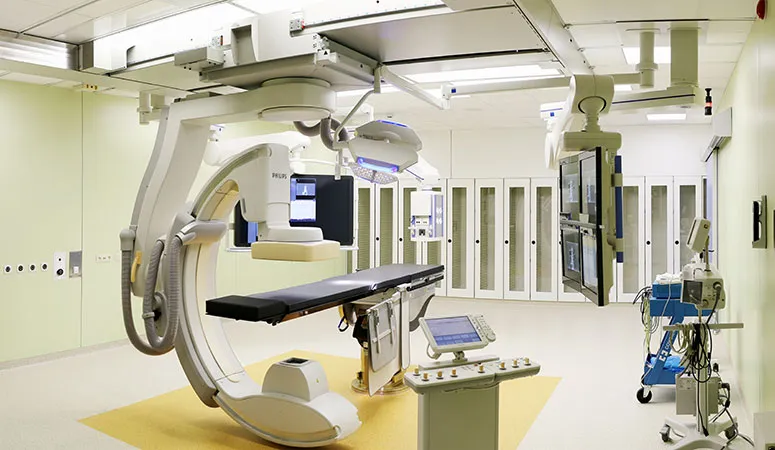
Suppose a new hospital is being built and you are responsible for constructing the operating theatre complex. How would you approach the project today? We can ask the same question if your hospital’s operating theatres are due for a major refurbishment. The latter is, of course, more common, because the operating theatre complex is the fastest-ageing department in a hospital.
On average, every hospital faces this situation once every fifteen years. The reason is simple. No other area of a hospital incorporates as much technology as its operating theatres. This technology is changing at a rapid pace. New innovations bring new possibilities, but also new requirements. For example, the new WIP guideline means that an operating theatre once considered ‘state of the art’ will need a major refurbishment after a number of years.
10 reasons to build using a modular approach
It all starts with drawing up plans, identifying users’ requirements and assessing the available space in the building. The result is a Schedule of Requirements (SoR), after which a construction method must be chosen. Have you considered modular construction? Here are 10 reasons why it could be an attractive option for you.
1. Speed
The time between agreeing the SoR and the final handover of new or refurbished operating theatres can sometimes stretch to several years. By then, requirements may already have changed, meaning the theatres being brought into use no longer meet the latest standards. Both the preparatory phase and the construction period are much shorter for a modular operating theatre complex.
2. Production in ideal conditions
When a modular building is constructed, much of the work is carried out in advance at the factory. It goes without saying that conditions there are far more favourable than when everything has to be done on site, especially in a hospital environment, which comes with its own constraints.
3. Hospital grounds remain available for their intended use
Construction work inevitably causes disruption. Lorries come and go, and part of the hospital grounds, often including scarce parking spaces, has to be closed off to make room for site cabins and materials storage. A complete modular operating theatre complex can be installed on site in just a few days.
4. Considerably less disruption
Traditional construction often generates a lot of dust and noise, exactly what you do not want in this environment. The heavy work on a modular building has already been completed at the factory. Building and services fit-out is clean work that causes very little disruption.
5. Risk of technical systems failing
During a refurbishment, adjacent departments have to continue operating as usual. If the work is carried out in phases, a large part of the operating theatre complex itself must also remain operational. An operating theatre complex contains many technical systems that need to be worked on during the refurbishment. This creates a risk that these systems may fail, potentially leading to unsafe situations for patients.
6. Ready for the next refurbishment
Today’s state-of-the-art operating theatres will be due for a major refurbishment again in fifteen years. Why plan now for the disruption and risks that this will entail? Build modularly now, and next time all you need to do is swap the modules.
7. Financial benefits
Construction costs
A modular building also makes financial sense. Its construction costs are almost always favourable compared with traditional construction.
Relocatable
A modular building can be relocated. If it is no longer needed at its original site, it can be used elsewhere. At a time of hospital mergers and the associated redistribution of services, it may be desirable to redeploy existing operating theatre capacity elsewhere.
Residual value
A traditional building that needs to make way for something else has to be demolished. If it has not yet been fully depreciated, it must be written off early, and demolition itself is costly. A modular building always retains some residual value.
8. Plug & Play
All operating theatre complexes built by Bussman are engineered for Plug & Play. This means that all connections for air ducts, electricity, medical gases and so on are always in exactly the same place. This makes it possible to disconnect and reconnect operating theatres, and to interchange them. Suppose a new treatment becomes available in three years’ time, but can only be carried out in a specially adapted operating theatre. Thanks to the Bussman Plug & Play concept, one theatre can be removed from an operating theatre complex that remains in use and adapted at the factory. Once ready, it is put back in place while the other theatres remain operational.
9. A second life for operating theatres
Operating theatres become technically and functionally outdated relatively quickly. The modules in which they are built can, of course, be stripped out and reused. There is another option, however. While operating theatres may be outdated by our strict Western standards, the quality of healthcare in many developing countries would improve enormously if they had access to the operating theatres we used fifteen years ago. If we had built them modularly at the time, they could now be deployed relatively cheaply for people in developing countries. Why not start doing that now?
10. Sustainable construction
As part of your commitment to Corporate Social Responsibility (CSR), you will naturally want to build as sustainably as possible. No other construction method produces so little waste or offers such great potential for reuse. Bussman specialises in technically complex spaces in healthcare and delivers these spaces on a turnkey, validated basis. Does your hospital have plans to build or refurbish? Bussman’s advisers would be pleased to visit you, with no obligation.
Question about this story? Ask your question
Keep following this
Get an email when a new story is published. No account needed.
- ThemeFaster, more flexible healthcare construction
- SubjectGeneral







