New energy plant for Sanquin Amsterdam
Text Maya Debie Beeld ULC Installatietechniek
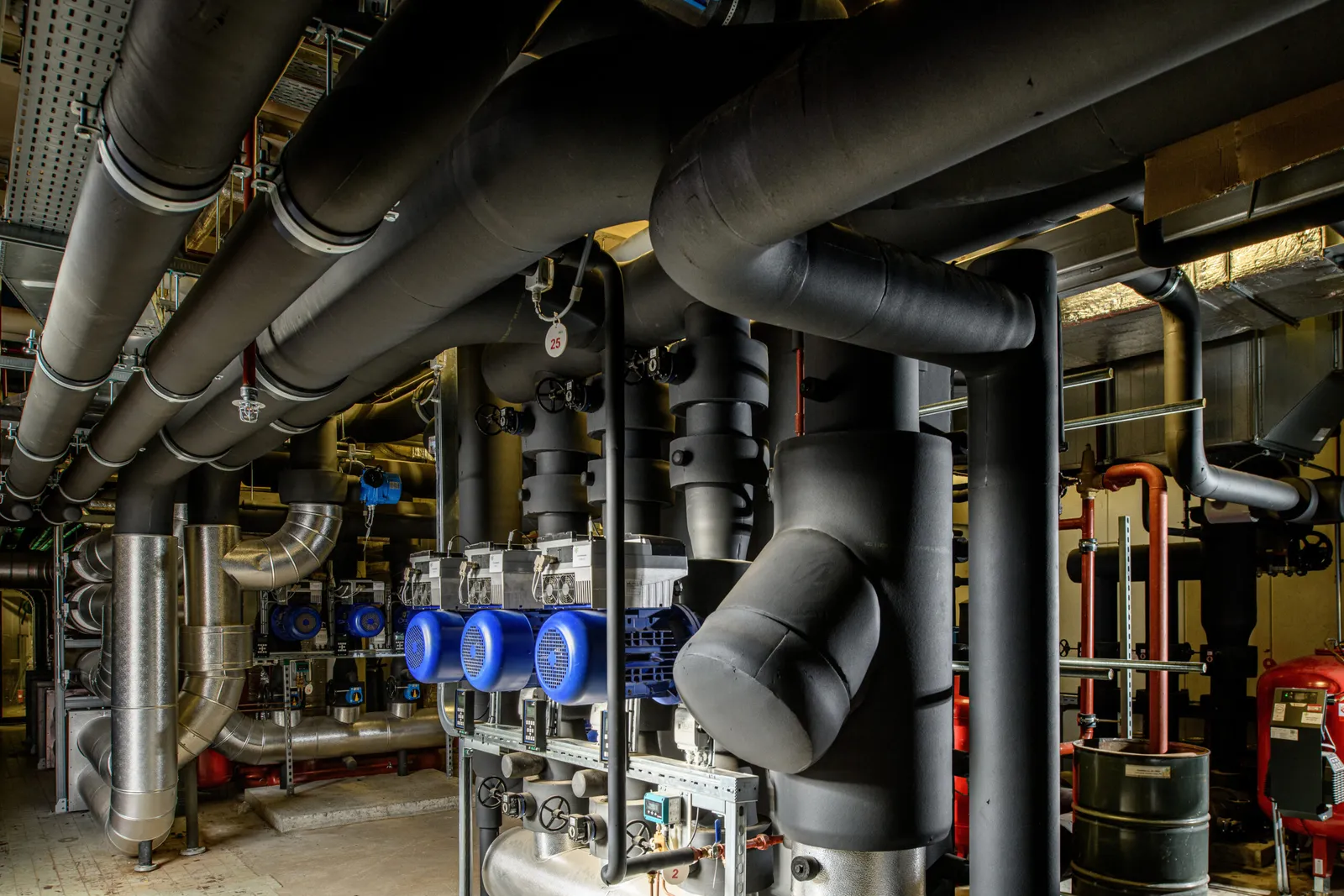
At the heart of Amsterdam’s healthcare and research sector, Sanquin’s site on Plesmanlaan underwent a major technical transformation. While the blood bank and laboratories continued operating 24/7, ULC Installatietechniek delivered a completely new energy plant and an ingenious energy ring. “It’s like open-heart surgery while the patient carries on working,” says project manager Jeroen Schevers.
Sanquin is no ordinary project site. As the national blood bank and a leading pharmaceutical research centre, continuity of operations is literally a matter of life and death. ULC Installatietechniek was tasked with renewing all the building services installations and preparing the complex for a low-gas future.
The energy ring: the new main artery
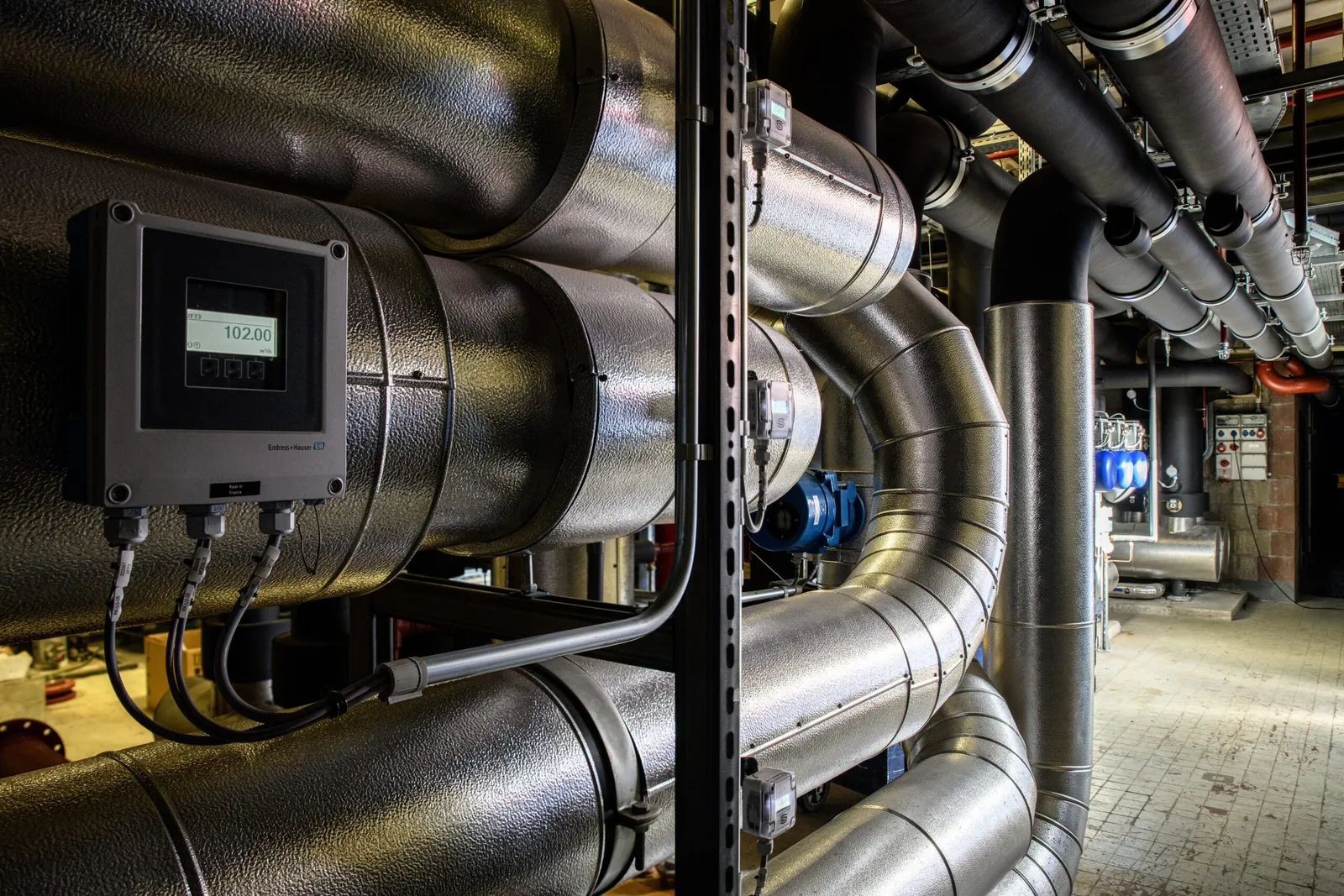
The flagship of the upgrade is the so-called ‘energy ring’. Previously, the various buildings often had their own separate generation systems. Now, a central ring main runs throughout the complex. “The energy ring acts as the building’s main artery, optimising the distribution of heating and cooling,” explains Schevers. “Its main advantage is the flexibility it offers for the future. We can now draw heat or cooling from, or feed it into, the ring at any point. If Sanquin decides to convert or expand a laboratory in a few years’ time, there will be no need to adapt the entire plant. They can simply ‘tap into’ the ring that is already in place. That makes the property future-proof.”
Reducing gas use with aquifer thermal energy storage and heat pumps
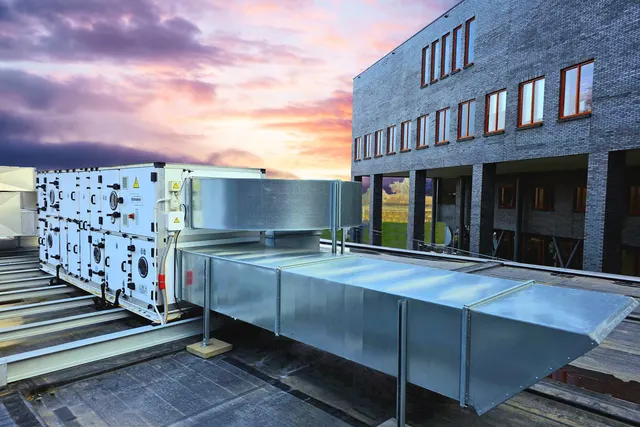
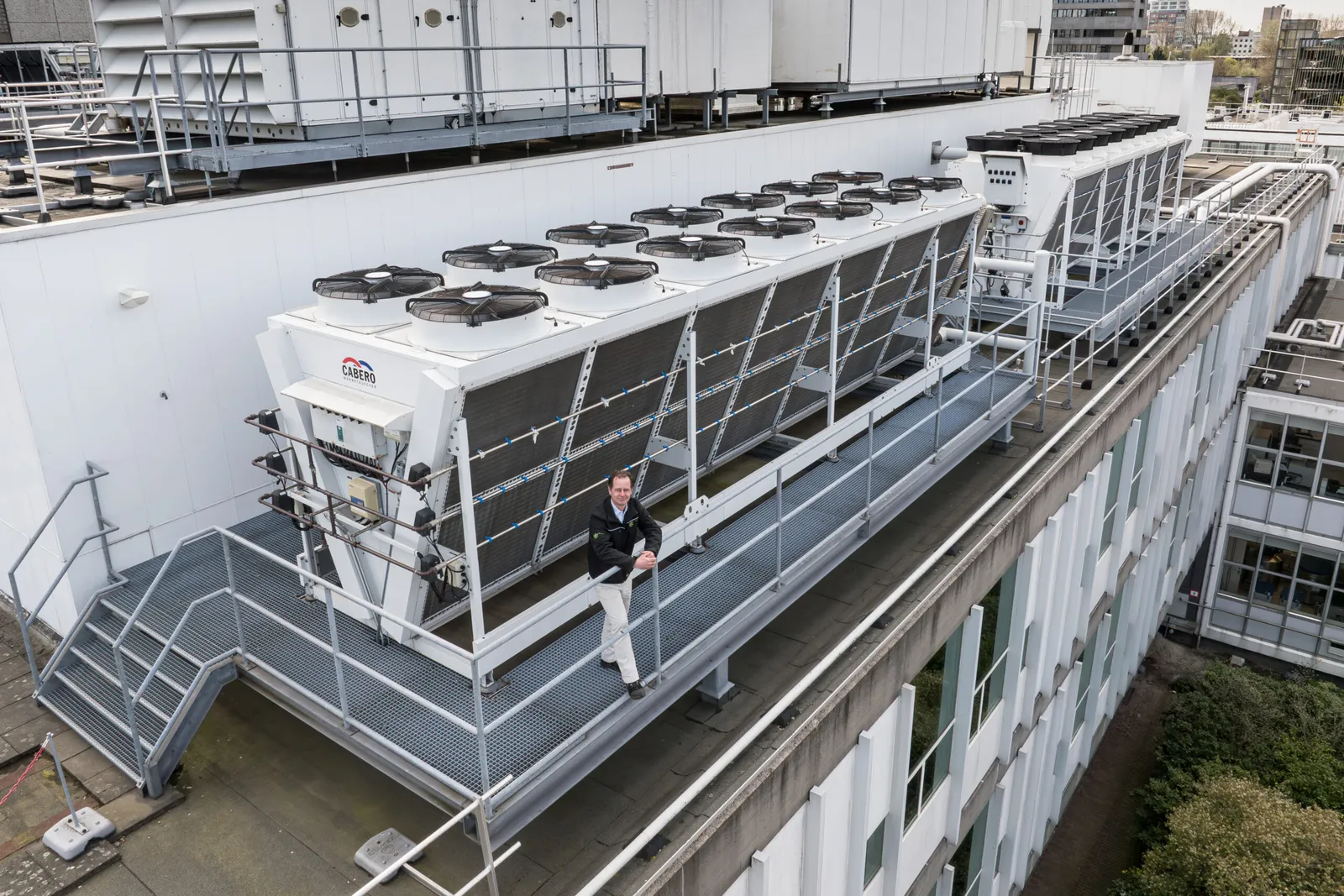
The driving force behind this ring is the new energy plant. Sanquin aims to move away from fossil fuels. ULC delivered on this ambition by working with Roy van der Mark, commissioning specialist at Sanquin, to develop a system centred on powerful heat pumps, connected to aquifer thermal energy storage (ATES) underground, forming what is known as an energy loop. “This system allows us to store and reuse energy,” says Schevers. “Heat stored in summer is used in winter, and vice versa. This significantly reduces CO2 emissions and increases the efficiency of the entire system.”
Working to millimetre precision in a critical environment
The biggest challenge was not just the technology, but above all the environment in which it had to be installed. Sanquin’s laboratories house highly sensitive equipment, including freezers that must remain at -80 degrees Celsius at all times, as well as specialist equipment for the laboratory research carried out there. These cannot tolerate any vibration or temperature fluctuations. “You can’t just pull the plug here,” says Schevers. “The laboratories and the production of medicines from blood plasma run continuously. We therefore used extensive bypass systems and temporary installations. Every switchover and every drilling operation was coordinated with the users. Sometimes that meant working in the evening or when a particular laboratory test was not under way. Communication was every bit as important as the technology itself.”
The power of collaboration
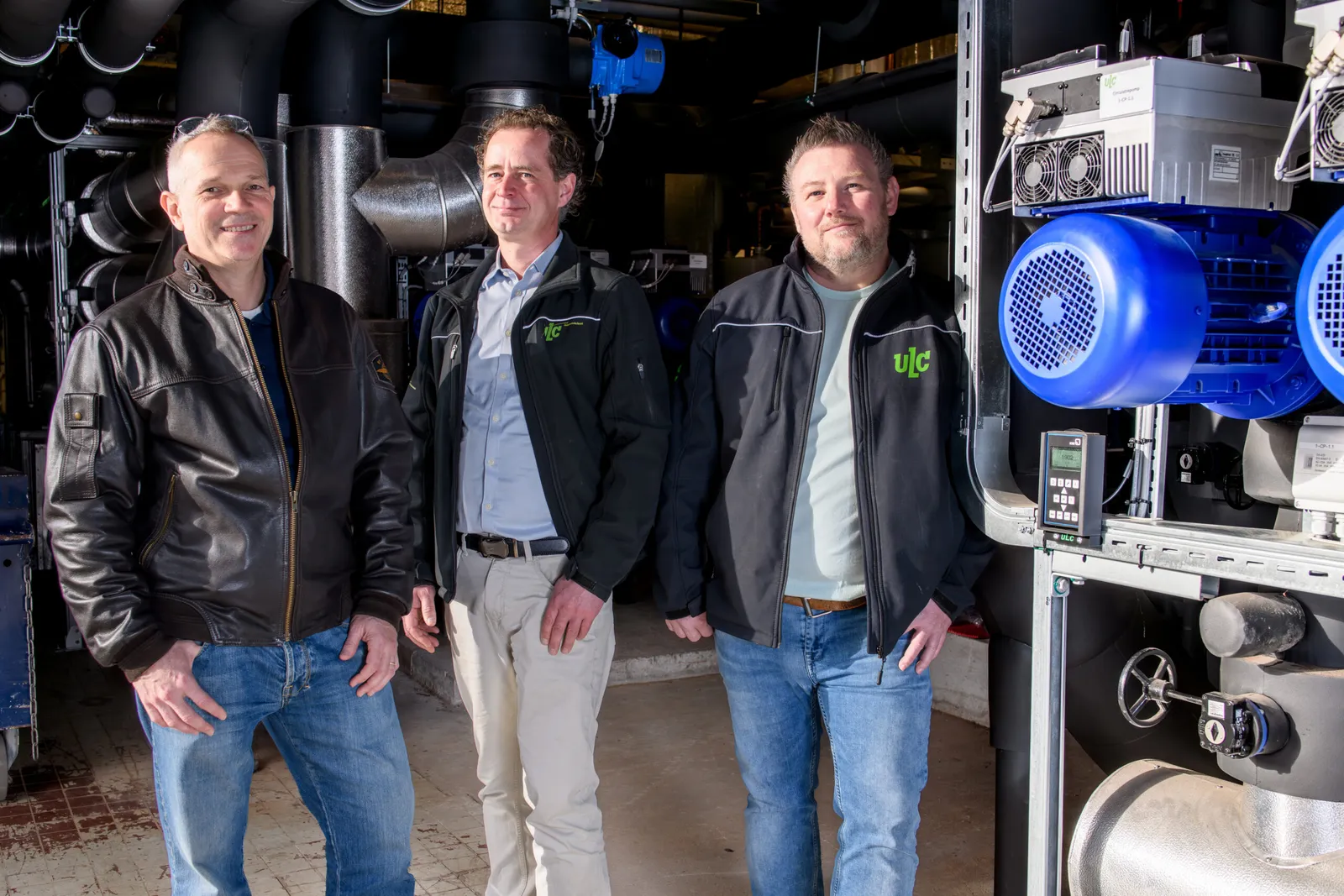
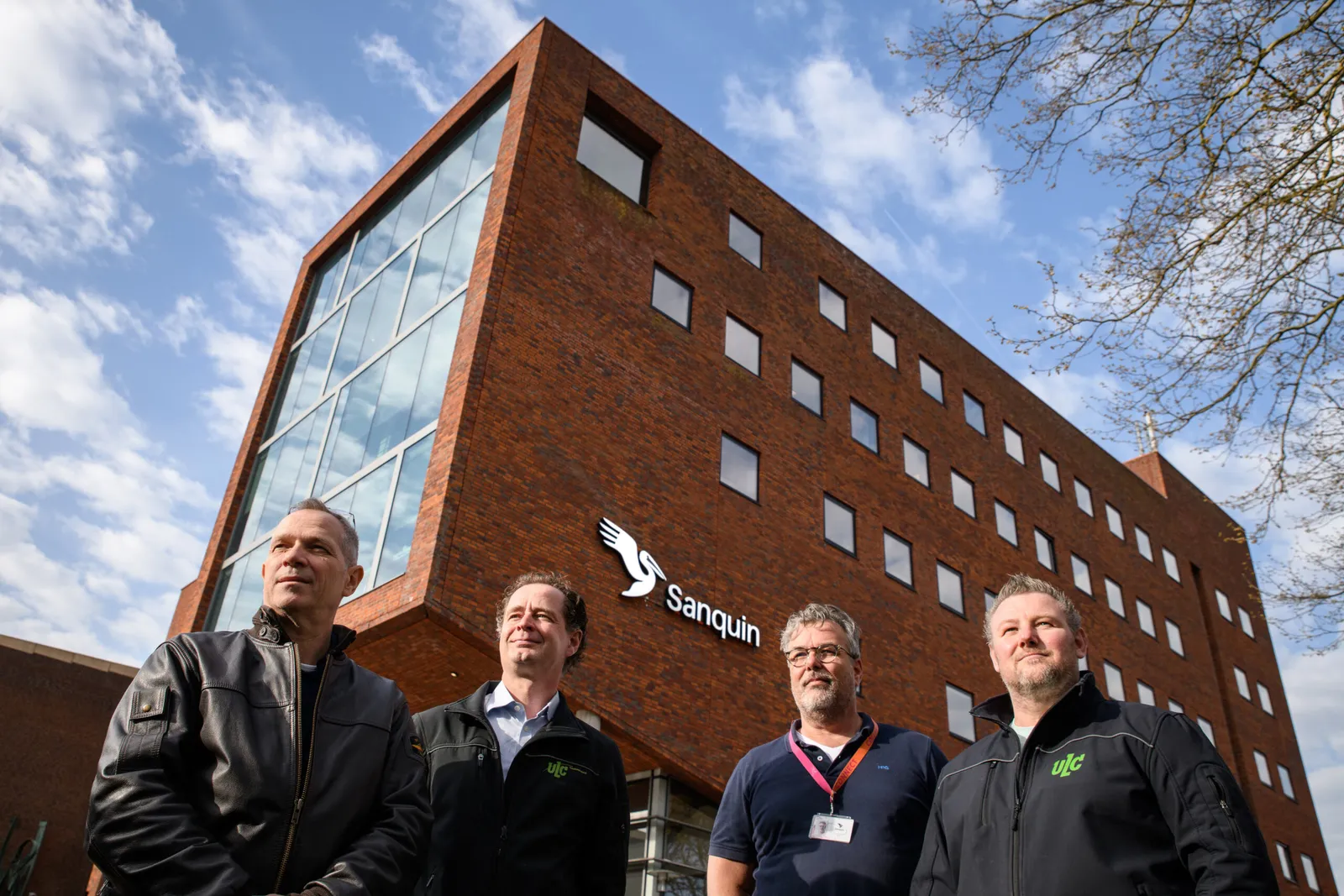
To minimise disruption and installation time on the cramped Amsterdam-Slotervaart construction site, the project relied heavily on prefabrication and detailed upfront engineering. In close collaboration with various partners, large sections of pipework and complete skids were prepared in the factory. Schevers stresses the importance of team spirit: “Our collaboration with client Sanquin, Peter Hipke and Roy van der Mark was built on mutual trust and expertise.” Hipke adds: “On a project of this scale in an existing building, surprises are inevitable. A rigid supplier is no use then. You need a partner who thinks along with you and responds quickly. We experienced that ‘partnership mentality’ at ULC throughout the project. And on site, my right-hand man Said and the rest of the team were hugely driven too. Everyone knew we were working on something essential to the blood supply in the Netherlands.”
Looking to the future
With the project complete, Sanquin now has a modern, sustainable and flexible energy supply, but for Schevers the greatest satisfaction lies elsewhere. “I’m most proud that we carried out such a complex intervention without operations stopping for a single moment,” he says. “When you’re standing in the plant room and everything is running as it should, you know this is what you did it for. An installation Sanquin can rely on for decades to come.”
Een zakelijke vraag aan ULC Installatietechniek? Get in touch
Who worked on it
Sanquin Amsterdam energy centre in Amsterdam
- mechanical installations
 ULC Installatietechniek
- clientSanquin
Keep following this
Get an email when a new story is published. No account needed.
- ProjectSanquin Amsterdam energy centre
- ThemeFaster, more flexible healthcare construction
- SubjectTechnology
- CompanyULC Installatietechniek
- CompanySanquin