A new standard in cardiac monitoring: smart cameras detect what was previously invisible
Text José Mulder Beeld Catharina Ziekenhuis Eindhoven
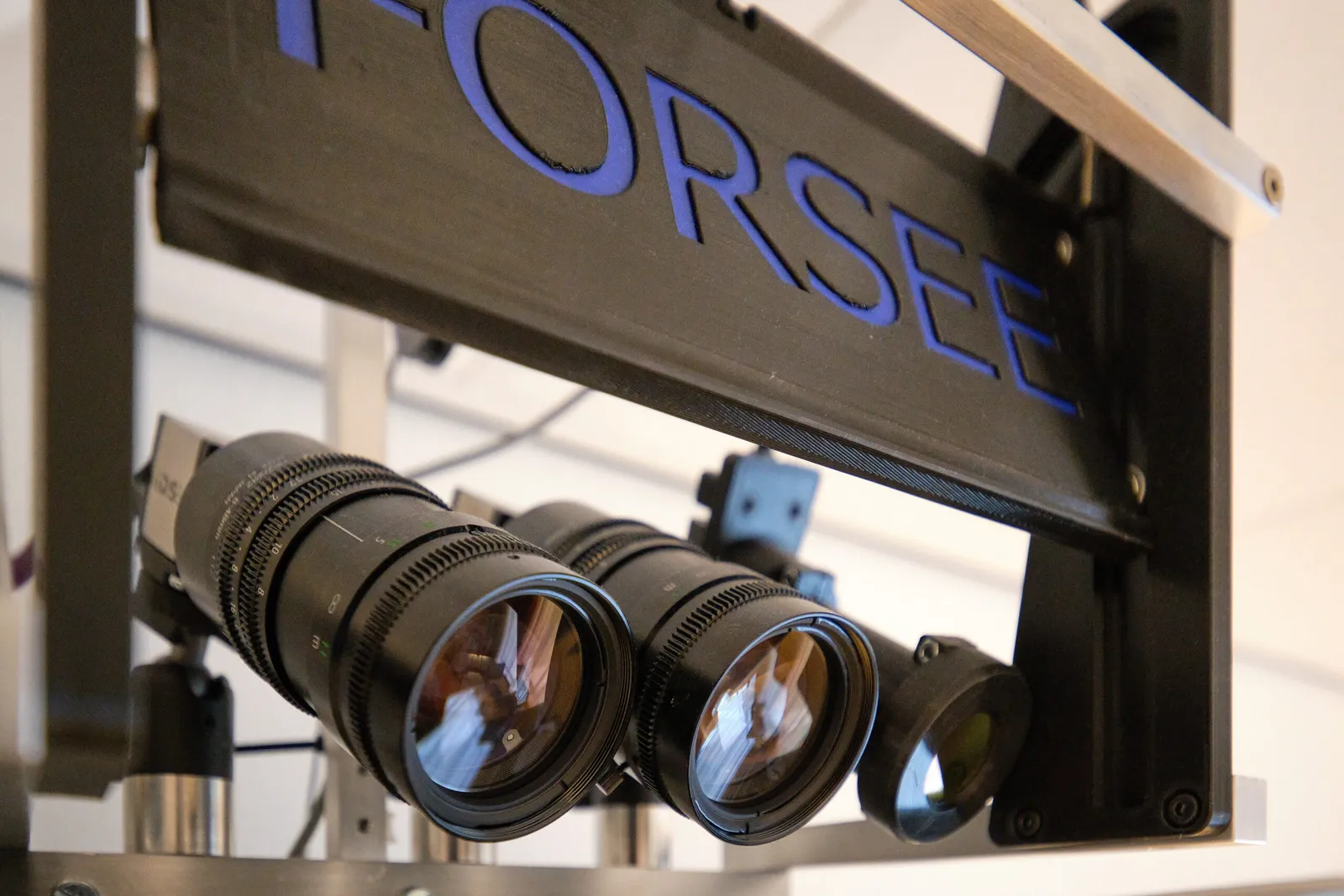
Patients’ health can deteriorate on hospital wards, often outside the reach of direct monitoring. The smallest changes in heart rate and breathing go unnoticed, even though they may be the first signs of complications. At Catharina Ziekenhuis in Eindhoven, the Advance ForSee research programme is working on a new application that uses smart cameras and AI to measure heart rate and breathing continuously and without contact, with the aim of detecting problems earlier and making care on the ward easier.
Professor of cardiology prof. dr. Lukas Dekker explains: “We too are running up against the limits of what is feasible. We want to deliver more and more care with fewer people, while demand for care continues to grow. So we are looking for solutions that reduce workloads while also improving the quality of care.”
Five years ago, the researchers became acquainted with camera technology capable of measuring heart rate and breathing continuously and without contact. While nurses currently measure patients’ vital signs a few times a day and record them manually, continuous monitoring reveals subtle changes that would otherwise go unnoticed. This can be crucial for a good recovery and patient safety.
Safety before privacy
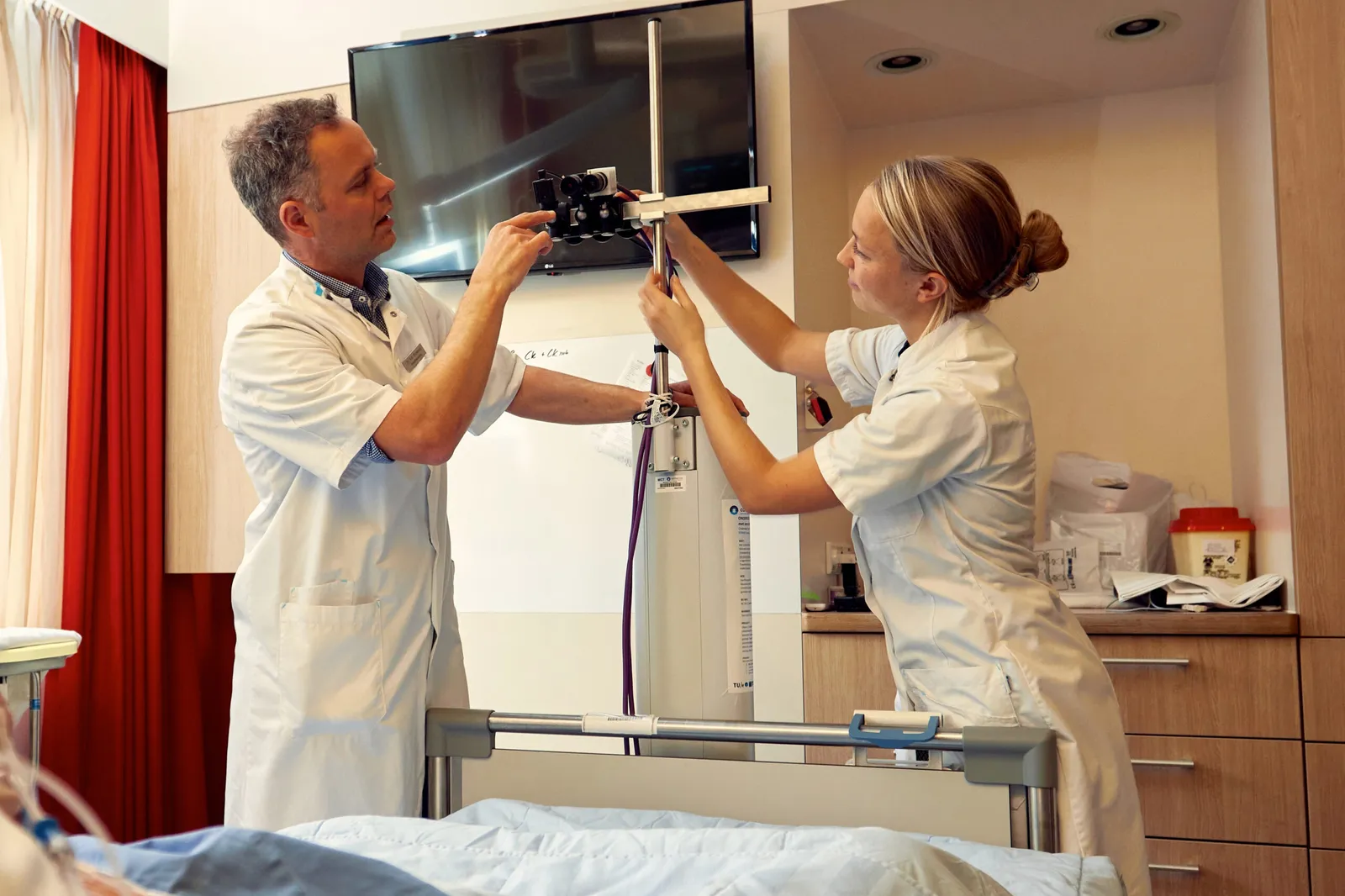
Advance ForSee uses three cameras aimed at the patient in bed. They detect and analyse subtle colour changes (micro-discolourations) in the face to determine heart rate. Breathing is detected through chest movements, even under a blanket. These measurements were compared extensively over a period of time with the ‘gold standard’ ECG and respiratory measurements in the ICU. From the outset, the team also held extensive discussions with patients and nursing staff. “Without their approval, we would develop a wonderful technology that nobody wants to use,” Dekker explains. “The patients were almost unanimously positive. They put safety ahead of privacy. We have also added a simple flap that can be used to cover the cameras if desired. The nurses were initially a little more cautious, but they too see the benefits. Less administration means more time for direct patient care.”
Reliable measurements
Researcher and cardiologist in training dr. Gijs van Steenbergen explains what comes next: “We can now measure reliably. The challenge is to translate this continuous stream of data into models that can predict complications, such as heart rhythm disorders after open-heart surgery. These predictions can also help us better identify which patients are likely to make an uncomplicated recovery. They may be able to leave hospital earlier, with digital follow-up such as home monitoring or a video consultation.” This could make it possible to use beds more efficiently and deploy staff more effectively, while also improving patient safety. Dekker emphasises: “The aim is absolutely not to cut staff. Quite the opposite: the technology can help us make care more personal and give healthcare professionals more time for what really matters: contact with the patient.”
Advance ForSee makes clear that future-proof care is no longer about new buildings, but about digital infrastructure, data processing and smart systems that fit seamlessly into care processes. Catharina Ziekenhuis shows how technological innovation can make a practical contribution to sustainable care, with quality and human contact remaining the standard.
Question about this story? Ask your question
Keep following this
Get an email when a new story is published. No account needed.
- SubjectTechnology