Art is an essential complement to healthcare
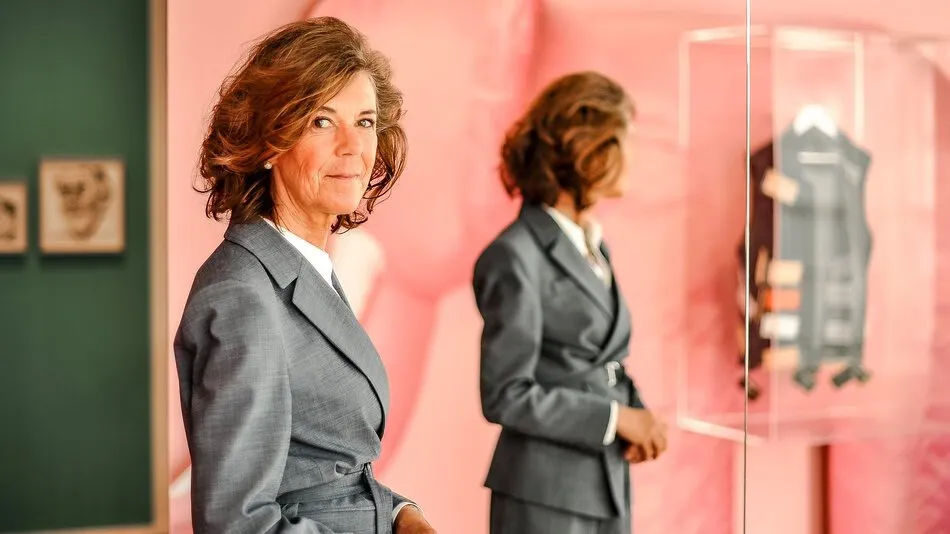
Art offers solutions where healthcare has nothing to offer. Through the power of the imagination, art (singing, music, dance, theatre, poetry and visual art) can contribute to the necessary humanisation of care and its transformation towards health promotion. This is what Professor Tineke Abma argues in her inaugural lecture, The Art of Healing. On Friday 12 June, she will take up the chair in ‘Arts and Healthcare’ at Erasmus School of Health Policy & Management (ESHPM).
Modern medicine has no model for what it means to be whole as a person. It divides people into separate specialisms, often places measurable facts above personal experiences and leaves little room for meaning, spirituality and emotional experience. This is precisely where it falls short. And this is exactly where the power of art lies: artists bring attention to meaning, imagination and the inner self. They see the person, not the patient.
Healing
Art cannot cure illness or disability, but it can have a healing effect, says Abma. “On a physical level, art sets all kinds of things in motion. The immune system responds to the experience of art: defences are strengthened and the risk of inflammation is reduced. Studies show that the stress hormone cortisol falls after an arts intervention, and that hormones associated with happiness are released. Psychologically, art helps regulate emotions, while socially it can reduce loneliness, help people feel more connected and improve their social skills.”
In practice
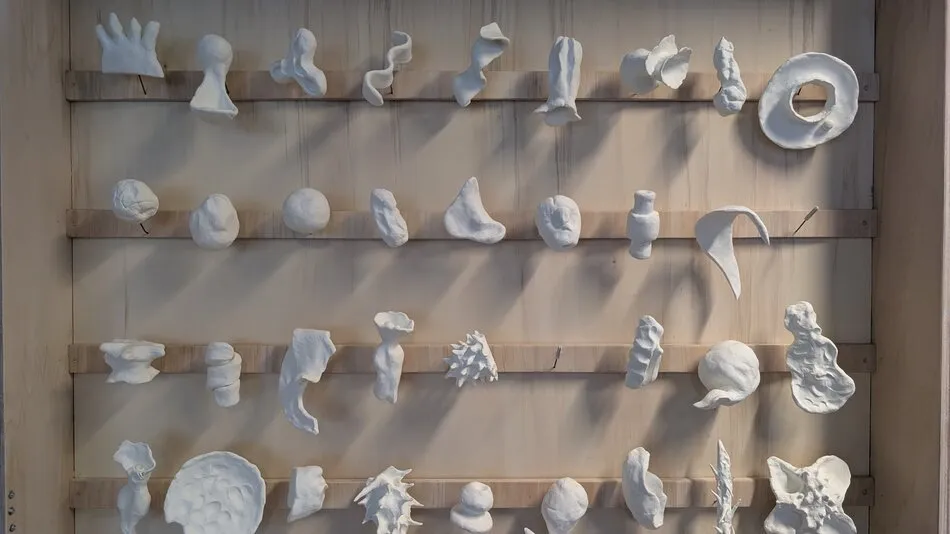
One good example, according to Abma, is the MeeMaakAtelier, run by visual artist Nieke Koek at the pain clinic of Amsterdam UMC. “Doctors use questionnaires to ask about pain, but these do not really get to the heart of it. Koek moulds the pain in clay while the patient talks to her about it. Koek asks unusual questions, such as ‘What colour is the pain?’ The patient then takes the artwork to the doctor. On several occasions, the doctor has adjusted the treatment as a result.”
Abma also mentions R.A.A.F. danst!, a series of dance workshops for young women with and after cancer. After intensive hospital treatments, they suddenly find themselves at home without follow-up care, just as their emotions begin to surface. “Through dance, the women reconnect with their bodies. This is an example of how medicine cannot always solve everything, but art can help. Art does not work in a linear way, like a medicine acting on a chemical process. Instead, it has an impact on the physical, psychological, social, behavioural, existential and spiritual levels.”
Healthcare, art and science
Through the chair in ‘Arts and Healthcare’, Abma aims to provide a stronger evidence base for what practitioners observe and what many of us already know intuitively. Her scientific research contributes to healthcare practice by fostering cross-sector collaboration. Sustainable change does not come from outside or from positioning art as a solution. Instead, it develops from within, through co-creation with the people who matter, including patients and their families, healthcare professionals, artists and makers, healthcare providers, local authorities and health insurers.
Transforming healthcare
“Art acts as a mirror and can help redefine problems in healthcare,” says Abma. “Many artists who enter the healthcare sector do so because they are critical of a healthcare system driven by technology and productivity. They draw attention to our humanity and to questions for which there is no quick fix. Through the power of the imagination, art broadens our horizons and makes an important contribution to the necessary humanisation of care and its transformation towards health promotion.”
Centre of Expertise for Arts and Healthcare
To further develop knowledge about art in healthcare, ESHPM, Cordaan and Museum van de Geest, which made the chair possible, have established the Centre of Expertise for Arts and Healthcare together with Leyden Academy on Vitality & Ageing. The centre, with Abma as its figurehead, will focus in the coming years on more in-depth research into the relationship between art in all its forms and its beneficial effects on our mental and physical health.
Arts & Health Festival and Symposium
The Arts & Health Festival and an afternoon symposium will take place before the inaugural lecture, featuring workshops, performances and inspiring talks by leading national and international speakers. Alongside raising awareness of the significance of art for the health and wellbeing of individuals and communities, the programme will focus on sharing scientific insights and best practices. Everyone is warmly invited to attend all parts of The Art of Healing. The full programme and registration form are available on our website.
Question about this story? Ask your question
Keep following this
Get an email when a new story is published. No account needed.
- ThemeFaster, more flexible healthcare construction
- SubjectInteriors